Our reviews and ratings are 100% unbiased. As an Amazon Associate, Screenwise earns from qualifying purchases, so if you buy a book or game through one of our links, we may earn a commission. We don't get any credit if you just Google it instead :)
Screenwise Verdict
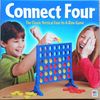
Connect 4 is the platonic ideal of a gateway strategy game. It does exactly one thing—teach kids to think two moves ahead—and does it well enough that it's been in production for 50 years.
The magic is in its simplicity: a 6-year-old can learn it in 30 seconds, but actually winning requires real thought. Kids develop pattern recognition, learn to block opponents, and start understanding strategic planning without feeling like they're doing homework. The 10-minute playtime is perfect for modern attention spans.
The downside? It's shallow. After a few dozen games, the patterns become obvious. The BGG rating of 5.0 reflects this—it's fine, not amazing. Optimal play is mathematically solved, so it lacks the infinite depth of chess or even checkers. Think of it as training wheels for strategy games, not the bike itself.
For families with kids 6-10, it's an easy yes. It's cheap, durable, and you'll actually play it. Just don't expect it to be the only game in your collection—it's a starter, not a keeper for life.
Age Fit
Ideal for ages 6-12 as a first strategy game. Younger kids (4-5) can play with help but won't grasp blocking strategy. Teens might play casually but won't seek it out—it's not deep enough to compete with their phones. Adults can enjoy it as a quick filler with younger kids.
WISE Breakdown
Wholesome
92
Pure two-player competition with zero toxic elements. Fast 10-minute rounds prevent frustration buildup. Face-to-face gameplay encourages sportsmanship and turn-taking. No chaotic pacing, no mean-spirited mechanics—just clean strategic fun that works equally well between siblings, parent-child, or friends.
Imaginative
68
Pattern recognition and spatial thinking are genuinely engaging, but the game is fully deterministic with solved optimal play. The 7x6 grid offers tactical creativity for kids learning strategy, but once you understand the patterns, the imaginative ceiling is limited. No narrative, no building, no open-ended exploration—it's abstract strategy in its purest, most constrained form.
Safe
98
About as safe as board games get. No mature themes, no conflict-inducing mechanics beyond normal competitive play, physical pieces with no choking hazards for age 6+. The game creates mild competitive tension but nothing that damages relationships—losing is quick and you can immediately play again. Zero monetization, zero privacy concerns, zero problematic content.
Enriching
76
Teaches genuine strategic thinking: blocking, planning ahead, recognizing diagonal patterns. The low complexity (1.18 BGG weight) makes it accessible while still requiring actual thought. Kids develop pattern recognition and forward planning. However, entertainment value drops once you've played 50+ games—it's enriching for developing minds but doesn't offer deep ongoing skill progression like chess. Still, for its target age, it delivers solid cognitive exercise.
Parent Info
✓
Why It Might Be Great
Teaches real strategic thinking (blocking, planning, pattern recognition) without overwhelming complexity—perfect for kids transitioning from pure luck games
10-minute rounds mean no one gets stuck in a painful hour-long game, and losses don't sting because you can immediately rematch
Zero setup time, zero cleanup drama—pull it out, drop some discs, done
Actually portable for travel unlike most board games that claim to be
The satisfying clack of dropping discs is weirdly addictive and tactile in a good way
⚠
What to Watch For
Replayability ceiling—after 30-40 games, patterns become predictable and kids may lose interest
Optimal play is mathematically solved, so an adult playing seriously will dominate a young kid (play suboptimally on purpose)
Two-player only means someone's left out if you have multiple kids—consider getting two sets or rotating
Conversation Starters
""What's your strategy—do you try to win or focus on blocking me?""
""Did you notice I was setting up a diagonal? What could you have done differently?""
""Want to try starting in different columns and see what works best?""
""How many moves ahead are you thinking?""
""What's harder—getting four in a row horizontally or diagonally?""