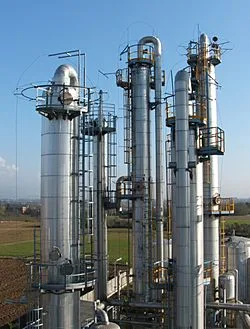
This is essentially a digital encyclopedia entry. It’s useful, accurate, and safe, but let's be real: it's not 'entertainment.' It serves a specific purpose—answering the question 'what is chemical engineering?'—and then it's done.
If your kid is a budding scientist, this is a great five-minute read to ground their interests in reality. If you're looking for something to keep them engaged for an hour, you'll need to pair this with a YouTube channel like Mark Rober or a hands-on kit. It’s a utility, not a destination.
Age Fit
Best for kids ages 8 to 13 who are already interested in STEM or need a quick, reliable source for a school project. It's too dry for younger kids and too basic for high schoolers.
WISE Breakdown
Wholesome
95
It is a straightforward, educational encyclopedia entry. There is zero mature content, snark, or hidden agendas—just pure, age-appropriate scientific information.
Imaginative
40
While the subject matter is about building and creating, the website itself is a static text page. It describes imagination in the field rather than sparking it through interactive play or creative tools.
Safe
98
Hosted on Kids Kiddle, which is a filtered, kid-safe environment. No comments, no user-generated toxicity, and no physical safety risks since it contains no lab instructions.
Enriching
72
Provides a solid conceptual bridge between basic science and real-world careers. It explains the 'how' and 'why' of industrial processes like water desalination and food production.
Parent Info
✓
Why It Might Be Great
Zero-risk exploration of a complex field without the need for safety goggles or cleaning up spilled vinegar.
Clear definitions that bridge the gap between 'science' (knowing things) and 'engineering' (building things).
Free and accessible content that doesn't hide information behind a subscription or a heavy login wall.
⚠
What to Watch For
The page is visually sparse and text-heavy; kids who prefer video or interactive games will likely bounce off this in under two minutes.
It is a starting point only—it defines terms but doesn't offer the 'next steps' like DIY experiments or project ideas.
Conversation Starters
"If you had to design a giant machine to turn salt water into drinking water, what would be the hardest part?"
"Why do you think chemical engineers need to understand economics and money, not just science?"
"Look at the food in our pantry—which of these do you think a chemical engineer helped make?"
Deep Dive
The 'Hidden' Engineering
Most kids know what a civil engineer does (bridges) or what a mechanical engineer does (robots). Chemical engineering is the 'invisible' cousin that actually runs the world, from the gasoline in the car to the medicine in the cabinet. This Kids Kiddle page does a decent job of demystifying that. It doesn't use flowery language or try to 'sell' the career; it just lays out the facts.
What’s missing is the spark. Because it's a safe, read-only resource, it avoids the mess and danger of actual chemistry, which is great for your kitchen counters but less great for a kid's attention span.
How to use it
Don't just hand them the tablet and walk away. Use this page as a 'pre-flight check.' Read it together to understand the concepts of mass balance and unit operations, then go find a video of a real refinery or a food processing plant. It’s the perfect 'boring but necessary' foundation for more exciting STEM activities. If you want more structure, you can look at the AIChE K-12 modules, but for a quick Saturday morning 'What's that?' moment, this site does exactly what it says on the tin.