

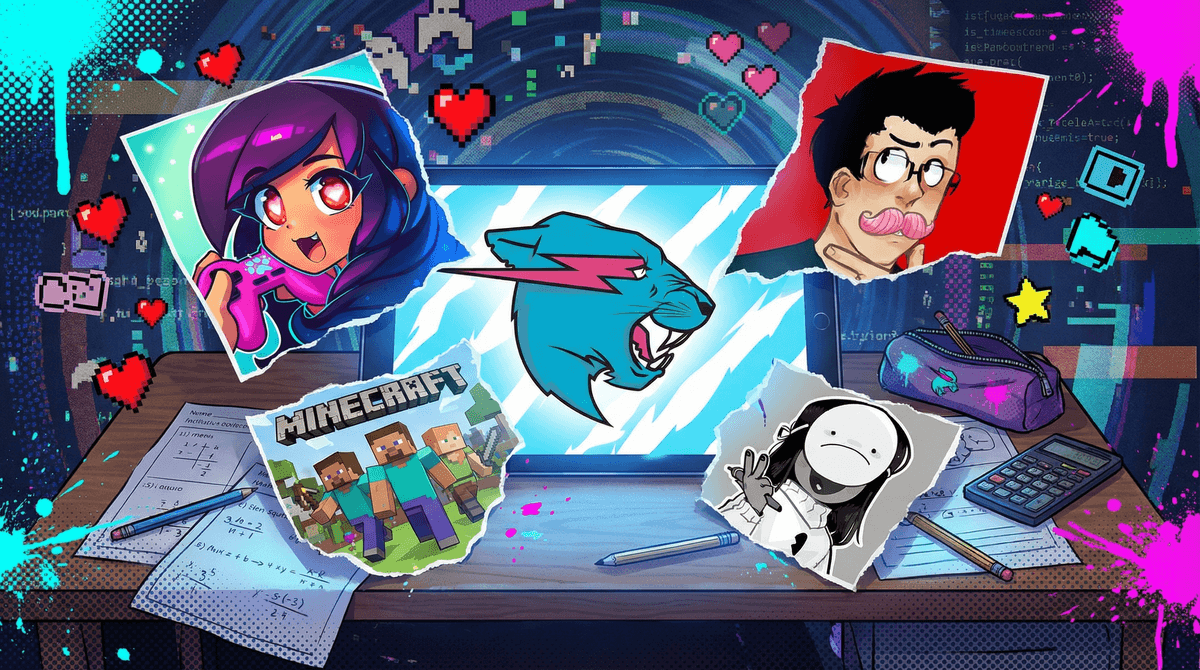
Your kid can recite every MrBeast challenge from memory, knows the entire lore of Dream SMP, or won't stop talking about whatever Aphmau is up to this week. Meanwhile, they "forgot" their times tables again.
YouTube star obsession is when kids become deeply invested in the lives, content, and personalities of YouTube creators — often to the point where these digital celebrities feel more real and relevant than traditional celebrities, historical figures, or yes, sometimes even their math homework.
And here's the thing: this is completely normal. By middle school, about 80% of kids have a favorite YouTuber they follow regularly. For many kids ages 8-14, YouTube creators are their primary form of entertainment, their main source of "what's cool," and honestly, a significant part of their social currency at school.
The difference between our childhood celebrity crushes and their YouTube obsessions? These creators upload multiple times a week, respond to comments, create inside jokes with their audience, and build what feels like actual relationships with viewers. When your kid says they "know" their favorite YouTuber, they kind of do — or at least, they know a carefully crafted version.
Parasocial relationships are powerful. YouTubers talk directly to the camera, use first names, share "behind the scenes" moments, and create a sense of intimacy that traditional celebrities never did. When MrBeast says "hey guys," your kid genuinely feels like he's talking to them specifically.
The content is designed for them. Unlike TV shows that adults greenlit, YouTube content is created by people who understand exactly what kids find entertaining — because they're often getting real-time feedback through comments, likes, and analytics. The algorithm is literally optimizing for your kid's engagement.
It's their culture. Not knowing who Markiplier is or what happened in the latest Dream drama is like showing up to school in the 90s not knowing who was on TRL. YouTube knowledge is social capital, and kids are highly motivated to stay current.
The aspirational factor is real. YouTubers seem attainable in a way movie stars never were. Kids think "I could do that" — and technically, they're not wrong. The barrier to entry is just a phone and an idea. Whether that's realistic is another conversation, but the dream feels possible.
Let's start with the positives, because there are real ones:
Genuine skill building happens. Kids watching Minecraft YouTubers are learning problem-solving, creativity, and collaboration. Those following art channels are getting legitimate tutorials. Science YouTubers like Mark Rober are teaching engineering concepts better than many classrooms.
They're developing media literacy. Kids who follow multiple creators learn to recognize different content styles, understand editing techniques, and yes, sometimes even spot when someone's being sponsored or fake.
Community and belonging matter. For kids who feel like outsiders at school, finding a YouTuber who shares their interests and a comment section full of like-minded fans can be genuinely meaningful.
But here's where it gets complicated:
Consumerism is baked in. Whether it's MrBeast's Feastables, merch drops, or constant product integration, YouTube culture is inseparable from buying stuff. Kids are being marketed to constantly, and the line between content and advertisement is intentionally blurry.
The parasocial relationship can be manipulative. When a creator says "only real fans will buy my merch" or "if you don't subscribe you're not part of the squad," that's using emotional connection to drive behavior. Kids don't always recognize this.
Not all content is created equal. Some YouTubers are putting out thoughtful, high-quality content. Others are churning out reaction videos, drama, and whatever the algorithm rewards this week. Your kid's YouTube diet matters just like their food diet does.
The entrepreneurship angle is oversold. Yes, some kids will become successful creators. But for every MrBeast, there are millions of kids filming content that goes nowhere. The "anyone can make it" narrative can distract from actual skill-building and education.
Ages 6-9: Curated viewing only At this age, stick with YouTube Kids or parent-selected channels. Kids this young can't distinguish between content types or recognize manipulation tactics. Good options: Blippi, Art for Kids Hub, SciShow Kids.
Ages 10-12: Supervised exploration This is when YouTube obsession typically peaks. Kids can start exploring more independently, but you need to know who they're watching. Watch a few videos together, talk about what they like, and set clear boundaries about content types that are off-limits. Check their watch history regularly — not as punishment, but as basic supervision.
Ages 13+: Guided independence Teens will watch what they want to watch. Your job shifts to teaching critical thinking: Who's sponsoring this? What's the creator trying to sell? Is this drama real or manufactured? How much time is this taking from other activities? The conversation matters more than the control at this point.
The algorithm is not your friend. YouTube's recommendation engine is designed to maximize watch time, not your kid's wellbeing. One video about Minecraft can lead to a rabbit hole of increasingly intense gaming content, drama channels, or worse. Understanding how YouTube's algorithm works helps you protect your kid without being clueless.
Scandals happen constantly. That wholesome creator your kid loves? There's a non-zero chance they'll be "canceled" next month for something they said or did. YouTube drama is a genre unto itself, and kids get emotionally invested in these controversies. Be prepared for conversations about why people they admired let them down.
The merch requests will be relentless. Hoodies, plushies, mystery boxes, limited drops — YouTube merch is expensive and often low quality. Set clear boundaries early about what you will and won't buy, and help kids understand they're being marketed to.
Screen time battles are real. "Just one more video" is the new "just one more episode," except YouTube videos are 8-15 minutes and the next one autoplays immediately. You need actual systems (timers, house rules, device management) not just good intentions.
Your kid probably wants to BE a YouTuber. About 30% of kids say "YouTuber" when asked what they want to be when they grow up. This isn't automatically bad — creating content teaches real skills — but it needs realistic framing. Here's how to approach the "I want to be a YouTuber" conversation.
YouTube star obsession isn't inherently good or bad — it's a reality of growing up in 2026. The question isn't whether your kid will be into YouTube creators (they will), but whether you'll help them develop the critical thinking skills to engage with this content thoughtfully.
Know who they're watching. You don't have to love it, but you need to understand it. Watch a few videos. Ask questions. Show genuine interest in what they find entertaining, even if you personally think reaction videos are the death of creativity.
Set boundaries that make sense for your family. Maybe that's time limits, maybe it's content restrictions, maybe it's "no YouTube until homework is done." Every family is different, and that's fine.
Teach media literacy actively. Point out sponsorships. Discuss why creators manufacture drama. Talk about how editing changes reality. Help them see behind the curtain without ruining the magic entirely.
Channel the obsession productively. If they love gaming YouTubers, can they learn actual game design? If they're into art channels, get them real art supplies. If they want to make content, teach them about scripting, editing, and storytelling — not just filming themselves unboxing toys.
YouTube isn't going anywhere. Your kid's obsession with their favorite creator is developmentally normal, socially important to them, and yes, sometimes genuinely educational. Your job isn't to eliminate it — it's to help them navigate it with awareness, boundaries, and critical thinking.
And maybe, just maybe, learn enough about MrBeast to understand what they're talking about at dinner. You don't have to like it, but you do have to show up.
Ready to get specific about your kid's YouTube habits? Screenwise can help you understand exactly what they're watching, how it compares to their peers, and create a personalized plan that works for your family — not some generic advice column family.
Because every kid's YouTube obsession is different, and cookie-cutter solutions don't work when the content is this personalized to begin with.