

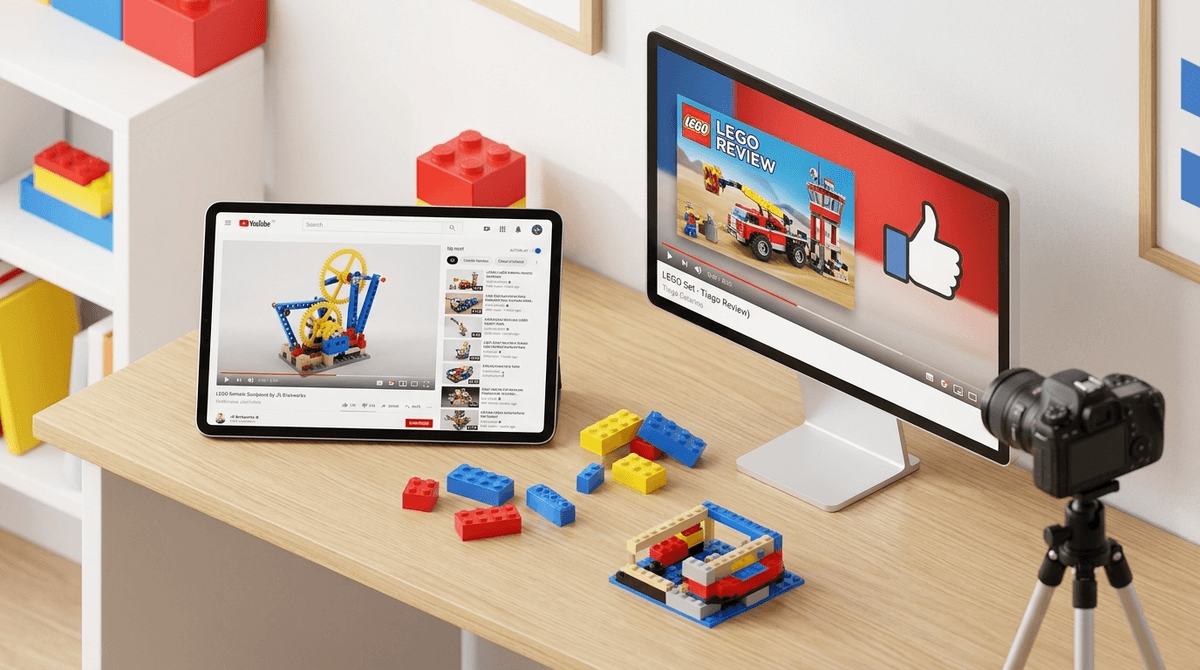
TL;DR: LEGO YouTube is a massive ecosystem that oscillates between "educational engineering" and "unfiltered consumerist FOMO." If your kid is watching to learn how to build a motorized transmission, that’s a win. If they’re watching "massive hauls" that make them feel like their own collection is trash, it’s time to pivot.
Quick Recommendations:
- For Honest Reviews: Tiago Catarino
- For Mechanical Genius: JK Brickworks
- For Narrative Storytelling: BrotherhoodWorkshop
- For "How is that even possible?" Builds: Beyond the Brick
We’ve all been there: the floor of the playroom is a literal minefield of 2x4 bricks, and your kid is sitting on the couch, mesmerized by a 20-minute video of a grown man opening a $800 Star Wars Millennium Falcon set.
It feels a bit absurd, right? Why watch someone else build the toy you have sitting in a bin three feet away? But LEGO YouTube isn't just one thing. It’s a mix of ASMR, engineering school, art gallery, and—yes—high-octane marketing.
The goal for us as intentional parents isn't to ban the "brick-tubers," but to curate the feed so it moves our kids from "I want to buy that" to "I want to build that."
There is something deeply satisfying about the "click." LEGO YouTube taps into the same psychological itch as ASMR or "Restoration" videos. Seeing a chaotic pile of plastic transform into a structured masterpiece provides a sense of order and completion that's hard to find in, say, a chaotic round of Roblox.
For older kids, it’s about the community and the "MOC" (My Own Creation) culture. They aren't just looking at sets you can buy at Target; they’re looking at what’s possible when you treat LEGO as an art medium. It’s the difference between coloring in a book and being handed a blank canvas.

If you want to nudge your kid toward the "active" side of the screen-time spectrum, these are the channels that actually teach something or inspire genuine creativity.
This is the "Gold Standard" for mechanical LEGO. Jason Allemann doesn't just build pretty houses; he builds kinetic sculptures. We’re talking galloping horses, flying dragons, and functional clocks made entirely of plastic. It’s basically a physics and engineering class disguised as a toy channel. If your kid likes Minecraft Redstone, they will lose their minds here.
Tiago is a former LEGO set designer. This is crucial because he has "insider" energy without being a corporate shill. His reviews are famously blunt. He’ll tell you if a set is overpriced, if the build experience is boring, or if the "play features" are actually kind of lame. He also does "5-minute builds" that show kids how to make everyday objects (like a toaster or a piano) using the random pieces they already have in their bins.
Think of this as the "Travel Channel" for LEGO. They go to conventions and interview builders who have spent years on massive, room-sized displays. It’s great for showing kids that this hobby has a high ceiling for skill and persistence. It’s less about "buy this" and more about "look what is humanly possible with enough patience."
This channel is a bit more "YouTube-y"—faster cuts, higher energy—but the content is solid. He does experiments like "Can LEGO withstand a leaf blower?" or "Building a LEGO car that can climb anything." It’s reminiscent of Mark Rober and encourages that "trial and error" mindset that is the bedrock of scientific thinking.
If your kid is interested in filmmaking, this is the spot. They create high-end stop-motion animations (Brickfilms). The technical skill involved in lighting and "acting" with plastic minifigures is incredible. It often leads kids to want to try their own hand at stop-motion animation.
Not all LEGO content is created equal. There is a sub-genre of "Haul" videos and "Investment" videos that can be pretty toxic for a kid’s perspective on money and contentment.
- The "Haul" Culture: Some influencers spend thousands of dollars a month on sets. For a 10-year-old, watching someone drop $5,000 on LEGO Star Wars sets in one afternoon can create a warped sense of reality. It turns the hobby into a "collection" race rather than a building activity.
- The "Investor" Vibe: There’s a whole side of YouTube dedicated to "LEGO Investing"—buying sets to keep them in boxes and sell them for a profit. If your kid starts talking about "resale value" and "sealed boxes" instead of actually playing with the bricks, it might be time to have a talk about the purpose of toys.
- Ages 5-7: Stick to channels like LEGO Official or simple build-along tutorials. Avoid the high-energy "challenge" channels that feel like MrBeast clones—they're often too loud and overstimulating for this age group.
- Ages 8-12: This is the sweet spot for JK Brickworks and Brick Science. They are old enough to understand the mechanics and might actually try to replicate the builds.
- Ages 13+: Teens might gravitate toward the more technical "MOC" builders or the cinematic stop-motion creators. This is also where they might encounter the "investor" side of the community—keep an eye on that.
Generally speaking, the LEGO community on YouTube is one of the "cleaner" corners of the platform. You aren't going to find much profanity or "edgy" content in the mainstream channels because the creators know their audience is largely kids (and adult fans of LEGO who are generally pretty wholesome).
However, the comments section is still YouTube. Even a video about a LEGO Friends set can have a comment section full of weirdness, spam, or arguments. If your kid is on the main YouTube app, I’d recommend keeping comments turned off or using YouTube Kids for the younger ones, though many of the best "MOC" channels aren't always flagged for the "Kids" app.
You’ll notice a lot of these influencers film in pristine, all-white rooms with perfectly organized drawers containing tens of thousands of sorted pieces. It looks like a laboratory.
It’s worth reminding your kid that this is a job. These creators have professional studios. A "real" LEGO experience usually involves a giant plastic bin under the bed and a half-finished castle on the coffee table. Don't let the "aesthetic" of YouTube make your kid feel like their "messy" way of playing is wrong.
Instead of "Turn that off and go play," try these conversation starters to bridge the gap:
- "That mechanism they just built is wild. Do you think we have the pieces to try a version of that?"
- "Why do you think that reviewer gave this set a 'thumbs down'? Do you agree with them?"
- "If you were going to make a stop-motion video, what story would you tell with your minifigures?"
- "Do you like watching the 'unboxing' or the 'building' part more?" (This helps you gauge if they are into the toy or the creativity).
LEGO YouTube is a tool. When used correctly, it’s a free masterclass in design, storytelling, and mechanical engineering. When used passively, it’s just a very long, very effective commercial.
The best way to handle it? The "Build-Along" Rule. If they want to watch 20 minutes of LEGO YouTube, they have to have a pile of bricks in front of them while they do it. Turn that passive screen time into a "studio session."
- Audit the feed: Check your kid's "History" on YouTube. Are they watching Tiago Catarino or just "Mystery Box" unboxings?
- Challenge them: Find a "10-minute build" video and see if you can do it together using only the pieces you already own.
- Explore alternatives: If they love the building aspect but you're tired of the plastic, look into Roblox Studio or Scratch for digital building.