

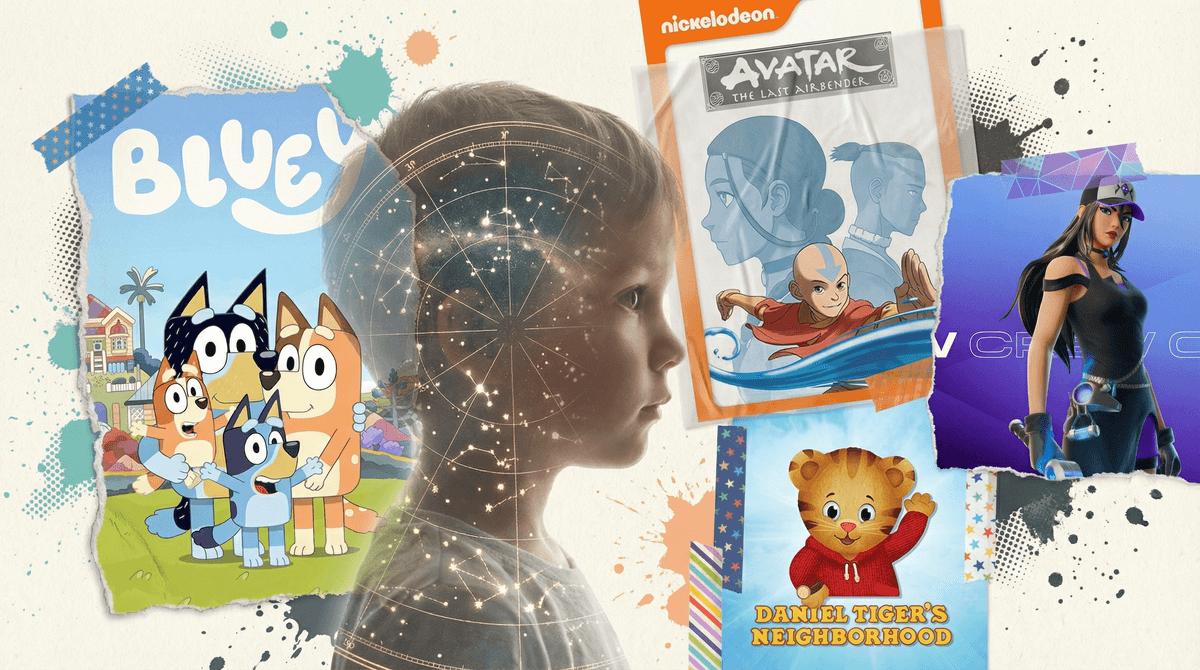
Every time your kid watches a show, plays a game, or scrolls through content, they're absorbing messages about how people behave, what's cool, what's funny, and what's possible. The characters they see repeatedly? Those become their media role models—the fictional (or sometimes real) people who shape their understanding of the world.
And here's the thing: role models aren't just the "good guys" your kids consciously admire. They're also the snarky sidekick, the popular mean girl, the YouTuber who screams at their screen, the protagonist who solves every problem with violence. Kids absorb behavioral cues from all of them, often without realizing it.
This isn't about panicking that your 8-year-old watched one episode of something questionable. It's about understanding that the cumulative effect of the characters they spend time with actually matters—a lot more than we sometimes want to admit.
Research consistently shows that media role models influence kids' behavior, values, and aspirations in measurable ways. Kids who regularly see characters solving conflicts through communication are more likely to try that approach themselves. Kids who watch content where female characters are primarily defined by their appearance internalize those messages about what matters.
The impact shows up in surprising places:
-
Prosocial behavior: Studies show that kids who watch shows with characters demonstrating kindness, cooperation, and empathy (think Bluey or Avatar: The Last Airbender) are more likely to exhibit those behaviors themselves.
-
Career aspirations: The "Scully Effect" is real—girls who watched The X-Files were significantly more likely to pursue STEM careers. Representation in media literally expands kids' sense of what they can become.
-
Aggression and conflict resolution: Kids who primarily consume content where problems are solved through physical aggression or verbal cruelty start to see those as normal, default responses.
-
Body image and self-worth: Repeated exposure to unrealistic body standards and appearance-focused narratives (looking at you, certain Disney Channel shows and a LOT of YouTube content) shapes how kids see themselves.
The tricky part? Kids don't just copy the heroes. They absorb the entire behavioral ecosystem of the content they consume. If the "funny" character is constantly making mean jokes and everyone laughs, your kid learns that cruelty can be comedy. If the cool character solves problems by being the loudest and most aggressive, that becomes a template.
This conversation gets more complex when we move beyond traditional TV and movies into YouTube and gaming content, where the "characters" are often real people or player-created avatars.
YouTube creators are particularly powerful role models because they speak directly to the camera, creating a parasocial relationship that feels like friendship. When a creator your kid watches daily exhibits toxic behavior—screaming, rage-quitting, making cruel jokes, promoting hustle culture to 9-year-olds—that's not just entertainment. That's a behavioral model delivered with the intimacy of a best friend.
And in games like Roblox or Fortnite, your kid isn't just watching characters—they're being characters and interacting with other players. The behavioral norms they encounter there (how people treat each other, what's considered funny, what language is acceptable) become part of their social learning.
You can't control every character your kid encounters, and trying to will drive you (and them) bananas. But you can be intentional about the overall media diet and the role models who get the most screen time.
Some practical approaches:
Curate the primary content
The shows, games, and creators your kid returns to repeatedly are the ones that matter most. Make sure at least some of those feature characters who demonstrate the values you want to reinforce. This doesn't mean everything has to be educational or wholesome—it means being thoughtful about the behavioral patterns they see most often.
Watch for behavioral echoes
If your kid suddenly starts talking like a character or creator (and not in a cute way), that's information. Are they adopting a sarcastic, dismissive tone? Making jokes at others' expense? Expressing anxiety about productivity or success? Those are clues about which role models are landing.
Talk about the characters
Make it normal to discuss media role models explicitly: "I noticed that character always interrupts people—do you think that's a good way to have a conversation?" or "The way that YouTuber talks about losing is pretty intense. How do you feel when you lose at something?"
You're not ruining the fun—you're teaching media literacy and helping your kid develop a more conscious relationship with the content they consume.
Diversify the role model portfolio
Make sure your kid encounters characters of different genders, races, abilities, and personality types in meaningful roles. This isn't just about representation (though that matters)—it's about expanding their understanding of what different kinds of people can do and be.
Remember: You're a role model too
Kids are watching how you interact with media and technology. Do you rage at video games? Doomscroll while stressed? Make snarky comments about people on TV? They're learning from that too.
Ages 3-7: At this age, kids have a hard time distinguishing fantasy from reality, and they're incredibly impressionable. The role models they see should be explicitly prosocial. Shows like Daniel Tiger's Neighborhood and Bluey are popular for good reason—they model emotional regulation and positive behavior in ways young kids can absorb and practice.
Ages 8-12: Kids this age are developing their own identities and are particularly susceptible to "cool" characters and popular creators. This is when you want to be especially thoughtful about YouTube and gaming content. They're old enough to start discussing character choices and motivations, which makes this a great age for building media literacy skills. Shows like Avatar: The Last Airbender offer complex characters making real moral choices—perfect for discussion.
Ages 13+: Teens can handle more complex and flawed characters, and they should. But they're also navigating intense social pressures and identity formation, which means media role models can have outsized influence on their sense of what's normal or desirable. The goal here isn't to control their media diet but to maintain open conversations about what they're consuming and why certain characters or creators appeal to them.
Media role models aren't just entertainment—they're teaching your kids how to be human. Not in a scary, deterministic way, but in a real, cumulative, "this is how people act" way.
The good news: You don't need to ban everything or only allow PBS Kids until college. You just need to be intentional about the overall pattern of role models your kid encounters, especially the ones they see most often.
The better news: Having these conversations with your kids—about characters, choices, behavior, and values—is actually one of the most effective ways to build their critical thinking skills and help them become conscious media consumers.
Your kid will encounter problematic characters and questionable role models. That's inevitable. But if you've helped them develop the skills to think critically about what they're seeing, they'll be equipped to navigate that complexity.
-
Take inventory: What shows, games, and creators does your kid engage with most often? What behavioral patterns do those role models exhibit?
-
Start one conversation: Pick a character or creator your kid loves and ask them what they like about that person. Listen for what values or behaviors are appealing.
-
Introduce one new option: Find one show, game, or creator that features role models you feel good about and make it easily accessible. Check out our guides for age-appropriate recommendations.
-
Model conscious media consumption: Talk about your own media choices and what you value in the content you consume. Let your kid see you being thoughtful about it.
Want to dig deeper into specific shows or creators your kid loves? See guidance on media role models and get personalized guidance for your family.