

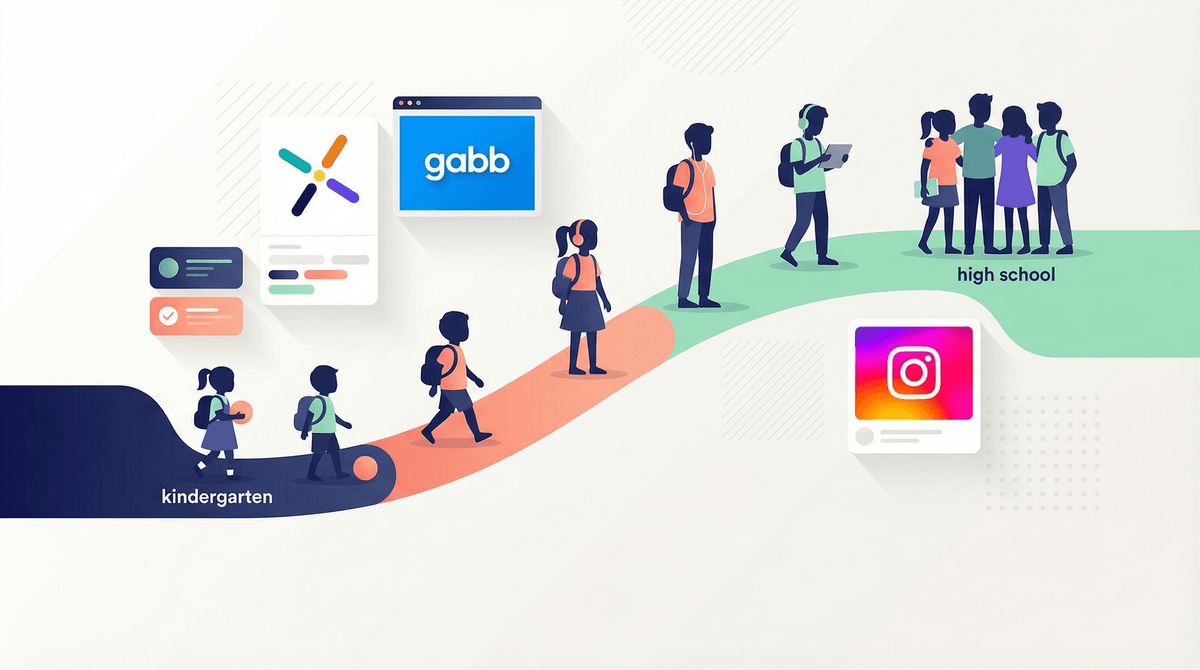
Let's be honest: you're not just wondering when other kids will get phones. You're trying to figure out when the pressure will really hit, when your kid will be the "only one" without a phone (spoiler: they won't be), and when you'll need to make this decision yourself.
The phone question isn't just about the device—it's about texting, group chats, social coordination, and independence. And the timeline? It's shifting earlier every year, but not as dramatically as the panic suggests.
Here's what the data actually shows in our community:
Elementary School (K-5th Grade)
Right now, about 68% of elementary-aged kids don't have any phone at all. Let that sink in when your third grader insists "everyone" has one.
Of the kids who do have devices:
- 22% have smartphones (usually hand-me-downs with restrictions)
- 10% have basic phones or "dumbphones" (calling and texting only)
The texting picture is even more telling: 55% of elementary kids aren't texting at all. Among those who are, most (25%) are only texting family members. Just 15% are texting friends, and only 5% are in group chats.
Translation: If you're holding the line in elementary school, you're in the majority, even if it doesn't feel that way at pickup.
Middle School (6th-8th Grade)
This is where things shift. The phone question becomes less "if" and more "when" and "what kind." But even here, there's more variation than you'd think.
Group chats become the real pressure point—60% of kids still aren't in them, but that means 40% are navigating school project groups, sports team coordination, and social planning via text. The "I can't do the homework because I didn't see the group chat" argument arrives in full force.
About 30% of middle schoolers are using their phones for independence—getting picked up from activities, coordinating with parents, managing their own schedules.
High School (9th-12th Grade)
By high school, the phone landscape looks completely different. Most teens have smartphones, and the question shifts from "do they have one" to "what apps are they using" and "how are we managing screen time".
The timeline matters because social coordination is real. When the soccer team communicates practice changes via group text, your kid genuinely might miss information. When friends make weekend plans in a group chat, your kid genuinely might get left out.
But here's why it doesn't matter as much as you think: Every family's timeline is different, and that's okay. The data shows significant variation at every grade level. There's no magic age where everyone suddenly has a phone.
Some families start with a basic phone at 10 for safety and coordination. Others wait until high school for a full smartphone. Some never give their kids personal devices and use family tablets instead. All of these approaches exist in your community right now.
Instead of "when will other kids get phones," try asking:
What specific need are we solving?
- Safety and pickup coordination? A basic phone or smartwatch might work.
- Social connection? Consider whether a family iPad with messaging apps meets that need.
- Independence? Think about what level of independence actually makes sense for your kid's maturity.
What are we actually worried about?
- Social media access? You can delay that even with a smartphone.
- Screen addiction? That's about boundaries and habits, not just device ownership.
- Safety concerns? Both having and not having a phone come with different safety considerations.
What does our specific kid need? The eighth grader who takes the bus across town has different needs than the one who walks three blocks to school. The kid with ADHD who uses their phone for organization has different needs than the anxious kid who spirals on Instagram.
Here's a framework that might help:
Ages 8-10: If you're considering a device, think basic—a Gabb phone, Pinwheel, or hand-me-down smartphone with heavy restrictions. Focus on teaching digital citizenship basics before adding complexity.
Ages 11-13: This is the most variable range. Some kids are ready for more independence and responsibility; others aren't. Consider starting with limited functionality and earning more access over time. Group chats become relevant—you'll need a plan for how your kid stays connected to teams and friend groups.
Ages 14+: Most teens will need smartphone functionality for school, activities, and social life. The focus shifts to teaching healthy boundaries, privacy awareness, and social media literacy.
The "right" age for a phone isn't about what other families are doing—it's about what makes sense for your kid, your family values, and your specific circumstances.
Yes, you'll face pressure. Yes, your kid will say "everyone has one." And yes, there will be moments when not having a phone creates genuine inconvenience.
But there will also be families making the same choice you are, even if they're not as visible. The data shows significant diversity in every grade level. You're not alone, whatever you decide.
Ready to dig deeper?

The phone decision isn't one-and-done. It's an ongoing conversation about responsibility, independence, and values. Start there, and the timeline will work itself out.