

What Is Fantasy Violence and Why It Matters for Your Kids' Media Diet
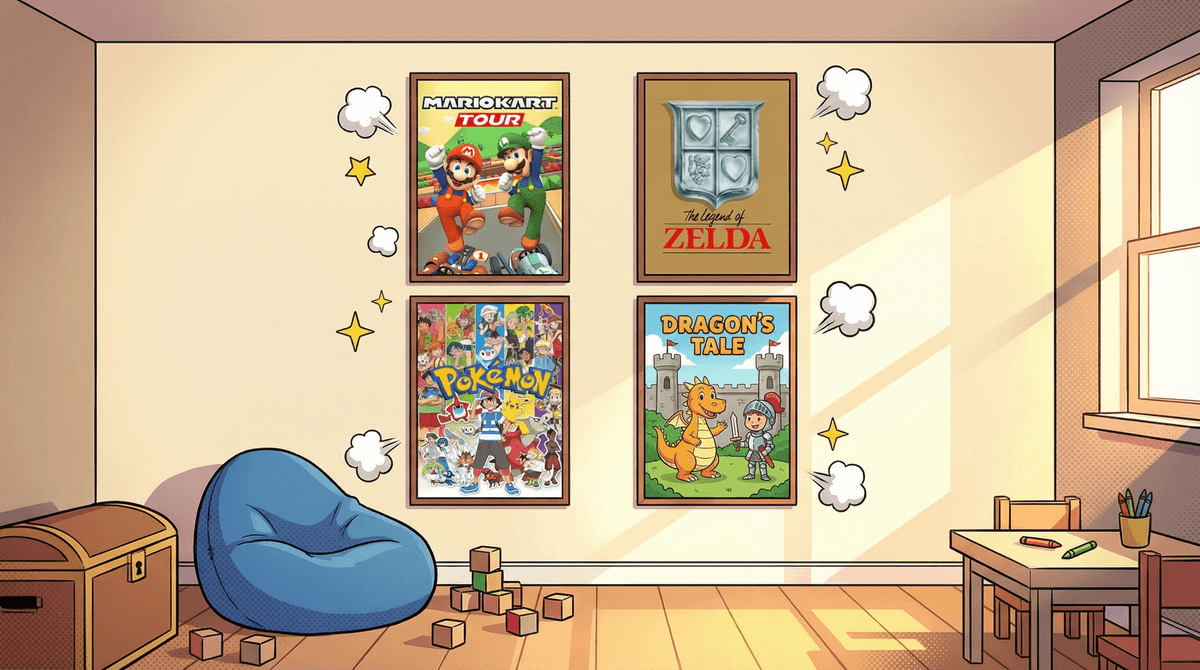
Fantasy violence is exactly what it sounds like: violence that happens in clearly fictional, often cartoonish or magical contexts. Think Paw Patrol rescues where vehicles crash spectacularly but everyone's fine, Mario Kart banana peels that send racers spinning, or Pokemon battles where creatures "faint" instead of die.
The key distinction? Fantasy violence is removed from reality. There's no blood, no realistic consequences, and often no human victims. When Link swings his sword in The Legend of Zelda, enemies disappear in a poof of smoke. When cartoon characters get flattened by anvils in old Looney Tunes, they pop back up in the next scene.
This is different from realistic violence—the kind you see in shows like Breaking Bad or games like Call of Duty, where violence has weight, consequences, and looks like something that could actually happen in our world.
Here's where it gets interesting: not all violence affects kids the same way.
Research consistently shows that fantasy violence has minimal to no negative impact on most children, while realistic violence—especially when it's graphic, rewarded, or goes unpunished—can increase aggressive thoughts and desensitize kids to real-world violence.
A landmark 2015 study published in Psychology of Popular Media Culture found that fantasy violence in video games (think cartoon-style combat) showed no relationship with aggressive behavior in children, while realistic violence did. The American Academy of Pediatrics distinguishes between the two in their media guidelines for exactly this reason.
The context matters enormously. When violence is:
- Clearly fantastical or cartoonish
- Has no realistic consequences
- Happens to non-human characters
- Includes humor or absurdity
- Shows clear good vs. evil dynamics
...it's processed differently in kids' brains than realistic depictions of human-on-human violence.
That said—and this is important—fantasy violence still isn't for everyone. Some kids are more sensitive to any kind of conflict or peril. Some families have values that prioritize non-violence in all forms. And age absolutely matters.
Ages 3-5: Even mild fantasy violence can be scary. At this age, kids struggle to distinguish fantasy from reality consistently. A dragon breathing fire in a cartoon might genuinely frighten them, even if it's clearly animated. Stick to truly gentle content like Bluey or Daniel Tiger.
Ages 6-8: Most kids can handle mild fantasy violence—think Minecraft zombies that look like blocky pixels, or Wild Kratts where animals might be in peril but educational content frames everything. They're starting to understand "pretend" more solidly, but still benefit from clear good-guy-wins narratives.
Ages 9-12: This is peak fantasy violence territory. Kids this age can fully distinguish fantasy from reality and often love the excitement of combat in games like Splatoon (where you shoot ink, not bullets) or shows like Avatar: The Last Airbender (which has martial arts combat but in a clearly fantastical world with magic).
Ages 13+: Teens can handle more nuanced violence, but this is actually when you want to start having different conversations—not about whether they can handle it, but about what messages the violence sends. Is violence glorified? Are there consequences? What's the context?
The rating systems acknowledge this distinction. The ESRB (video game ratings) specifically includes "Fantasy Violence" as a content descriptor, separate from "Violence" or "Intense Violence." A game rated E10+ with fantasy violence is fundamentally different from a game rated M for realistic violence.
Your kid's temperament matters more than their age. I know 7-year-olds who laugh at Pokemon battles and 10-year-olds who get upset when characters in Roblox games get eliminated. You know your kid.
Co-viewing/co-playing helps enormously. When you're there to point out "wow, that was silly—he just bounced back like nothing happened!" or "remember, this is pretend," you're helping your child process what they're seeing and reinforcing the fantasy-reality distinction.
The "why" behind the violence matters. Fantasy violence in service of a story about friendship, bravery, or problem-solving (The Wild Robot, How to Train Your Dragon) is different from violence that's just there for its own sake.
This is the question I hear most: "But won't fantasy violence desensitize my kid to real violence?"
The research says: not really, not in the way we worry about.
Kids are remarkably good at understanding that cartoon physics don't apply to real life. Your 8-year-old who loves Super Smash Bros isn't learning that it's okay to hit people—they're learning timing, strategy, and how to handle winning and losing.
Desensitization is a real concern with realistic violence, especially when it's:
- Graphic and detailed
- Rewarded without consequences
- Perpetrated by protagonists we're meant to admire
- Presented as normal or inevitable
But a cartoon character getting bonked on the head and seeing stars? That's not teaching anything about real-world violence.
The exception: If your child is already showing aggressive behavior, struggling with impulse control, or has experienced trauma, even fantasy violence might not be appropriate right now. Talk to your pediatrician or a child psychologist about what makes sense for your specific situation.
Fantasy violence is a tool that storytellers use to create conflict, excitement, and stakes in clearly fictional worlds. For most kids at age-appropriate developmental stages, it's not harmful and can even be part of stories that teach valuable lessons about courage, friendship, and standing up for what's right.
But—and this is crucial—you get to decide what's right for your family. If you're uncomfortable with any violence in media, that's completely valid. If you're fine with Mario jumping on Goombas but not okay with Fortnite (which, despite being cartoonish, involves shooting other players), that's a reasonable line to draw.
The key is being intentional rather than just defaulting to whatever's popular. Check the content descriptors. Watch trailers. Play the first level of a game with your kid. Read reviews from other parents.
And remember: the goal isn't to shield kids from every bit of conflict or tension in stories—that would eliminate most good storytelling. The goal is to make sure what they're consuming is appropriate for their age, temperament, and your family's values.
- Check ratings and content descriptors on games, shows, and movies before saying yes
- Try this guide to age-appropriate action content for specific recommendations
- Ask your kid what they think about the violence they see in media—their answers will tell you a lot about how they're processing it
- Set family guidelines that make sense for you, not based on what other families allow
Want to dig deeper into what your kids are actually watching and playing? Get help understanding the content your kids are consuming about your family's specific situation.