

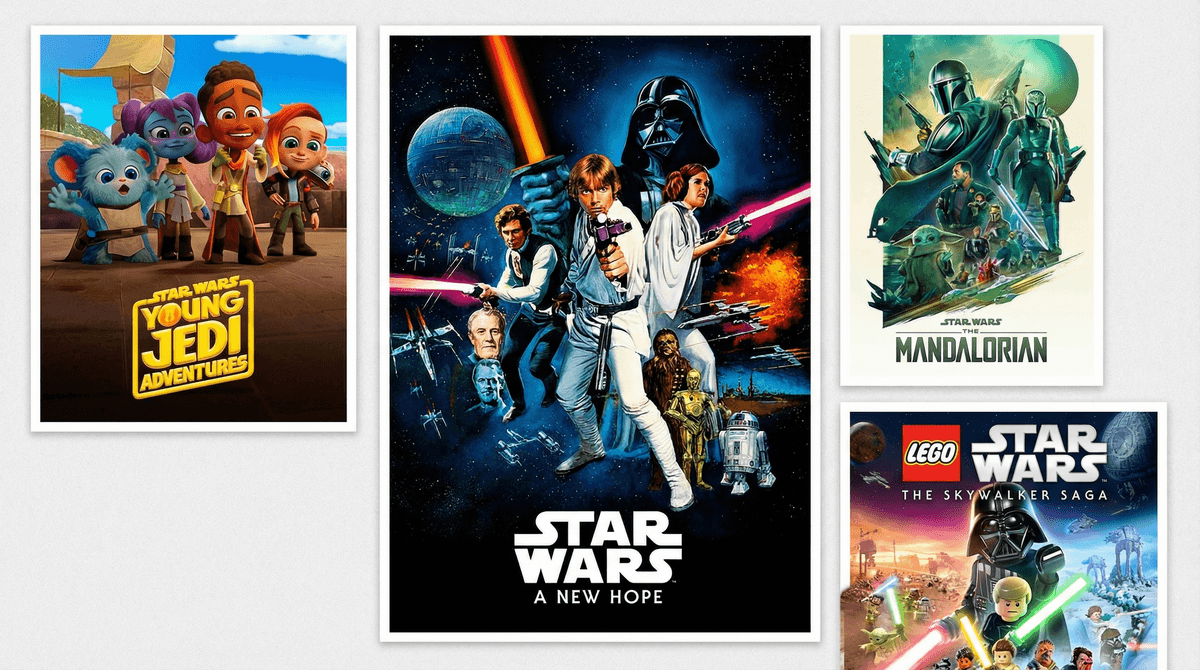
What Age Is Star Wars Appropriate For? The Parents' Guide
The Star Wars saga spans wildly different age appropriateness depending on which movies, shows, and games you're talking about. Here's the quick breakdown:
- Ages 5-7: Start with The Mandalorian, Star Wars: Young Jedi Adventures, or the LEGO Star Wars games
- Ages 8-10: Original trilogy (A New Hope, Empire Strikes Back, Return of the Jedi), The Clone Wars animated series
- Ages 11+: Prequel trilogy, sequel trilogy, Rogue One, Andor
- Ages 13+: Revenge of the Sith (seriously, this one's intense), Andor
The biggest variable isn't just violence—it's emotional intensity, political complexity, and how your kid handles scary imagery.
Star Wars isn't one thing. It's a 47-year-old multimedia empire with movies ranging from "adorable forest teddy bears" to "children being murdered on screen." Saying "my kid watches Star Wars" is like saying "my kid reads books"—cool, but which ones?
The franchise has always walked this weird line between being a space adventure for kids and a genuinely dark mythological saga about fascism, genocide, and family trauma. George Lucas made A New Hope as a throwback to 1930s adventure serials, but by Revenge of the Sith, we're watching a man burn alive while screaming for help.
So let's break this down by what actually matters: the content itself.
Best for Ages 5-7
Honestly? None of the movies are ideal starting points for this age. Even A New Hope—the most kid-friendly theatrical film—has Luke finding his aunt and uncle's charred skeletons, and that's in the first 30 minutes.
If your 6-year-old is obsessed with Star Wars because of friends or older siblings, start with The Mandalorian (more on that below) or jump straight to the LEGO versions, which are genuinely hilarious and sanitize all the dark stuff.
Ages 8-10: The Original Trilogy
This is the sweet spot for most kids to start their Star Wars journey:
A New Hope (1977) - The most accessible entry point. Yes, there's the skeleton scene and Obi-Wan getting sliced, but the violence is mostly laser blasters and explosions. The emotional stakes are clear, the heroes are heroic, and the story structure is classic hero's journey stuff that 8-year-olds can follow.
The Empire Strikes Back (1980) - Darker and more complex, but still appropriate for this age range. The big reveal hits different when you're a kid discovering it fresh (if that's even possible in 2026). The Hoth battle might be intense for sensitive kids, and Luke losing his hand is rough, but it's not gratuitous.
Return of the Jedi (1983) - Ewoks make this the most "kid-friendly" of the original trilogy, though Jabba's palace has some genuinely creepy moments and the Emperor's force lightning scene is pretty intense. Most 9-year-olds can handle it.
The key question: Can your kid handle the good guys losing sometimes? Empire ends on a massive cliffhanger with Han frozen in carbonite. If your kid melts down when things don't resolve perfectly, maybe wait.
Ages 10-12: The Prequels (Except Revenge of the Sith)
The Phantom Menace (1999) - This movie gets roasted by adult fans, but kids? Kids often love it. It's got podracing, a kid protagonist, and Jar Jar Binks (who, yes, is annoying, but 10-year-olds don't care). The Darth Maul fight is incredible, and while he gets cut in half, it's not graphic. The whole "trade dispute" plot is boring as hell, but that's not an age-appropriateness issue.
Attack of the Clones (2002) - The arena battle is fun, the romance subplot is cringey (even kids notice), and there's a scene where Anakin admits to murdering an entire village including children. That's... a lot. But it's discussed, not shown. Age 11+ can probably handle the moral complexity.
Ages 12-13+: The Heavy Stuff
Revenge of the Sith (2005) - This is where we need to pump the brakes. This movie is dark. Anakin murders children (shown on screen, though not graphically). He force-chokes his pregnant wife. He gets his limbs cut off and burns alive while screaming. The whole third act is watching a good person become a monster, and it's genuinely disturbing. PG-13 rating, but I'd say 13+ minimum, and even then, know your kid.
The Sequel Trilogy - The Force Awakens, The Last Jedi, and The Rise of Skywalker are all PG-13 and feel like it. The violence is more intense than the originals, and there's a patricide scene in Force Awakens that's emotionally brutal. Age 11+ for most kids, but these don't pull punches.
Rogue One (2016) - This is a war movie that happens to be set in the Star Wars universe. The entire main cast dies. It's beautifully made and emotionally powerful, but it's heavy. Age 12+ minimum.
Solo (2018) - Honestly the most "fun" of the newer movies. Heist film energy, not too dark, though there's some violence. Age 10+ works.
Here's the secret: the shows are often better starting points than the movies for younger kids.
Star Wars: Young Jedi Adventures (Ages 4-7)
This is the "Bluey of Star Wars"—actually made for little kids. Bright, colorful, educational messages about teamwork and problem-solving. If you want to introduce Star Wars to a preschooler, this is your answer.
The Mandalorian (Ages 7+)
The show that saved Star Wars for a lot of families. It's got Grogu (Baby Yoda), a stoic bounty hunter dad, and episodic adventures that don't require 40 years of lore knowledge. There's violence—Mando is literally a bounty hunter—but it's not graphic. The emotional core is about found family and protection, which kids totally get.
One caveat: Some episodes get darker than others. Season 1, Episode 8 has some intense moments. Preview episodes if you're worried.
Star Wars: The Clone Wars (Ages 8-12)
This animated series is seven seasons of content between Episodes II and III. It starts kid-friendly and gets progressively more mature. Early seasons are great for 8-year-olds. Later seasons deal with war crimes, political assassination, and moral ambiguity. It's some of the best Star Wars storytelling ever made, but you'll want to watch alongside younger kids.
Star Wars Rebels (Ages 8+)
Set between Episodes III and IV, this show is more consistently kid-appropriate than Clone Wars. It's got heart, humor, and a ragtag crew of heroes. Great for families watching together.
Andor (Ages 14+)
This is prestige television that happens to be Star Wars. It's slow, political, and genuinely adult in its themes about fascism and resistance. There's torture, execution, and moral complexity. This is not for kids. This is for you to watch after the kids go to bed and remember why you loved Star Wars in the first place.
LEGO Star Wars Games (Ages 6+)
These games are perfect for introducing Star Wars to kids. They're funny, they're co-op, and they turn all the dark stuff into slapstick comedy. Your kid can experience the whole saga without the trauma. The Skywalker Saga covers all nine films and is genuinely excellent.
Star Wars Jedi: Fallen Order / Jedi Survivor (Ages 12+)
These are single-player action games with Souls-like combat (meaning: challenging and sometimes frustrating). The stories are great, but they're darker and more complex. Not for younger kids, but great for teens who can handle difficulty and mature themes.
Star Wars Squadrons (Ages 10+)
Space combat sim. If your kid loved the trench run in A New Hope, this is that feeling in game form. Can be intense but not inappropriate.
The Violence Question
Star Wars violence is mostly laser blasters and lightsabers. People get shot and fall down. Limbs get cut off (but it's always cauterized, so no blood). The original trilogy was designed to be intense but not graphic—Lucas wanted kids to feel the stakes without nightmares.
The bigger issue is emotional intensity. Watching Anakin turn evil, watching characters you love die, watching the heroes lose—that stuff can hit hard for kids who aren't ready.
The Scared Kid Factor
Darth Vader is genuinely scary for little kids. His breathing, his mask, his voice—he's designed to be terrifying. The Emperor is nightmare fuel. Jabba's palace has creatures that gave millennials trauma. If your kid is sensitive to scary imagery, wait on the movies and start with the lighter shows.
The Mythology Problem (Or: Why Kids Ask Theological Questions)
Star Wars is basically a religion. The Force is a mystical energy field that binds the universe together. Jedi are warrior monks. There's talk of destiny, balance, and chosen ones. Kids will ask questions about how the Force works, whether it's real, and how it relates to your family's actual beliefs.
This is actually kind of great? Star Wars is a fantastic framework for talking about moral philosophy, destiny vs. choice, and what it means to be good. Just be ready for it.
The Fandom Problem
Star Wars fans are... a lot. If your kid gets into Star Wars, they'll encounter online communities that are passionate, opinionated, and sometimes toxic. The sequel trilogy discourse especially got ugly. This is more of an issue for tweens and teens who might dive into Reddit or YouTube comments.
Talk to your kids about healthy fandom engagement and the difference between loving something and making it your whole identity.
For Ages 7-9: The "Fun First" Order
- The Mandalorian (Season 1)
- A New Hope
- Return of the Jedi (yes, skip Empire for now—it's dark)
- Empire Strikes Back (when they're ready for complexity)
For Ages 10-12: The "Chronological-ish" Order
- The Phantom Menace
- Attack of the Clones
- The Clone Wars (selected arcs)
- Revenge of the Sith (if ready)
- Original trilogy
- The Mandalorian
For Ages 13+: The "Machete Order"
This is for kids who can handle complexity and want the full experience:
(This order treats the prequels as a flashback after the Empire reveal, which is actually pretty brilliant.)
Star Wars is not one age rating. It's a spectrum from "adorable puppet baby" to "watching democracy die." Your job is to match the right Star Wars content to your kid's emotional readiness, not just their age.
Start with The Mandalorian or the LEGO games for younger kids. Move to the original trilogy around age 8-9. Save the heavy stuff—Revenge of the Sith, Rogue One, Andor—for when they're genuinely ready for moral complexity and loss.
And remember: Star Wars is at its best when it's a shared experience. Watch together. Talk about the Force. Debate whether Han shot first. Let your kid pick a favorite character (and don't judge them when it's Jar Jar). This is one of the great multi-generational stories we have—use it to connect, not just to entertain.
May the Force be with you. (Sorry, had to.)
Want more Star Wars guidance?
Ready to map out your family's Star Wars journey? Take the Screenwise survey to get personalized recommendations based on your kids' ages, sensitivities, and interests.