

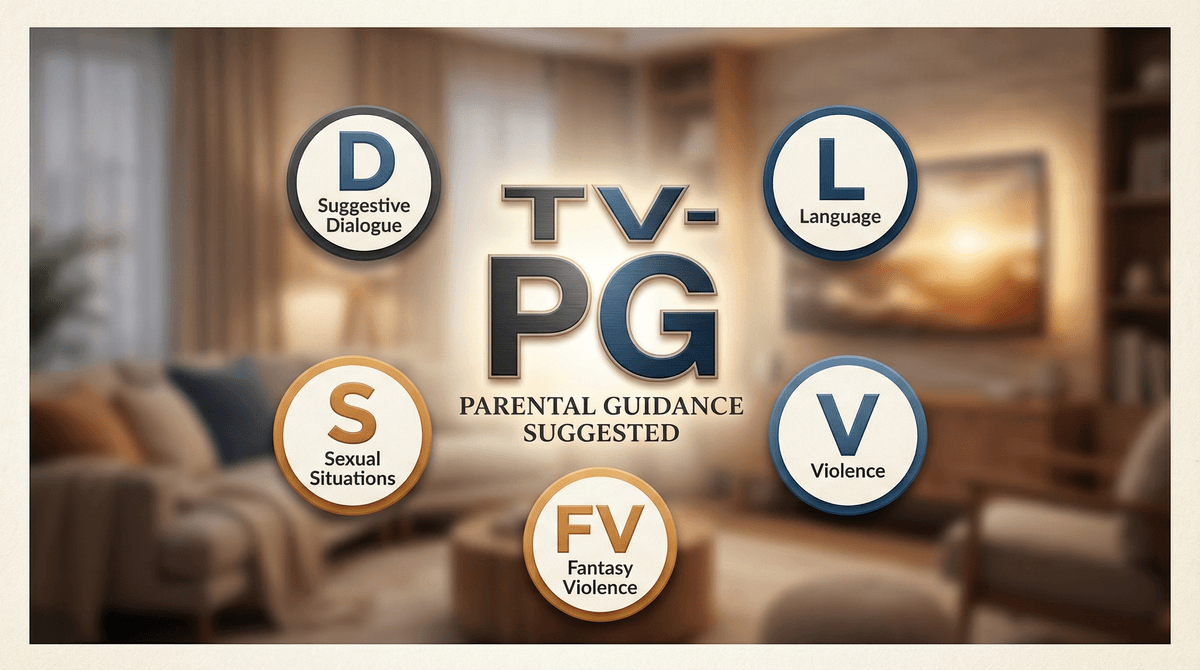
TV-PG Ratings: What Parents Actually Need to Know
TL;DR: TV-PG means "Parental Guidance Suggested" — content may be unsuitable for younger children. But those two letters tell you almost nothing useful. The real info is in the content descriptors (D for dialogue, L for language, S for sexual content, V for violence, FV for fantasy violence). A show rated TV-PG-V is very different from TV-PG-D. Most networks are hilariously inconsistent with ratings, and streaming platforms barely enforce them. Your move: actually watch a few minutes yourself, check Common Sense Media, and decide what works for your family.
TV-PG is the second rating in the TV Parental Guidelines system (TV-Y and TV-Y7 come first for younger kids). It's designed for programs that may contain material parents find unsuitable for younger children — think moderate language, some suggestive dialogue, mild violence, or brief nudity.
The rating was created in 1997 after the Telecommunications Act required a TV rating system. Networks self-rate their content, which is... exactly as reliable as it sounds.
The official definition: "This program contains material that parents may find unsuitable for younger children. The theme itself may call for parental guidance and/or the program may contain one or more of the following: some suggestive dialogue (D), infrequent coarse language (L), some sexual situations (S), or moderate violence (V)."
Cool, super helpful, right? Let's break down what that actually means in practice.
This is where the useful information lives. TV-PG can include one or more of these letters:
TV-PG-D (Suggestive Dialogue): Innuendo, sexual references, crude humor. Think The Simpsons or Friends — jokes that sail over younger kids' heads but make you cringe when you realize your 10-year-old just repeated that line at dinner.
TV-PG-L (Language): Mild profanity. "Damn," "hell," occasional bleeped words, or creative substitutes. Not the hard stuff, but more than you'd hear on Bluey.
TV-PG-S (Sexual Situations): Kissing, romance, implied sexual activity. Rarely explicit, but enough to make you suddenly very interested in your phone when watching with your kid.
TV-PG-V (Violence): Moderate violence — cartoon violence, fantasy combat, some blood. Avatar: The Last Airbender is TV-PG-V. So is WWE. Yeah.
TV-PG-FV (Fantasy Violence): This one's technically for TV-Y7-FV, but you'll see it referenced in discussions about TV-PG shows too. Animated or clearly unrealistic violence.
Multiple descriptors: A show can have several. TV-PG-DLV means dialogue, language, AND violence. That's a different beast than just TV-PG-D.
The TV rating system relies on networks rating their own content. There's no central review board double-checking. This creates some truly baffling situations:
- Stranger Things started as TV-14 but honestly should be TV-MA for later seasons (body horror, intense violence, genuine terror).
- The Flash is TV-PG despite regular deaths, intense peril, and some genuinely dark storylines.
- Gilmore Girls is TV-PG but the dialogue moves at 900 words per minute with constant pop culture references and sexual innuendo.
- SpongeBob SquarePants is TV-Y (all children) but has episodes with surprisingly crude humor.
Networks have incentives to rate shows lower than they probably should be — a TV-PG rating reaches more viewers and advertisers than TV-14. Streaming platforms are even worse because they're barely regulated at all.
Here's what you're actually signing up for with common TV-PG shows:
Sitcoms and comedies: The Office, Parks and Recreation, Brooklyn Nine-Nine — sexual innuendo, relationship drama, workplace humor that occasionally gets crude. Your 8-year-old probably won't get most of the jokes, but your 12-year-old definitely will.
Animated shows: Gravity Falls, The Owl House, Amphibia — fantasy violence, some scary imagery, occasional mild language. Generally great for kids 8+ but can have genuinely intense moments.
Action/adventure: The Mandalorian, Avatar: The Last Airbender — combat, weapons, characters in peril. Violence is usually not graphic but definitely present.
Reality TV: Competition shows, cooking shows, home improvement — usually TV-PG but watch for interpersonal drama, occasional language, and stress-inducing situations that might not be great for anxious kids.
The "PG" stands for "Parental Guidance" for a reason — it's not a green light, it's a yellow light that says "parent should probably be involved here."
Ages 6-8: TV-PG is often too much. Stick with TV-Y7 or TV-G unless you've previewed it. Even "mild" content can be surprisingly intense for this age group. A show like The Bad Batch (TV-PG) has war violence that can be genuinely upsetting.
Ages 9-11: This is the sweet spot for TV-PG content, especially TV-PG-V shows with fantasy violence. Kids can handle more complex storylines and moderate action. But TV-PG-D and TV-PG-S shows might still go over their heads (or worse, not go over their heads).
Ages 12+: Most TV-PG content is fine, though you might want to start looking at TV-14 shows and deciding what works for your family. The gap between TV-PG and TV-14 is smaller than you think.
The sibling problem: If you have a 7-year-old and a 12-year-old, TV-PG creates the classic dilemma — too mature for the younger kid, too babyish for the older one. Welcome to the eternal struggle of finding shows everyone can watch together.
Netflix, Disney+, Hulu, Max, Paramount+ — they all use the TV rating system, but enforcement is inconsistent at best:
- Autoplay previews can show content from TV-14 or TV-MA shows even in kids' profiles
- "Because you watched X" recommendations are chaotic and don't respect rating boundaries
- International content often has different standards (looking at you, anime that's rated TV-PG in the US but would be TV-14 anywhere else)
- Parental controls exist but are buried in settings and easy for kids to bypass
Disney+ is probably the most consistent because their brand depends on it. Netflix is the Wild West. Read this guide about setting up parental controls on streaming platforms if you haven't already.
1. Watch the first episode yourself (or at least the first 10 minutes). You'll know immediately if it's right for your kid. Ratings lie, your gut doesn't.
2. Check the content descriptors, not just the rating. TV-PG-V is different from TV-PG-D. Know what you're dealing with.
3. Use Common Sense Media. Their reviews include specific age recommendations and detailed content breakdowns from both parents and kids. Way more useful than a two-letter rating.
4. Ask other parents. Group chats exist for a reason. "Has anyone let their 9-year-old watch The Mandalorian?" is a totally reasonable question.
5. Co-watch when possible, especially for new shows. You'll catch things that matter to your family that might not bother others (or vice versa).
6. Remember that ratings don't account for your kid's specific sensitivities. Some kids are fine with fantasy violence but terrified of jump scares. Some can handle mature themes but are disturbed by animal deaths. You know your kid better than any rating system.
TV-PG is a suggestion, not a rulebook. It means "hey parent, you should probably know what's in this before your kid watches it." The content descriptors (D, L, S, V) tell you more than the rating itself, but even those are inconsistently applied.
The rating system was designed in 1997 — before streaming, before YouTube, before kids had tablets in their rooms. It's doing its best, but it's not equipped for how we actually consume media now.
Your actual strategy: Preview content when you can, use multiple sources for guidance (Common Sense Media, other parents, your own judgment), and accept that you'll occasionally get it wrong. Your kid will see something you wish they hadn't, or you'll say no to something that turns out to be totally fine. That's just part of it.
And if you're trying to figure out what shows are actually worth your time for family viewing, we've got you covered there too.