

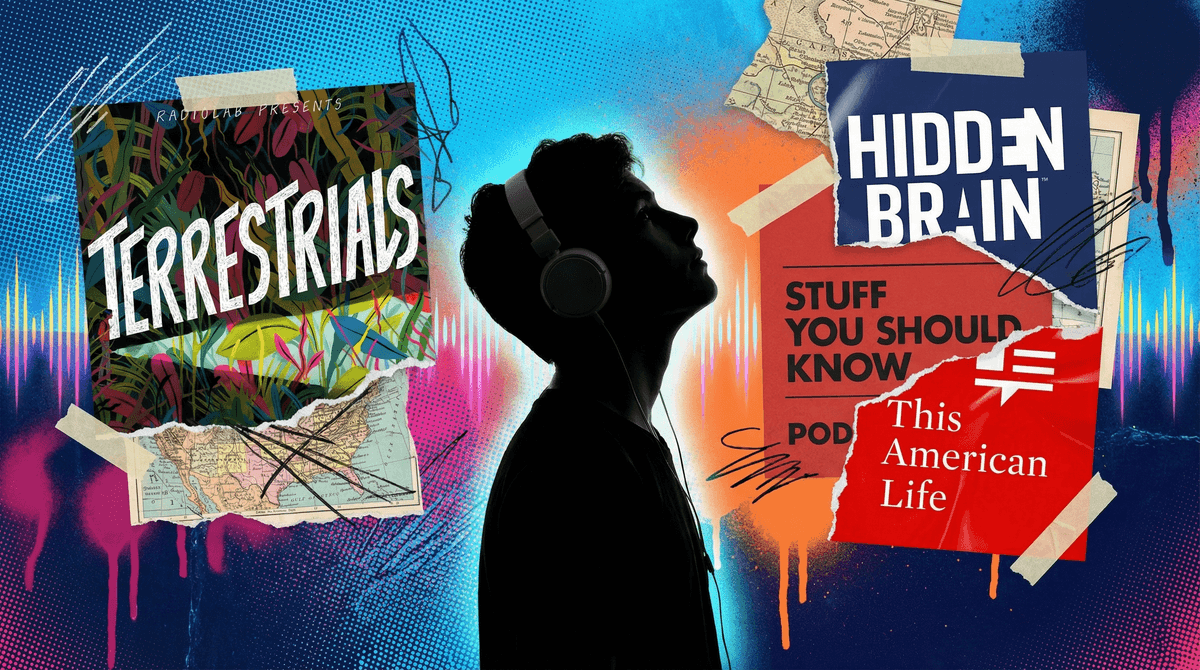
Podcasts are having a moment with teenagers, and honestly? This is one digital trend worth celebrating. Unlike the dopamine slot machines of TikTok and Instagram, podcasts offer something increasingly rare: long-form content that requires actual attention. They're audio shows that teens can stream or download—covering everything from true crime to science, comedy to current events, mental health to pop culture deep dives.
The podcast landscape for teens has exploded in the past few years. We're not just talking about educational content disguised as entertainment (though there's plenty of that). There are genuinely engaging shows made specifically for teenage audiences that tackle complex topics with nuance and respect for their intelligence.
Podcasts fit perfectly into teenage life. They can listen while doing homework (debatable whether this is actually effective, but they're doing it anyway), walking to school, working out, or lying in bed when they're supposed to be sleeping. It's multitasking-friendly content that doesn't require staring at a screen—which, let's be honest, is a welcome break.
But here's what's really interesting: podcasts offer teens a way to explore ideas and identities privately. A 14-year-old questioning their sexuality can listen to LGBTQ+ stories without anyone knowing. A teen interested in politics can dive deep into issues without performing their opinions for their peer group. There's something beautifully low-stakes about podcast consumption.
Plus, podcasts make teens feel sophisticated. They're consuming "adult" media, having complex thoughts, and—this is key—they're actually learning things they want to know about, not just what's on the curriculum.
Unlike most digital media, podcasts actually encourage:
Critical thinking: Good podcasts present arguments, interview experts, and explore multiple perspectives. Teens have to follow complex narratives and process information without visual cues.
Extended attention spans: A typical podcast episode is 30-60 minutes. That's an eternity in TikTok time, and it's genuinely training their brains to focus longer.
Vocabulary and communication skills: Teens absorb sophisticated language patterns and learn how smart people discuss difficult topics.
Curiosity: The podcast format naturally leads to rabbit holes. One episode about space leads to three about physics leads to a deep dive into the philosophy of time.
That said, not all podcasts are created equal, and the medium has its own set of challenges.
Mature content is everywhere: Many popular teen podcasts tackle heavy topics—sexual assault, mental health crises, graphic true crime. Unlike TV shows with ratings, podcasts often have vague content warnings or none at all. Your 13-year-old could easily stumble into a detailed discussion of a serial killer's methodology.
Parasocial relationships are real: Teens can develop intense one-sided relationships with podcast hosts, feeling like they're friends. This isn't inherently bad, but it can influence their opinions and values significantly.
Misinformation and bias: Just because someone has a microphone and sounds confident doesn't mean they're right. Teens (and adults, let's be real) aren't always great at identifying bias or fact-checking podcast claims.
True crime obsession: The true crime genre is massively popular with teens, especially girls. While it can spark interest in criminal justice and psychology, it can also be genuinely disturbing and sometimes glamorizes violence or disrespects victims.
Ages 11-13: Start Here
For younger teens, look for podcasts specifically made for their age group:
- Brains On! and Smash Boom Best - Science and debate in accessible formats
- Wow in the World - Still engaging even for tweens
- Short & Curly - Ethics and philosophy for kids
- The Past and The Curious - History stories
These are designed with younger audiences in mind, so content is vetted and age-appropriate.
Ages 14-16: Expanding Horizons
Middle high schoolers can handle more mature content, but preview first:
- Radiolab - Science and philosophy (some episodes are intense)
- This American Life - Storytelling that varies widely in content
- Stuff You Should Know - Accessible deep dives on random topics
- Hidden Brain - Psychology and human behavior
For this age group, co-listening to a few episodes helps you understand the tone and content level.
Ages 17-18: Almost Adult Territory
Older teens can handle most adult podcasts, but you still want to know what they're consuming:
- Serial and other investigative journalism
- The Daily - Current events from the New York Times
- Freakonomics Radio - Economics and social science
- Code Switch - Race and identity
Even at this age, checking in about what they're learning keeps communication open.
Some podcast content genuinely isn't appropriate for teens:
Graphic true crime: Detailed descriptions of violence, sexual assault, or child abuse. Shows like "My Favorite Murder" are popular but can be traumatizing.
Conspiracy theories: Podcasts that present fringe theories as fact without critical analysis. This is where misinformation really takes root.
Toxic relationship advice: Some popular podcasts normalize unhealthy relationship dynamics or promote harmful gender stereotypes.
Extreme political content: Not because teens shouldn't learn about politics, but because some podcasts radicalize rather than educate.
If you discover your teen is deep into concerning content, don't just ban it. That makes it forbidden fruit. Instead, listen to an episode yourself and have a real conversation about what they find compelling and what concerns you.
The best approach? Show genuine interest without judgment.
"I noticed you're really into that podcast—what's it about?" works way better than "What are you listening to? Is it appropriate?"
Try co-listening to something together. Not in a "we're monitoring you" way, but in a "let's share this experience" way. Finding podcasts that genuinely interest both of you can create amazing conversation opportunities.
Ask questions that show you value their opinions:
- "What makes you trust this host?"
- "Do you think they're presenting all sides of the story?"
- "How do you feel after listening to this?"
This teaches critical media literacy without being preachy.
1. Ask for their current rotation: Just ask what they're listening to. Most teens will happily share if you're genuinely curious.
2. Listen to one episode yourself: You don't need to audit everything, but sampling their favorites gives you context.
3. Create a shared playlist: Suggest trading podcast recommendations. You share one, they share one. It's a low-pressure way to expose them to quality content while staying connected to their interests.
4. Set one boundary: If there's content that genuinely concerns you (graphic violence, conspiracy theories), explain why rather than just banning it.
5. Encourage breadth: If they're only listening to one type of content, gently suggest branching out. "Since you love true crime, have you tried investigative journalism podcasts?"
Podcasts are genuinely one of the better digital habits teens can develop. They encourage sustained attention, expose kids to new ideas, and can spark genuine intellectual curiosity. Yes, there are concerns—mature content, misinformation, and the occasional problematic host—but these are manageable with awareness and open communication.
The goal isn't to control every piece of content your teen consumes. It's to help them develop the critical thinking skills to evaluate what they're hearing and the judgment to know when something isn't right for them.
If your teen is choosing podcasts over endless scrolling, that's honestly a win. Your job is just to stay curious about what they're learning and keep the conversation going. And who knows? You might discover your next favorite podcast from them.
Want to explore specific podcasts your teen is interested in? Check out our media pages for detailed breakdowns, or ask our chatbot about specific shows and their age-appropriateness for your family.