

The Ultimate Guide to Football Video Games for Families
TL;DR: The two dominant football video games right now are EA Sports FC 26 (the rebranded FIFA) and Madden NFL 26. Both are rated E for Everyone, which sounds parent-friendly until you realize they both include loot-box-style microtransactions that can drain your bank account faster than your kid can say "just one more pack, I promise." About 55% of families in our community have gaming consoles, and football games are consistently among the most-played titles—so if your kid is asking for one, you're definitely not alone.
Let's cut through the noise: there are two franchises that matter in football gaming right now, and they're both made by EA Sports.
EA Sports FC 26 is the soccer (or football, depending on where you live) simulation that used to be called FIFA until EA lost the licensing rights. Don't let the rebrand confuse you—this is still the same game your kid's been begging for. It features over 17,000 licensed players including stars like Mohamed Salah, Alexia Putellas, and Kylian Mbappé, each with detailed ratings that affect how they perform on the virtual pitch. The game has an overhauled gameplay engine, something called "Manager Live Challenges," and new "Archetypes" that let players shape their club experience.
Madden NFL 26 is the American football counterpart, simulating the 2025 NFL season with real teams, players, and playbooks. Kids can create custom strategies, manage franchises, and compete online. It's the gold standard for NFL simulation and has been for decades.
Both games are rated E for Everyone by the ESRB. The only content descriptor? "Mild Lyrics"—meaning there might be occasional profanity in the background music. That's it. No violence rating, no blood, no mature themes. Just football.
Sounds great, right? Well, hold that thought.
Both EA Sports FC and Madden include something called "Ultimate Team" modes, which are essentially fantasy football meets trading cards meets... a casino? Players can buy "packs" of random player cards using either in-game currency (earned through gameplay) or real money. These packs might contain a superstar player or a bunch of nobodies—you never know until you open them.
This is where the "In-Game Purchases (Includes Random Items)" warning comes in, and it's not just a technicality. Kids can easily spend $5, $10, $20, or more chasing that one player card they want. The randomness triggers the same dopamine response as slot machines, which is why some countries have investigated whether these mechanics constitute gambling.
The reality check: Your kid will almost certainly ask to buy packs. They'll see their friends pull a rare card and want to try their luck. They'll watch YouTube videos of streamers opening hundreds of packs (yes, that's a whole genre of content). And the game will constantly nudge them toward the store with flashy promotions and limited-time offers.
What you can do:
- Set up parental controls at the console level (PlayStation, Xbox, Nintendo Switch all have robust family settings)
- Use EA's Player and Parental Tools to disable or limit spending
- Have a clear conversation about the difference between earning players through gameplay vs. buying them
- Consider setting a monthly "pack budget" if you're comfortable with any spending at all (many families find $10-20/month keeps kids engaged without breaking the bank)
- Disable stored payment methods on the console entirely
The good news? Both games are fully playable without spending a dime. Career modes, exhibition matches, and local multiplayer don't require any purchases. Ultimate Team is optional, even if it doesn't feel that way to your kid.
Both games carry the "Users Interact" label because they support online multiplayer and user-generated content. Your kid can play against strangers on the internet, which means they can also chat with strangers on the internet.
Most interactions in these games are actually pretty tame—people are focused on playing football, not trolling. But toxic behavior exists, especially when competition gets heated. Expect your kid to encounter some trash talk, the occasional rage-quitter, and maybe some language that didn't make it into the "Mild Lyrics" descriptor.
EA's "Positive Play" initiative provides tools for reporting abuse and managing communication settings. You can:
- Disable voice chat entirely
- Restrict text chat to friends only
- Report players for harassment or inappropriate behavior
- Review who your kid is playing with and communicating with
Most kids ages 10+ can handle online play with some guidance. Younger kids (6-9) might be better off sticking to local multiplayer or single-player modes until they're ready for the online environment.
The E rating is technically accurate—there's nothing in these games that's inappropriate for a 6-year-old. But that doesn't mean every 6-year-old will enjoy or understand them.
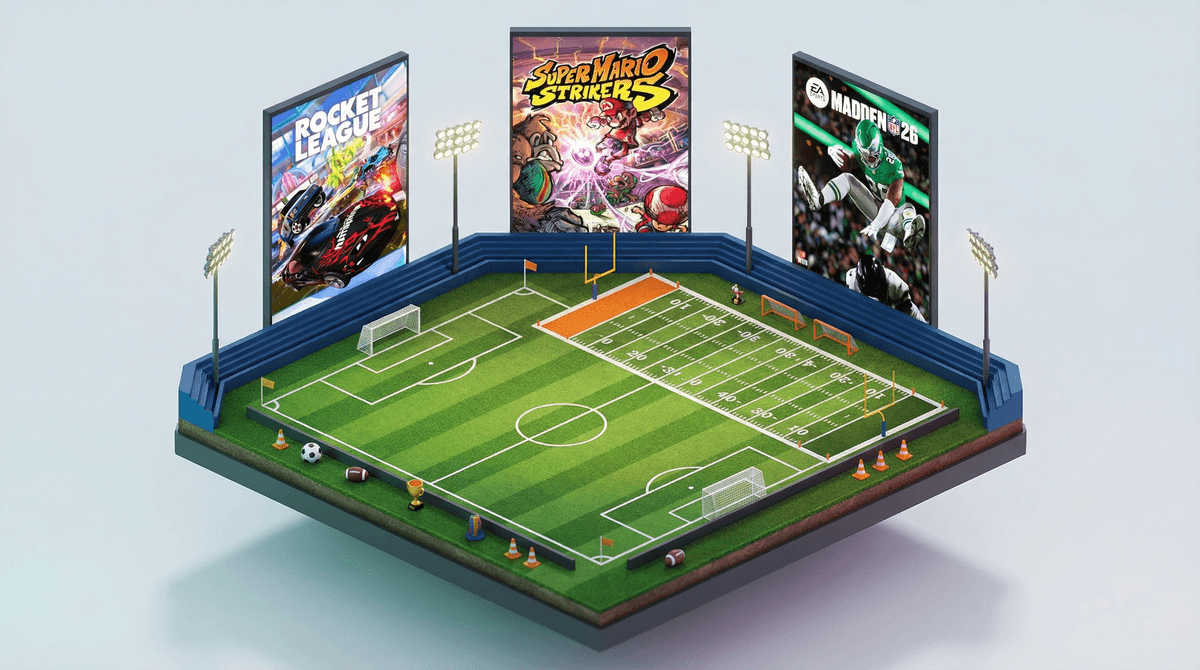
Ages 6-8: These games have complex controls and strategic depth that can frustrate younger kids. They might enjoy kicking the ball around in exhibition mode, but the full experience will likely be over their heads. Consider starting with something simpler like Rocket League (soccer with cars, way easier to grasp) or Mario Strikers (arcade-style soccer with power-ups).
Ages 9-12: This is the sweet spot. Kids this age can understand the rules, execute the controls, and start appreciating the strategic elements. They're also old enough to have conversations about responsible spending and online behavior. Just be prepared for them to get very invested in building their Ultimate Team.
Ages 13+: Teens can fully engage with every aspect of these games, including the more complex franchise management modes. They're also more likely to play competitively online, which means you'll want to have ongoing conversations about sportsmanship, screen time balance, and spending limits.
You might have heard that Netflix is making a new FIFA-branded soccer game with a startup called Delphi Interactive. As of now, we have basically zero details—no screenshots, no release date, no gameplay information. The press release promises something "fast-to-learn, thrilling to master" aimed at a broad audience, but that could mean anything.
My take: Wait and see. Delphi Interactive hasn't shipped a game before, and Netflix's track record with gaming is... mixed. Don't let your kid get hyped about this until we know what it actually is, what it costs, and whether it's any good. The fact that it's FIFA-branded doesn't automatically make it worth your time or money.
Look, I'm not going to pretend these games are educational in the traditional sense. But they do teach some genuinely useful skills:
Strategic thinking: Managing a franchise in Madden or building a club in EA Sports FC requires planning, resource allocation, and long-term thinking. Kids learn to balance short-term wins with long-term goals.
Sports knowledge: Both games use real players, teams, and rules. Kids who play these games often develop a deeper understanding of football strategy, player positions, and game dynamics. They're learning the sport, even if they're doing it from the couch.
Frustration tolerance: These games can be brutally difficult, especially online. Learning to lose gracefully and improve through practice is a valuable life skill.
Social connection: For many kids, playing FIFA or Madden with friends is a bonding experience. It's the digital equivalent of shooting hoops in the driveway.
You'll need a subscription for online play. PlayStation Plus, Xbox Game Pass, or Nintendo Switch Online are required to access multiplayer features. Factor that into your budget.
Updates are constant. Both games receive regular patches, roster updates, and new content throughout the year. Your kid will want to download these updates immediately, which can be annoying if you're trying to limit screen time.
The games feel similar year-to-year. EA releases new versions of both games annually, and honestly? The differences are often minimal. If your kid already has Madden 25 or EA Sports FC 25, they probably don't need the 26 version unless they're obsessed with having the current rosters.
Physical vs. digital matters. Digital copies can't be resold or traded, but they also can't be lost or damaged. Physical copies can be shared with friends or sold when your kid moves on to something else. Choose based on your family's preferences.
EA Sports FC 26 and Madden NFL 26 are both solid, age-appropriate football games that millions of kids (and adults) genuinely love. The E rating is accurate—there's nothing objectionable in the core gameplay. But the microtransaction systems are designed to extract money from players, and the online features require some parental oversight.
If you set up proper controls, have clear conversations about spending, and monitor online interactions, these games can provide hours of entertainment and even some genuine learning opportunities. Just don't go in blind thinking "E for Everyone" means "no parental involvement required."
-
Check out our community data: About 55% of families have gaming consoles, and football games are consistently popular. Learn more about gaming trends in your community.
-
Set up parental controls before your kid starts playing. Seriously, do this first. Here's how to set up parental controls on major gaming consoles.
-
Have the money talk. Explain how Ultimate Team packs work and why spending real money on random items is usually a bad deal. Get tips on talking to kids about in-game purchases
 .
. -
Consider alternatives if these games feel too complex or expensive. Mario Strikers, Rocket League, and FIFA 23 (the last FIFA-branded game, often available cheap) are all solid options.
-
Stay involved. Watch your kid play sometimes. Ask about their team. Play a match together. The more you understand what they're doing, the better you can guide them through the tricky parts.
Football video games aren't going anywhere—they're a massive part of youth culture and sports fandom. Your job isn't to shield your kid from them entirely, but to help them engage thoughtfully, safely, and without spending your retirement fund on virtual trading cards.