

You know the drill: princesses who need rescuing, boys who solve problems with their fists, girls obsessed with their appearance, and boys who are "too tough" to show emotions. For decades, kids' TV has been serving up the same tired gender scripts—pink aisles and blue aisles in screen form.
But here's the thing: kids are watching an average of 2-4 hours of TV daily, and all that content is shaping how they see themselves and others. When your daughter only sees female characters worried about their looks, or your son never sees male characters cry or care for others, those patterns stick.
The good news? There's been a genuine shift in children's programming over the past decade. Shows are finally catching up to what we already know: kids are complex humans who don't fit into boxes, and they deserve to see that reflected on screen.
I get it—you might be thinking "it's just TV, they know it's not real." But research consistently shows that media representation shapes kids' beliefs about what's "normal" or possible for their gender.
Studies show that kids who watch shows with diverse gender representations develop more flexible attitudes about what boys and girls can do and be. They're more likely to pursue interests outside traditional gender lanes, more accepting of peers who don't fit stereotypes, and frankly, just more interesting humans.
Plus, let's be real: the gender stereotype stuff gets exhausting. When your kid internalizes that "boys don't cry" or "girls aren't good at math," you're fighting an uphill battle against invisible scripts they didn't even know they were learning.
For Younger Kids (Ages 4-8)
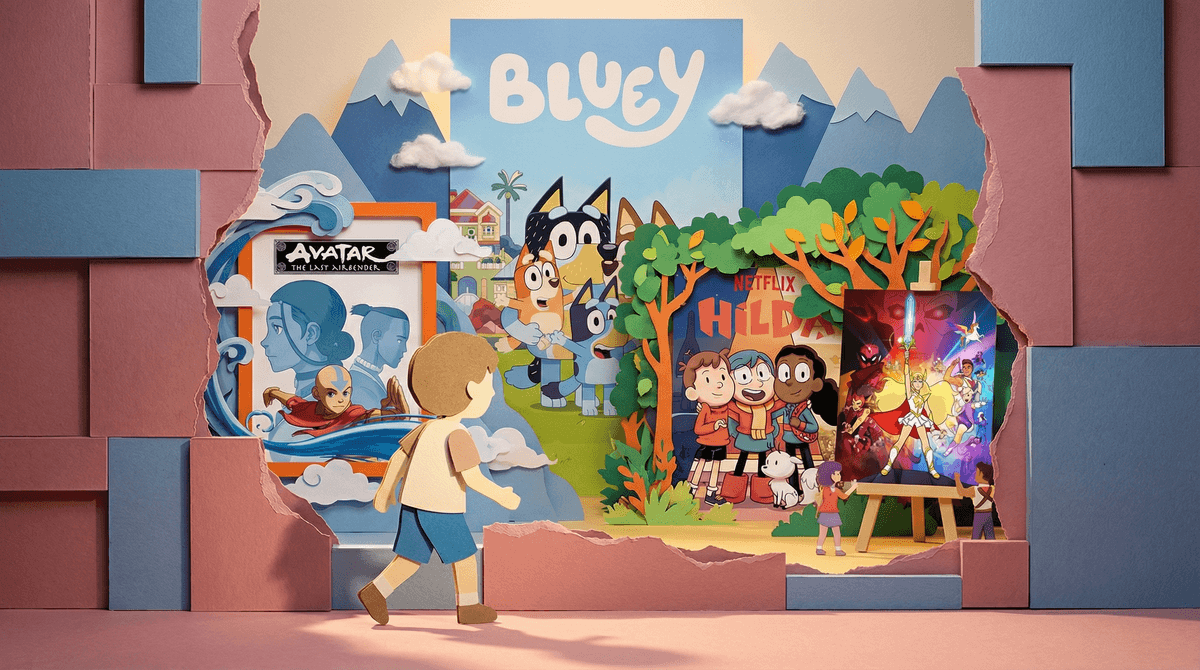
Bluey is the gold standard here. Bandit (the dad) is emotionally present, playful, and does the dishes. Chilli (the mom) is silly, sets boundaries, and has a career. The girl pups play rough, the boy pups play house, and nobody makes it weird. It's just... normal life, but animated and Australian.
Daniel Tiger's Neighborhood explicitly teaches emotional literacy to all kids, with Daniel's dad modeling vulnerability and care work. Dad Tiger literally sings about feelings. It's wholesome without being preachy.
Ada Twist, Scientist centers a young Black girl who's obsessed with science and asking questions. Her parents support her curiosity, and the show treats STEM as accessible to everyone—no "girls can be scientists too!" fanfare, just a girl who IS a scientist.
For Elementary Ages (Ages 6-10)
The Last Kids on Earth features boys who are scared, strategic, and emotionally honest during a zombie apocalypse. The girl characters are tough without being one-dimensional "strong female character" tropes—they're scared AND brave, silly AND capable.
Hilda gives you a fearless female protagonist who's curious and kind, with a male friend (David) who's anxious and cautious—and that's treated as totally fine and valid, not something he needs to "overcome" to be a "real boy."
Carmen Sandiego (the Netflix reboot) features a female lead who's brilliant, physical, and driven—but also makes mistakes and needs her team. Her crew includes boys and girls with different strengths, and nobody's pigeonholed.
For Tweens (Ages 9-13)
Avatar: The Last Airbender remains unmatched. Katara is nurturing AND a warrior. Aang cries, avoids violence when possible, and his gentleness is portrayed as strength. Toph is tough and disabled. Sokka grows from casual sexism to genuine respect. It's master-level character development.
She-Ra and the Princesses of Power (the Netflix version) takes the princess concept and explodes it. Princesses are warriors, scientists, and leaders. Male characters show vulnerability. There's LGBTQ+ representation. It's unapologetically progressive without feeling like an after-school special.
The Dragon Prince features strong female leaders, a deaf general who communicates through sign language, and boys who process emotions and seek peaceful solutions. The fantasy world just... includes everyone, no big deal.
For Teens (Ages 13+)
Heartstopper centers gentle, emotional boys in a queer love story. The rugby lads discuss feelings. Girls have storylines beyond romance. It's tender and real and the opposite of toxic masculinity.
Arcane has complex female leads who are brilliant, flawed, violent, and vulnerable—not despite being women, just as humans. Male characters show emotional depth. Nobody's motivation is "because girl" or "because boy." (Note: this one's genuinely intense—definitely preview before showing younger teens.)
Not every show marketed as "progressive" actually is. Some just swap stereotypes (making girls "tough" in a masculine way while still treating femininity as weakness) or add a "strong female character" who's basically a dude with a ponytail.
Look for:
- Characters of all genders showing the full range of human emotions
- Diverse interests and abilities that aren't gender-coded
- Caregiving and emotional labor shown as valuable, regardless of who does it
- Physical strength and intellectual ability distributed across genders
- Friendships and teamwork that don't rely on gender dynamics
Red flags:
- "Not like other girls" messaging (putting down femininity to elevate a female character)
- Boys who are only allowed to show anger, never sadness or fear
- Tokenism (one girl on a team of boys who has to represent all girls everywhere)
- "Girl power" that's just about being tough/violent in traditionally masculine ways
The best part about these shows? They create natural conversation starters. When you're watching together, you can ask:
- "What did you notice about how [character] handled that?"
- "Do you think boys/girls at your school would do the same thing?"
- "What would you do in that situation?"
You don't need to turn every episode into a lesson. Just watching this stuff normalizes the idea that people are complex, and that gender doesn't determine who you can be.
If your kid pushes back ("but girls ARE better at art" or "boys ARE stronger"), you can acknowledge patterns they've noticed while expanding the frame: "Some girls love art, and some don't. Some boys are super strong, and some aren't. People are all different—that's what makes life interesting."
Look, you're not going to undo all of society's gender baggage with the right Netflix queue. But intentional media choices do matter. Kids are absorbing messages about gender whether we're paying attention or not—might as well make sure some of those messages are actually helpful.
The shows listed here aren't perfect (nothing is), but they're genuinely trying to show kids a bigger, more interesting world than the one traditional gender roles offer. They're also just... good. Well-written, engaging, worth your time even as an adult half-watching while you fold laundry.
Start with one show that fits your kid's age and interests. Watch a few episodes together. See what conversations emerge. You might be surprised by what your kid notices—and what they've already been thinking about.
Want more recommendations? Check out our guide to shows that promote emotional intelligence or explore alternatives to stereotypical princess content.