

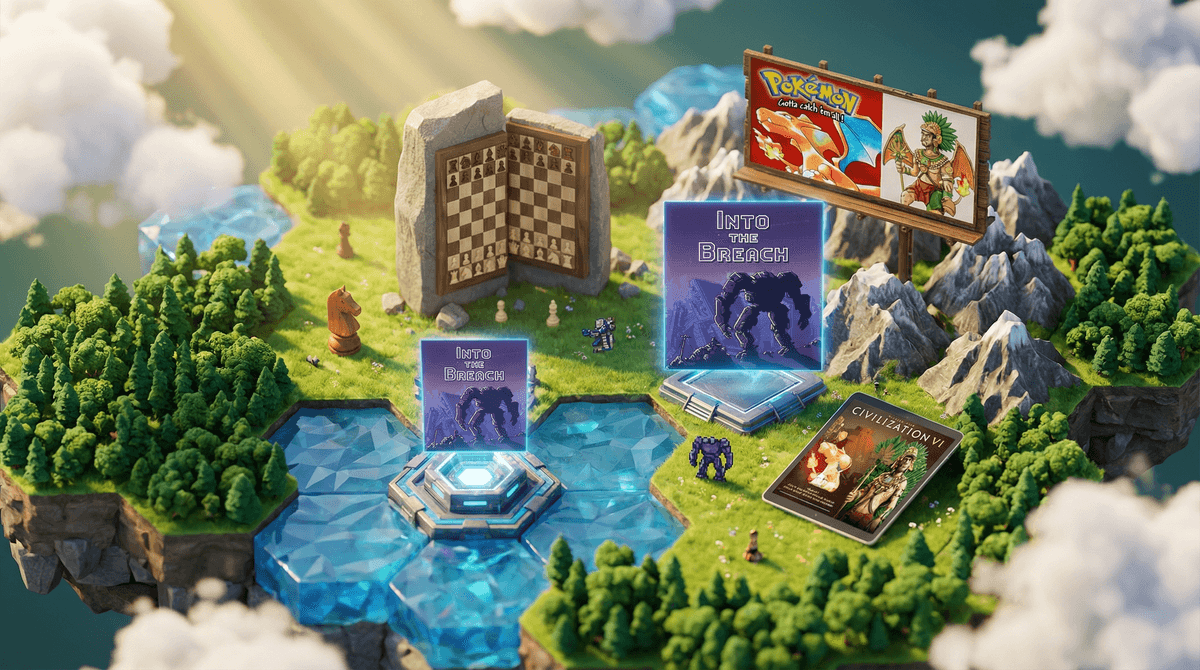
Turn-based strategy games are exactly what they sound like: games where players take turns making moves, thinking through their options before acting. Think Chess, but with dragons. Or robots. Or adorable creatures battling it out.
Unlike the frantic button-mashing of Fortnite or the reflexes required in most popular games, turn-based games give kids time to actually think. Each player gets their moment to analyze the situation, consider their options, and make a strategic choice. Then they wait while their opponent does the same.
The beauty here? There's no "I died because my reflexes aren't fast enough" excuse. Success comes from thinking ahead, recognizing patterns, and learning from mistakes. These are the games where a 10-year-old can absolutely demolish an adult through pure strategic thinking.
Here's the thing about turn-based strategy games: they're sneaky educational. Kids aren't grinding multiplication tables—they're planning three moves ahead to trap their opponent's king, managing resources to build an empire, or figuring out type advantages in Pokémon battles.
The appeal is real:
- They can play at their own pace - No pressure to react in milliseconds
- Victories feel earned - Winning comes from outsmarting, not out-clicking
- There's always a next move - Even losing teaches something for the rematch
- They work on almost any device - Most run on older tablets or computers without issue
And honestly? These games are some of the few where screen time genuinely builds transferable skills. We're talking critical thinking, pattern recognition, resource management, and planning ahead—skills that show up in math class, in managing their homework load, and in life.
For Younger Players (Ages 6-10)
Pokémon games (especially the mainline Nintendo titles) are the gateway drug here. Yes, it's turn-based combat, but it's also about type matchups, building a balanced team, and managing resources. Around 65% of kids ages 8-12 have played some form of Pokémon, so your kid is definitely hearing about it at school.
Plants vs. Zombies technically has real-time elements, but the strategic planning of where to place which plant is pure turn-based thinking. It's colorful, funny, and teaches resource management without feeling like homework.
For Middle Schoolers (Ages 10-14)
Slay the Spire is a card-based roguelike that's become hugely popular. Each run requires building a deck strategically, and every decision matters. Fair warning: it's challenging and can be frustrating, but that's part of the learning.
Into the Breach is like chess with giant mechs fighting kaiju. Every match is a puzzle where you can see exactly what the enemy will do next turn. It's perfect for teaching consequence-based thinking—you can literally see the result of your choices before you commit.
Civilization VI is the classic "just one more turn" game that teaches history, geography, resource management, and long-term planning. Be warned: games can take hours. But if your kid gets into it, you're looking at some seriously engaged learning time.
For Teens (Ages 14+)
XCOM 2 teaches probability and risk assessment in a way that no math class ever will. Should you take the 85% shot or reposition for a guaranteed hit? These decisions have real consequences, and kids learn to think in terms of odds and backup plans.
Fire Emblem series combines tactical combat with relationship-building between characters. The permadeath feature (characters who die stay dead) raises the stakes and teaches that choices have lasting consequences.
Time commitment varies wildly. A match of Chess.com might take 10 minutes. A session of Civilization VI can easily consume 3 hours. Set expectations about save points and stopping places before starting.
These games can be frustrating. Strategy games often involve losing—a lot—before you figure out what works. This is actually valuable (learning from failure and all that), but some kids need more support working through that frustration than others.
Multiplayer considerations: Many turn-based games have online multiplayer. Check the specific game's community before allowing online play. Games like Chess.com have decent moderation; others less so.
The "just one more turn" trap is real. These games are designed to keep you engaged. A clear timer or "finish this match then we're done" boundary works better than "five more minutes" which means nothing in strategy game time.
Ages 6-8: Stick with simpler games like Pokémon or Plants vs. Zombies. Play together and talk through strategy out loud. "Why did you choose that move?" becomes a natural teaching moment.
Ages 9-12: This is the sweet spot for most turn-based games. Kids have the patience and cognitive ability to think several moves ahead. Into the Breach and Slay the Spire are perfect here.
Ages 13+: They can handle complex systems like Civilization VI or XCOM 2. These games can genuinely compete with homework for mental bandwidth, so keep an eye on overall load.
If you're going to have screen time in your house (and let's be real, you are), turn-based strategy games are among the most defensible choices you can make. They're the closest thing to "educational gaming" that doesn't feel like edutainment garbage from 2003.
The key is matching the game's complexity to your kid's developmental stage and frustration tolerance. Start simple, play together when possible, and use these games as conversation starters about decision-making and consequences.
Start with one game that matches your kid's age and interests. Pokémon if they like creatures, Into the Breach if they like robots, Civilization VI if they're into history.
Play together for the first few sessions. You'll understand what they're learning and can help them think through strategies out loud.
Set clear boundaries about time before starting. "We'll play until you finish this mission" works better than vague time limits.
Want to dig deeper into whether a specific game is right for your family? Check out individual game guides or See what works for your specific situation to get personalized recommendations based on your kid's age, interests, and your family's values.