

TL;DR: Plants vs. Zombies is a rare beast: a game that actually requires legitimate strategy and spatial reasoning while remaining genuinely funny. However, the franchise has evolved from a "buy it once and own it" masterpiece into a "free-to-play" minefield of microtransactions and aggressive ads. If your kid is asking for it, start with the original version on a PC or console to avoid the "pay-to-win" rot of the mobile sequels.
Quick Links:
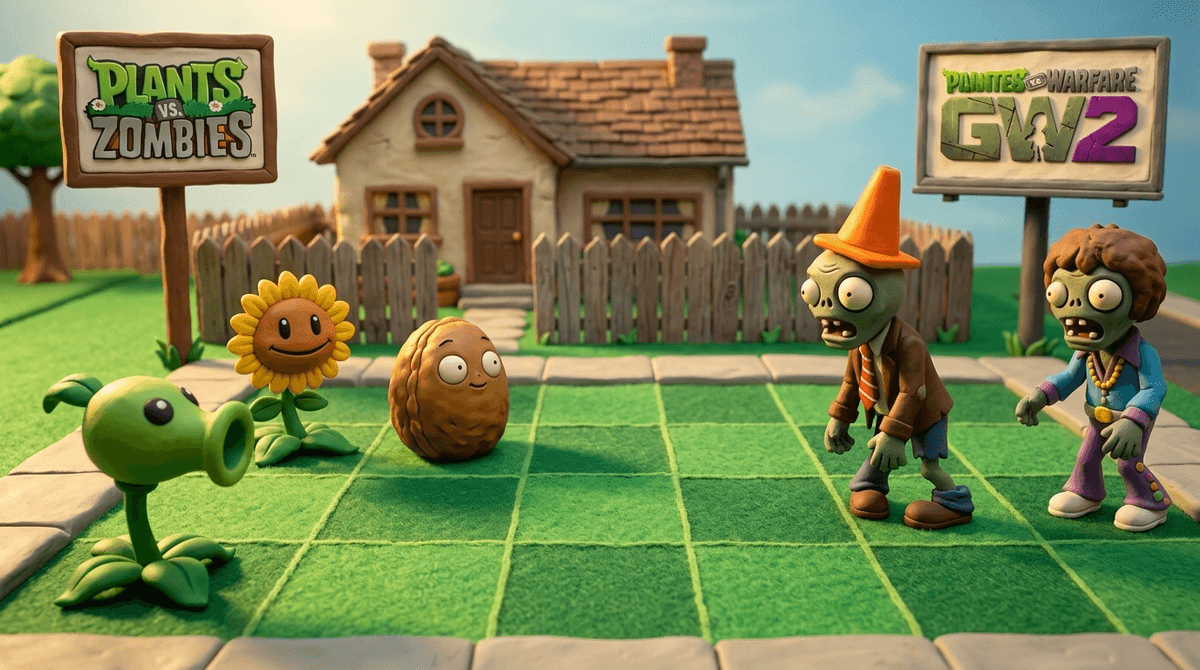
At its core, Plants vs. Zombies (often shortened to PvZ) is a "tower defense" game. The premise is as absurd as it sounds: a legion of goofy zombies is trying to invade your house to eat your brains, and your only line of defense is a collection of sentient, combat-ready garden plants.
You plant Sunflowers to generate "sun" (the game's currency), which you then use to "buy" offensive plants like Peashooters, Wall-nuts, and Cherry Bombs. It’s a game of resource management, timing, and lane-based strategy.
While it started as a single-player strategy game, the franchise has expanded into Plants vs. Zombies Heroes (a digital card battler similar to Hearthstone) and the Garden Warfare series, which are third-person shooters similar to Fortnite but with way more chlorophyll.
It’s the "vibe." PvZ manages to be "spooky" without being scary. The zombies aren't the flesh-ripping kind; they’re the kind that wear traffic cones on their heads, ride dolphins, or dress up like disco stars.
For younger kids, there’s a huge "collectibility" factor. Every few levels, you unlock a new plant with a unique personality and power. For older kids, the strategy gets surprisingly deep. Balancing your "sun" production while a wave of Buckethead Zombies approaches your front door requires actual focus and planning—something we’re always looking for in a sea of mindless "brain rot" content.
If you played the original Plants vs. Zombies back in 2009, you remember a pure experience. You paid $5 or $10, and you got the whole game.
Fast forward to today, and the franchise is owned by EA (Electronic Arts). If you know anything about EA, you know they never met a microtransaction they didn’t like.
This is the one most kids are playing on iPads. It’s "Free-to-Play," which is parent-speak for "expensive in the long run." The game is designed with "difficulty spikes" that are nearly impossible to beat unless you:
- Grind for dozens of hours.
- Watch a series of 30-second ads for other crappy games.
- Spend real money to buy "Power-Ups" or "Premium Plants."
Some of the coolest plants are locked behind a $4.99 or $9.99 paywall. For a kid, seeing a "Chomper" or a "Snow Pea" locked away is a direct hit to the dopamine receptors.
These are the console/PC shooters. Think of them as "My First Shooter." They are team-based, colorful, and chaotic. While they are much better games than the mobile sequels, they still rely heavily on "Sticker Packs" (loot boxes). You spend in-game coins (which can be bought with real money) to get random characters and upgrades. It’s gambling-lite, and it’s worth a conversation.
Ages 6-9
The original Plants vs. Zombies is perfect here. It’s offline, the strategy is manageable, and the humor hits the spot. Avoid the mobile version of PvZ 2 if you don’t want to deal with "Can I have $5 for the Jalapeño?" every ten minutes.
Ages 10-12
This is the prime age for Garden Warfare 2. It’s a great alternative to the more toxic environments of Call of Duty or even Fortnite. The community is generally younger and the violence is strictly "cartoon poofing."
1. The "Ad Rot"
The mobile versions of these games are littered with ads. Not just banners, but "rewarded video ads" where your kid is encouraged to watch a 30-second clip of a fake gameplay ad for some "King’s Choice" style game just to get a few extra coins. It breaks their focus and exposes them to some of the bottom-of-the-barrel marketing in the digital world.
2. The "EA Account" Requirement
Most modern PvZ games will try to get you to sign up for an EA account. This is how they track data and market other games to your kids. You can usually skip this, or use a "burner" parent email to keep the marketing out of your kid's face.
3. It’s a Gateway Game
PvZ is often the "gateway" into the wider world of gaming. If they like the strategy, they might move toward Minecraft or Roblox strategy sims. If they like the shooting, they’re headed toward Splatoon 3. This is a good time to set the "Screenwise" foundation for how your family handles new downloads.
Instead of just saying "no" to the in-app purchases, use it as a teaching moment about Dark Patterns in game design.
- Ask: "Why do you think the game made that level so hard all of a sudden?"
- Discuss: "The game is trying to make you feel frustrated so you'll spend money to skip the frustration. Let's see if we can beat it with strategy instead of the credit card."
- The "Robux" Comparison: If they play Roblox, they already understand virtual currency. Explain that "Gems" in PvZ are just like Robux—they feel like play money, but they cost real work hours to earn.
Learn more about how game developers use psychology to keep kids playing
Plants vs. Zombies is a fantastic franchise that has been somewhat "zombified" by modern corporate greed. The core gameplay is still some of the best in the business for teaching kids to think three steps ahead.
Our recommendation:
- Buy the original Plants vs. Zombies on Steam or a console. It’s often on sale for $2-5. It’s a clean, complete experience with zero ads.
- If they play the mobile sequels, keep the device in "Airplane Mode" when possible (though some features require internet) or ensure your app store password is required for every single purchase.
- Skip PvZ Heroes unless you’re prepared to deal with the "card pack" addiction that mirrors Pokémon cards but with zero physical resale value.
- Check your settings: Make sure "Ask to Buy" is enabled on your family sharing account.
- Play with them: Sit down for 15 minutes. PvZ is one of the few "kids' games" that is actually fun for adults. You might find yourself arguing over where to place the Tall-nut.
- Explore alternatives: If they love the strategy but you hate the ads, check out Kingdom Rush or Bloons TD 6 for a similar (though still slightly MTX-heavy) experience.