

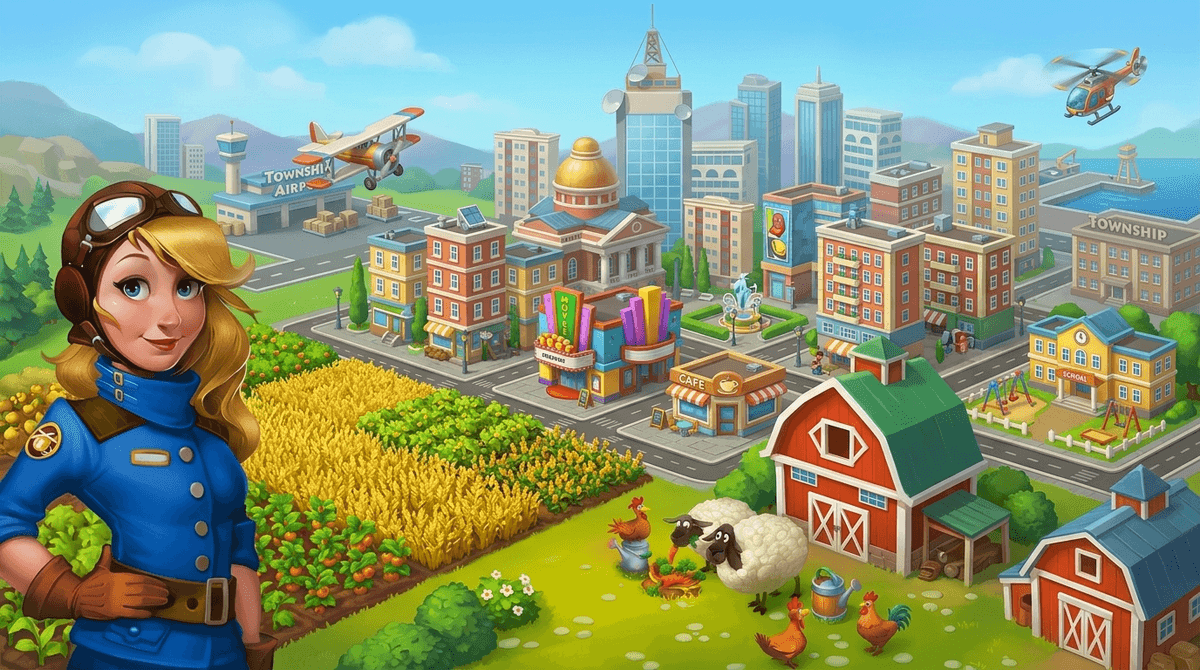
TL;DR: Township is a "freemium" city-building and farming simulator that is generally safe but highly addictive. It teaches basic resource management and strategy, but it’s packed with "dark patterns" designed to make kids (and adults) impatient enough to spend real money. If your kid loves the building aspect but you hate the micro-transactions, consider Stardew Valley or Animal Crossing: New Horizons as "one-and-done" purchase alternatives.
Get a breakdown of Township’s safety settings
At its core, Township is a hybrid of a farming sim and a city builder. Developed by Playrix (the same people behind those omnipresent "Save the King" ads for Royal Match), the game tasks players with developing a rural town into a bustling metropolis.
The gameplay loop is simple:
- Plant crops (wheat, corn, cotton).
- Process those crops in factories (turn wheat into bread, cotton into fabric).
- Sell the goods via helicopter orders, trains, or planes to earn coins and XP.
- Expand and decorate the town with the profits.
It sounds wholesome, and for the most part, it is. There’s no violence, no gore, and the aesthetic is bright, bubbly, and very "clean." However, as the game progresses, the "wait times" for crops and construction grow longer—ranging from minutes to literal days—which is where the psychological "nudge" to spend money kicks in.
If you’ve noticed your kid checking their iPad every twenty minutes to "harvest the cocoa beans," you’re seeing the power of the dopamine loop. Township excels at giving players a constant sense of micro-achievement.
Kids love it because:
- Creative Control: They get to decide where the cinema goes, what the zoo looks like, and how to name their cows.
- The "Ding" Factor: Completing an order provides an immediate hit of satisfaction.
- Social Connection: Through "Co-ops," kids can join groups with friends (or strangers) to help each other finish tasks and compete in "Regattas" (weekly racing events).
- Mini-Games: Playrix frequently injects "event" mini-games (like puzzle games or obstacle courses) that keep the experience feeling fresh, even if the core farming gets repetitive.
Let’s be real: Township isn't "brain rot" in the way that 10 hours of mindless YouTube Shorts might be, but it’s also not exactly an Ivy League prep course.
The game does require genuine strategy. Your kid has to calculate: "If the train needs three pizzas, and the pizza takes 2 hours to bake, but I need to grow the tomatoes first..." That’s logic. That’s resource management.
However, we need to talk about the "Bait and Switch" marketing. You’ve probably seen the ads for Township that show a character in a logic puzzle (like pulling pins to save someone from lava). Those puzzles are barely in the game. They are "mini-games" used to lure players in, but 95% of the game is just waiting for corn to grow. It’s a bit predatory, and it’s worth explaining to your kids how "false advertising" works in the app store.
Learn more about how mobile games use psychological tricks to keep kids playing
If you find that Township is causing more "I need $4.99 for T-Cash" tantrums than actual joy, there are incredible alternatives that offer the same satisfaction without the constant upsell.
This is the gold standard. For a one-time price (usually around $15 on console or $5 on mobile), your kid gets a massive, deep farming RPG with zero in-app purchases. It teaches seasons, relationships, and hard work. It’s a masterpiece.
If you have a Nintendo Switch, this is the ultimate "cozy" builder. It’s played in real-time, which actually encourages kids to put the controller down once they’ve done their daily tasks.
If they love the "building a city" aspect, Minecraft in Creative Mode is the ultimate digital sandbox. No wait timers, just pure imagination.
If they insist on the mobile farming vibe, Hay Day is the closest competitor. It has similar monetization, but some parents find the social trading system a bit more intuitive.
Ages 4-7: They will enjoy the animals and the colors, but they will almost certainly accidentally click on "Buy T-Cash." If they play, ensure your app store is password-protected and "In-App Purchases" are toggled OFF in your device settings.
Ages 8-12: This is the "sweet spot" for Township. They can handle the logic, but they are also the most susceptible to the "Golden Ticket" (the game’s seasonal battle pass). This is a great age to discuss the value of digital currency.
Ages 13+: Teens might find it a bit "kiddy," but many use it as a "stress-relief" game. The main concern here is the Co-op chat, which is unmoderated and can expose them to conversations with adults.
Check out our guide on setting up iPad restrictions for elementary schoolers
The "Golden Ticket"
Every few weeks, Township runs an event with a "Golden Ticket." It usually costs around $5.00 and gives players extra perks, skins, and faster production. It’s a classic "battle pass" model. It’s not "evil," but it creates a "fear of missing out" (FOMO) because once the season is over, those items are gone.
T-Cash (Premium Currency)
T-Cash is the green paper money in the game. It’s used to skip wait timers. If your kid is constantly asking for T-Cash, it’s a sign they haven't learned the "patience" part of the game yet.
Co-ops and Chat
Players can join "Co-ops" to chat and trade. While there is a profanity filter, it’s not foolproof. Most of the talk is about "Who can send me 3 bags of sugar?" but because it’s a live chat with strangers, you should encourage your kid to only join Co-ops with people they actually know, or keep the chat minimized.
Instead of "The game is trying to steal my money," try these conversation starters:
- On Patience: "I see that building the Hospital takes 24 hours. What are you going to do in the game while you wait, or is it time to take a break and do something else?"
- On Marketing: "Why do you think the ads show those 'pull the pin' puzzles when the game is actually about farming? Do you think that's honest?"
- On Budgeting: "If you want the Golden Ticket, that’s $5.00. Would you rather have that digital skin, or would you rather save that money for a new LEGO set?"
Township is a "B+" tier game. It’s high-quality, visually appealing, and lacks the toxic "kill-or-be-killed" vibe of Fortnite or the chaotic weirdness of Roblox.
It is a "safe" game, provided you have your spending locks in place. However, it is designed to be a "forever game"—one that never ends and always wants a little more of your time and money. If your kid can treat it like a digital garden to be tended occasionally, it’s great. If they start treating it like a second job they have to check at 2:00 AM to "win" a Regatta, it’s time to delete the app and head over to Stardew Valley.
- Check your settings: Ensure "In-App Purchases" are disabled or password-protected.
- Play together: Ask your kid to give you a "tour" of their town. It’s the best way to see who they are chatting with.
- Set a "Wait Timer" rule: If a building takes 4 hours, that’s a natural stopping point for the day.
Read our guide on the best "cozy games" for kids who hate competition