

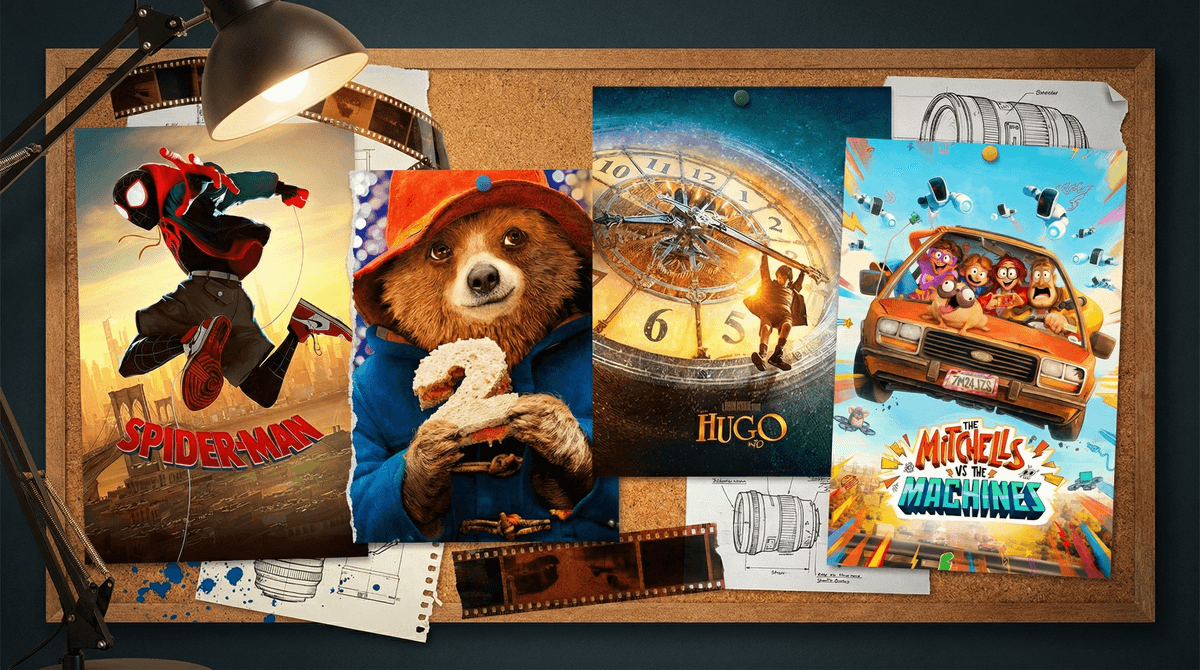
Top Movies for the 10-Year-Old Movie Buff
TL;DR: Your kid has opinions about cinematography and complains about plot holes? These films deliver genuine storytelling craft without the mature content. Jump to: The Mitchells vs. The Machines • Hugo • Spider-Man: Into the Spider-Verse • The Princess Bride • Paddington 2
There's a special kind of 10-year-old who doesn't just watch movies—they study them. They notice when the lighting changes in a scene. They can explain why a joke landed or didn't. They've watched the same film three times and caught something new each viewing. These kids are ready for movies that respect their intelligence and developing taste, but most "serious" films come packaged with content that's way too mature.
The good news? There's actually a sweet spot of films with genuine artistic merit, sophisticated storytelling, and technical excellence that don't require you to cover anyone's eyes or have awkward conversations afterward.
We're not talking about movies that are just "good for kids." We're talking about films that:
- Have actual directorial vision and style
- Use visual storytelling techniques worth noticing
- Feature smart dialogue and character development
- Employ music and sound design purposefully
- Reward repeat viewing with layers of detail
- Treat young viewers like intelligent humans
Basically, movies that could spark a "let's watch the behind-the-scenes features" conversation.
Ages 8+
This isn't just a superhero movie—it's a film school education disguised as entertainment. The animation style literally mimics comic book printing techniques, with intentional frame rate variations and halftone dots. There are layers of visual storytelling here that film students analyze. Plus it's genuinely funny, emotionally resonant, and the soundtrack slaps.
The sequel, Across the Spider-Verse, somehow goes even bigger with its visual ambition—each universe has its own distinct art style. Fair warning: it ends on a cliffhanger, which may drive your kid nuts.
Ages 8+
Produced by the same team as Spider-Verse, this film layers 2D doodles and effects over 3D animation to mirror how a creative teen sees the world. It's a masterclass in character design, pacing, and visual comedy. The family dynamics feel genuinely real (maybe a little too real if you've ever had a screen time argument), and there's actual emotional depth about creativity, connection, and letting your kids be who they are.
Also, it's one of the few family films that portrays a kid's creative digital life—making videos, editing, sharing—as legitimate art rather than "just screen time."
Ages 9+
Stop-motion animation at its absolute peak. Laika Studios spent years on this film, and it shows in every frame. The story draws from Japanese folklore with genuine respect, and the themes—memory, storytelling, loss—have real weight. Some moments get intense (there's a reason it's PG rather than G), but nothing gratuitous.
Watch the end credits to see how they created the giant skeleton fight scene. It'll blow your kid's mind.
Ages 6+
Yes, really. This movie sits at 99% on Rotten Tomatoes for a reason. Director Paul King brings Wes Anderson-level visual composition and color theory to a story about a polite bear. The prison sequence is legitimately one of the most joyful, well-crafted montages in recent cinema. Hugh Grant's villain performance is chef's kiss.
This is the movie to show kids that "family-friendly" doesn't mean "artistically compromised."
Ages 9+
Martin Scorsese made a love letter to early cinema, wrapped in a mystery adventure about an orphan living in a Paris train station. The 3D cinematography is some of the best ever done—Scorsese actually understood the medium. But even in 2D, it's gorgeous.
The film's second half becomes a documentary-esque tribute to Georges Méliès, the pioneering filmmaker, which might sound boring but plays like a revelation. This movie teaches film history without feeling like homework. Perfect for a kid ready to understand that movies have a history and evolution.
Ages 8+
The meta-narrative structure—a grandfather reading to his sick grandson—gives this film layers that kids increasingly appreciate as they get older. It's simultaneously a perfect adventure story AND a commentary on adventure stories. The dialogue is endlessly quotable, the performances are committed without being campy, and the sword fight between Inigo and the Man in Black is still one of cinema's best.
Rob Reiner directed this with real craft. Notice how the framing story shifts from interruption to enhancement as the grandson (and audience) gets invested.
Ages 8+
Spielberg at his finest. The way he shoots from a child's perspective—literally, with low camera angles that often exclude adult faces—makes kids the protagonists of their own story. The bike flight scene remains iconic for good reason: John Williams' score, the silhouette against the moon, the pure emotional release.
Some moments get intense (E.T. dying, the government hazmat situation), but it's the kind of intensity that teaches kids movies can make you feel things deeply.
Ages 10+
Wes Anderson's most accessible film, and a perfect introduction to his symmetrical, dollhouse-like visual style. The aspect ratio actually changes to reflect different time periods—a technique your young film buff will notice and want to understand.
The story moves fast, the dialogue sparkles, and while there are some mature themes (murder, prison breaks), it's all handled with Anderson's stylized, non-graphic approach. This is the movie that makes kids say "I want to watch more movies like THIS."
Content note: There's brief violence, some mild language, and adult themes, but nothing graphic. Preview if you're unsure.
Ages 5+
Hayao Miyazaki's masterpiece of quiet storytelling. Almost nothing "happens" in a traditional plot sense, yet it's completely captivating. The animation is hand-drawn perfection, and the film trusts long, silent moments—something almost unheard of in Western children's media.
This is the movie that teaches kids that stories don't need constant action or conflict to be engaging. Sometimes beauty and observation are enough.
Ages 9+
Miyazaki's Oscar-winner is genuinely strange and doesn't explain everything, which makes it perfect for kids ready for more ambiguous storytelling. The animation is breathtaking, the world-building is dense with detail, and the themes—identity, work, greed, environmentalism—have real depth.
Some imagery gets intense (the parents turning into pigs, No-Face's consumption spree), but it's fantastical rather than realistic scary.
Ages 8+
Pure adventure with Miyazaki's signature environmental themes and strong young protagonists. The floating castle concept is executed with such visual imagination that it'll stick with kids for years. The English dub (with Mark Hamill!) is actually quite good, though purists will prefer subtitles.
Ages 7+
Luc Jacquet's cinematography in Antarctica is stunning, and Morgan Freeman's narration brings genuine gravitas. This documentary shows the brutal reality of nature—some penguin chicks don't make it—but does so with respect and beauty rather than gratuitous detail.
Great for kids interested in filmmaking to see how documentaries construct narrative from real footage.
Ages 9+
Morgan Neville's documentary about Fred Rogers is a masterclass in biographical filmmaking. It's not hagiography—it explores Rogers' complexity, his depression, his doubts—while celebrating his revolutionary approach to children's media.
For a kid who makes content or thinks about media, this film offers a profound look at intentionality and purpose in what we create for young audiences.
Ages 8+
Brad Bird's animated masterpiece about a boy and a robot during the Cold War has genuine stakes and doesn't pull emotional punches. The "Superman" moment at the end wrecks adults, let alone kids. But it earns those tears through careful character development and visual storytelling.
The animation style—2D characters with a 3D robot—was innovative for 1999 and still holds up. Plus it's a great conversation starter about war, fear, and choosing who you want to be.
Ages 9+
Andrew Davis adapted Louis Sachar's novel with real respect for its intricate plotting and themes of justice, racism, and fate. The non-linear storytelling asks kids to piece together how past and present connect. Shia LaBeouf's breakout role, and Sigourney Weaver clearly having fun as the villain.
The book is even better, so this could launch a whole discussion about adaptation .
.
Ages 10+
Based on Homer Hickam's memoir about building rockets in a 1950s coal mining town. It's a sports movie structure applied to science and ambition. Jake Gyllenhaal and Chris Cooper deliver genuinely great performances, and the film doesn't shy away from class conflict and economic anxiety.
Some language and thematic weight, but nothing inappropriate. Just real.
The Goonies: Everyone remembers this fondly, but rewatching as an adult reveals it's... kind of a mess? Lots of screaming, some dated stereotypes, and pacing that drags. Your film buff might find it more chaotic than charming.
Most Pixar sequels: Toy Story 2 and Toy Story 3 are exceptions, but Cars 2, Monsters University, Finding Dory—these are fine, but they're not going to satisfy a kid looking for artistic ambition.
The live-action Disney remakes: With rare exceptions (The Jungle Book 2016 has some visual merit), these are soulless cash grabs that teach kids nothing about filmmaking except that studios will remake anything.
8-9 years old: Start with the animated films and lighter fare like Paddington 2 and The Princess Bride. These have the visual sophistication without heavy thematic weight.
10-11 years old: Add in Hugo, The Iron Giant, and the Miyazaki films with more complexity. They're ready for stories that don't resolve everything neatly.
12+ years old: Grand Budapest Hotel, October Sky, and Won't You Be My Neighbor? offer mature themes handled artfully. Also a good time to explore more of the Studio Ghibli catalog.
Encourage your kid to:
- Notice the music: When does it swell? When is it absent? Why?
- Watch for visual patterns: Colors, framing, recurring images
- Think about pacing: Why does this scene feel fast or slow?
- Consider the editing: How do cuts create meaning or emotion?
- Look for the director's choices: Why this angle? Why this moment?
Most of these films have excellent behind-the-scenes features or director commentaries. Watching those together can deepen appreciation and teach the language of filmmaking.
A 10-year-old film buff isn't just a kid who watches a lot of movies—they're developing taste, analytical skills, and an understanding of craft. These films reward that attention without requiring them to navigate content they're not ready for.
The best part? These movies hold up to adult scrutiny too, which means you're not suffering through another viewing. You might actually want to watch Spider-Verse for the fifth time to catch new details.
Next steps: Pick one from a category they haven't explored (if they love animation, try Hugo; if they love live action, try Spider-Verse). Watch it together, then dive into the making-of features. Let them explain what they noticed. Listen to them develop their voice as a viewer.
That's not just screen time—that's film education.