

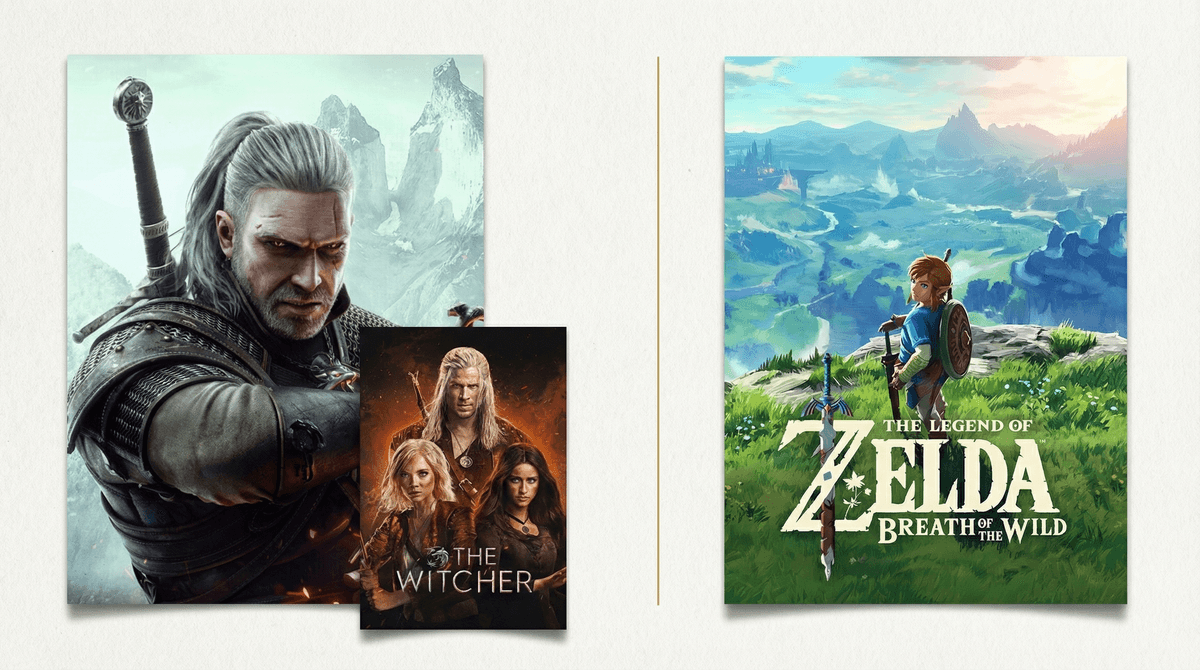
The Witcher 3: Wild Hunt is a massive open-world fantasy RPG released in 2015 that's still wildly popular today. You play as Geralt of Rivia, a gruff monster hunter navigating a morally complex medieval fantasy world. Think Game of Thrones meets Lord of the Ringss](https://screenwiseapp.com/guides/the-lord-of-the-rings-movies-which-ones-are-kid-friendly), but you're making the choices.
This isn't Zelda. The Witcher 3 earned its M rating honestly—it's got graphic violence, explicit sexual content, nudity, strong language, and some genuinely dark themes. But it's also considered one of the best-written games ever made, with storytelling that rivals prestige television.
The game takes 50-100+ hours to complete, features meaningful choices with real consequences, and has spawned a Netflix series (which your teen has probably already watched). It's available on pretty much every platform—PlayStation, Xbox, PC, and even Nintendo Switch.
Nearly a decade after release, The Witcher 3 maintains a devoted following, especially among older teens. Here's why:
The storytelling is legitimately excellent. This isn't button-mashing through a thin plot. The writing is sophisticated, morally ambiguous, and treats players like adults. Quests have multiple solutions, choices matter, and there's rarely a clear "good guy" option.
It's a complete experience. In an era of live-service games constantly asking for money, The Witcher 3 is a finished, self-contained epic. You buy it once, you get everything (though the DLC is absolutely worth it).
The world feels alive. NPCs have schedules, villages feel lived-in, and the game doesn't hold your hand. Teens appreciate being trusted to figure things out.
It's culturally relevant. The Netflix show brought new attention, and teens love comparing the game to the series. Plus, it's become a benchmark for "what good RPGs should be."
Let's be direct about what you're dealing with:
Violence: Extremely graphic. Combat involves dismemberment, decapitation, and lots of blood. You're literally a monster hunter—you'll see mutilated corpses, execute monsters brutally, and witness war crimes. One particularly disturbing quest involves investigating a serial killer. This isn't cartoonish violence; it's visceral and meant to be disturbing.
Sexual content: Explicit. There are sex scenes showing nudity (breasts, buttocks) with sexual movements and sounds. Geralt can visit prostitutes. Some quests involve sexual assault as plot points (not shown graphically, but discussed). There's a brothel you can visit. The game treats sex as a normal part of adult life, which means it's present throughout.
Nudity: Frequent. Beyond sex scenes, you'll encounter topless women in various contexts—bathing, being examined by doctors, or just existing in the world. It's presented matter-of-factly rather than gratuitously, but it's definitely there.
Language: Constant. F-bombs, all the usual suspects. Characters talk like adults in a medieval war zone.
Substance use: Alcohol is everywhere. Geralt drinks potions (including ones that make him drunk) as part of gameplay mechanics. There's a quest where you get absolutely wasted with other characters.
Dark themes: Child abuse, slavery, racism, genocide, torture, and war are central to the plot. The game doesn't shy away from showing the consequences of these things.
Under 16: No. Full stop, this isn't appropriate. The mature content isn't occasional—it's woven throughout the experience. You can't "skip" the adult parts because they're integral to the story and world.
Ages 16-17: Maybe, depending on your teen. This is where family values and individual maturity matter. Questions to consider:
- Has your teen handled mature content in other media responsibly?
- Can they engage critically with morally complex narratives?
- Have you already had conversations about sex, violence, and difficult historical topics?
- Are they playing because they genuinely want a deep RPG experience, or just because it has sex and violence?
18+: This is the target audience. The M rating exists for a reason, and this game exemplifies why.
The game does have a "nudity off" toggle in settings that removes some (not all) sexual content, but it doesn't address the violence, themes, or language.
Here's the thing: The Witcher 3's mature content serves the story rather than existing for shock value. The violence reflects the brutality of war. The sex scenes develop relationships. The dark themes explore genuine moral complexity.
This is why the game has such critical acclaim—it treats its mature content with purpose. But that doesn't make it appropriate for younger teens. A well-made R-rated movie is still R-rated.
Compare this to something like God of War, which is also violent but has less sexual content, or Skyrim, which offers similar open-world fantasy with significantly less mature content.
If your 14-year-old is begging to play this because "everyone at school has," here's your conversation starter:
"I looked into it, and this game has explicit sexual content and extremely graphic violence throughout. It's not just rated M as a technicality—it earned that rating. I'm not comfortable with that for you right now. Let's find something that gives you that open-world fantasy experience without the adult content."
Then actually follow through. Check out alternatives to The Witcher 3 that offer similar gameplay without the mature content.
If your 16-17 year old is asking, the conversation is different:
"This game has a lot of mature content—graphic violence, explicit sex scenes, and dark themes. I want to understand what appeals to you about it and talk about whether you're ready for that kind of content. Let's watch some gameplay together and discuss it."
Actually watch gameplay with them. Not a sanitized trailer—real gameplay that shows what they'll encounter. YouTube has plenty of parent-focused reviews that highlight the mature content.
The Witcher 3 is an exceptional game with genuinely adult content. It's not trying to be edgy—it's telling a mature story that requires mature content to tell effectively. That's great for adults and older teens who are ready for it. It's not appropriate for younger teens, regardless of how "mature for their age" they seem.
If you do decide your older teen is ready for it, know what you're agreeing to. This isn't a game where you can monitor their playtime from the next room and assume it's fine. The mature content is constant and integral.
For younger teens desperate for that open-world fantasy experience, there are better options. Breath of the Wild, Horizon Zero Dawn, or even Dragon Age: Inquisition offer similar gameplay with more age-appropriate content.
Want to explore alternatives? Check out our guide on fantasy RPGs for teens that offer epic adventures without the explicit content.
Decided to allow it for your older teen? Set expectations upfront about what content they'll encounter and keep communication open about how they're processing it.
Still have questions? Get answers about specific aspects of The Witcher 3's content to make an informed decision for your family.