

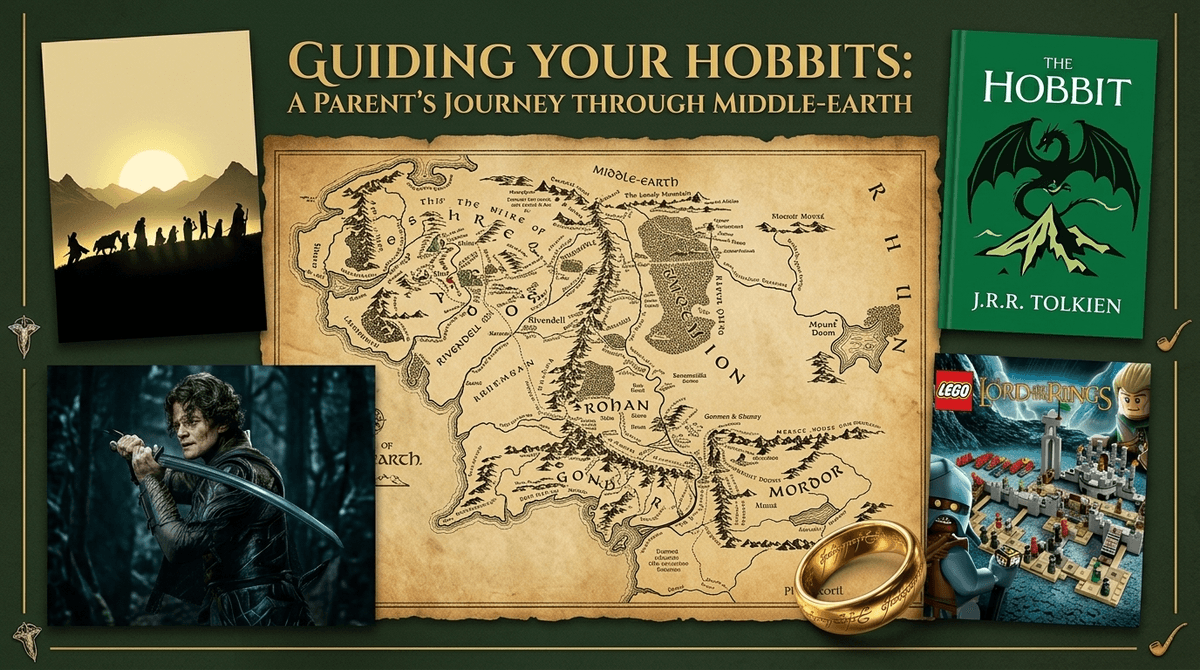
TL;DR: For most kids, age 10-12 is the "sweet spot" to start the trilogy. Start with the theatrical version of The Fellowship of the Ring. It’s high-fantasy, high-stakes, and a massive upgrade from the "brain rot" content currently dominating YouTube. If they aren't ready for the intensity of Orcs and Ringwraiths, start with The Hobbit book or the 1977 animated The Hobbit movie.
There comes a moment in every intentional parent’s journey when you realize you can’t look at one more Skibidi Toilet meme or hear another "Ohio" joke without losing your mind. You want something with heft. You want a story that isn't just flashing lights and dopamine loops. You want Middle-earth.
But then you remember the Orcs. And the Uruk-hai. And that giant spider that still haunts your own dreams.
The Lord of the Rings (LOTR) is the gold standard for storytelling, but it’s also a massive time commitment and, at times, a genuine horror movie for the elementary school set. Deciding when to make the jump from Minecraft to Mount Doom is a big parenting milestone.
The short answer is: it depends on their "scary" threshold. While the movies are rated PG-13, that rating was earned in the early 2000s. By today’s standards, the violence is "fantasy-intense"—lots of sword fighting and monster-slaying, but very little "human" gore or sexual content.
The real challenge for kids isn't just the scares; it's the pacing. These movies are long. We’re talking three hours of walking through woods, talking about lore, and close-ups of Viggo Mortensen looking brooding. If your kid struggles to sit through a 90-minute Pixar film, LOTR might feel like a chore rather than a treat.
Get a readiness checklist based on your kid's favorite movies
Not all Middle-earth content is created equal. Here is the recommended order for introducing your family to the world of J.R.R. Tolkien.
Ages 6+ If you want to test the waters without the nightmare fuel of live-action Orcs, this classic is the way to go. It’s whimsical, musical, and covers the essential plot points of Bilbo’s journey. It’s the "low stakes" entry point.
Ages 10-12 This is the true beginning. The first half is relatively light (the Shire is basically a toddler’s dream of a garden party), but it ramps up quickly.
- The Scary Bits: The Ringwraiths (Black Riders) are genuinely terrifying. They scream, they have no faces, and they hunt children (well, Hobbits). The Mines of Moria sequence with the Balrog is also very intense.
- The Payoff: It teaches themes of friendship, sacrifice, and the idea that even the smallest person can change the course of the future.
Ages 11+ This is where the "war" aspect takes center stage.
- The Scary Bits: The Battle of Helm’s Deep is incredible, but it's 45 minutes of sustained combat. There are also the "Dead Marshes" where ghosts pull people underwater—a scene that often triggers more fear than the actual battles.
- The Payoff: Introducing Gollum. This is a great opportunity to talk about addiction and how "the Ring" (or any obsession, like Roblox or social media) can change a person's character.
Ages 12+ The finale is the most intense of the three.
- The Scary Bits: Shelob. If your kid has any arachnophobia, the giant spider sequence in the cave is a "skip" or a "hide under the blanket" moment. There’s also more decapitation (mostly Orcs) and the psychological toll on Frodo.
- The Payoff: One of the most satisfying endings in cinematic history. It’s emotional, epic, and worth every minute.
Ages 9-11 Wait, shouldn't these come first? Technically, they are prequels. However, Peter Jackson made these much "busier" with CGI. While the tone is occasionally sillier (the trolls, the barrel scene), they are also quite violent in a "video game" kind of way. Many parents find these are easier for younger kids to digest because they feel less "real" than the original trilogy.
Check out our guide on the differences between The Hobbit and Lord of the Rings
If you ask a die-hard fan, they will tell you the Extended Editions are the only way to watch. Ignore them.
For a child’s first viewing, the Theatrical Editions are superior.
- Length: Theatrical versions are already 3 hours. Extended versions push 4 hours. That is a lot of "butt-in-chair" time for a 10-year-old.
- Pacing: The theatrical cuts were edited for flow. The extended scenes are great for lore-nerds, but they often slow down the action, which can lead to kids checking out or reaching for their phones.
- Intensity: Some of the extended scenes (especially in Return of the King) add extra "grim" moments that aren't necessary for the plot but add to the nightmare factor.
We talk a lot about "digital wellness" and "intentional parenting." A big part of that is quality of input. In a world of 15-second TikToks and YouTube Shorts, LOTR is a marathon for the brain. It requires:
- Sustained Attention: Following complex plotlines over 9+ hours.
- Emotional Literacy: Understanding why Boromir is a "complicated" hero rather than just a "bad guy."
- Moral Imagination: Grappling with the idea of absolute power and the importance of nature over industry.
Watching these movies together isn't just "screen time." It’s a shared cultural experience that provides a vocabulary for talking about courage and greed.
If you have a sensitive kid, keep an eye out for these specific triggers:
- Jump Scares: Bilbo’s "scary face" in Rivendell (if you know, you know). It’s a 2-second jump scare that has traumatized generations.
- Body Horror: The Orcs are "born" out of mud/slime in The Fellowship. It’s gross.
- Animal Peril: Horses are involved in battles. While they are mostly fine, the visual of horses in danger can be upsetting for some kids.
- Psychological Intensity: The way the Ring "whispers" and makes characters act crazy can be more disturbing to kids than a sword fight.
Check out our guide on how to handle scary movie scenes with sensitive kids
When you finish the movies (or even during the middle of them), use these prompts to move the conversation beyond "was that cool?":
- The Ring as a Metaphor: "The Ring makes people obsessed and changes how they treat their friends. Does anything in the real world (like phones or games) ever feel like that?"
- The Power of Small Things: "Why do you think a Hobbit was the one who had to carry the Ring instead of a powerful Wizard or a King?"
- Environmentalism: "The Ents (the tree people) get mad because Saruman is destroying the forest for his machines. What do you think Tolkien was trying to say about nature?"
Lord of the Rings is a "Tier 1" parenting win. It’s a bridge from "little kid" media to "grown-up" stories.
- Start with The Hobbit book if they are 8 or 9.
- Start the movies at 10-12 depending on their maturity.
- Stick to the Theatrical Versions for the first time.
- Watch with them. Don't just drop them in front of the TV. You’re going to need to explain who Isildur is about fourteen times.
If your kid finishes the trilogy and is obsessed, here’s where to go next:
- The Games: LEGO Lord of the Rings is a fantastic, kid-friendly way to relive the story.
- The Series: The Rings of Power on Amazon is visually stunning and generally a bit "cleaner" than the movies, though it has its own scary moments.
- The Deep Dive: If they are ready for the "hard stuff," start reading the actual Lord of the Rings books.