

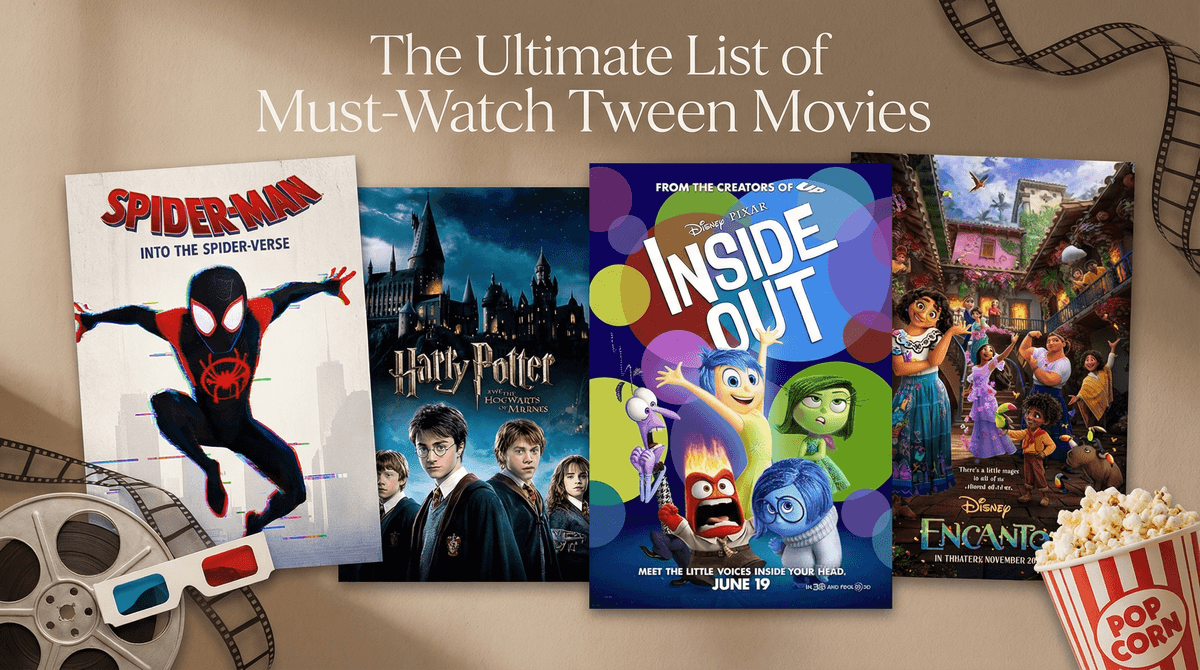
The Ultimate List of Must-Watch Tween Movies
TL;DR: Movie night shouldn't require a parental advisory board meeting. Here are films that hit the sweet spot—engaging enough that your tween won't roll their eyes, but age-appropriate enough that you won't regret it halfway through. Think magical worlds, coming-of-age stories, and adventure without the stuff that keeps everyone up at night.
Quick picks by mood:
- Pure magic: Harry Potter series, Encanto
- Laugh-out-loud: Turning Red, The Mitchells vs. The Machines
- Adventure seekers: Spider-Man: Into the Spider-Verse, The Goonies
- Thoughtful feels: Inside Out, Wonder
The tween years (roughly 8-12) are this weird in-between zone where kids are too old for Bluey but not quite ready for everything Netflix wants to throw at them. They're developing their own taste, want to watch what their friends are watching, but also still need content that doesn't expose them to mature themes before they're ready.
Finding movies that thread this needle? That's the challenge. You want films that respect their growing maturity without fast-tracking them into teenage territory.
Ages: 8+ (though the later films get darker—more like 10+ for Order of the Phoenix onward)
Yeah, it's the obvious choice, but there's a reason these films have staying power. The early movies (Sorcerer's Stone, Chamber of Secrets) are genuinely great for younger tweens—magical, adventurous, with stakes that feel real but not traumatizing. As the series progresses, it literally grows up with your kid.
Parent note: The tonal shift is real. Prisoner of Azkaban introduces dementors and gets significantly darker. By Goblet of Fire, there's an on-screen death. If you're starting fresh, watch them in order and check in as you go. This guide breaks down each film's intensity level.
Ages: 6+
Disney's exploration of generational trauma wrapped in gorgeous animation and earworm songs. Mirabel's journey to find her place in a family of magical overachievers resonates hard with tweens figuring out their own identity. Plus, the "We Don't Talk About Bruno" phenomenon means your kid has probably already heard the soundtrack on repeat at school.
Why it works: It's one of those rare films that operates on multiple levels. Younger kids see the magic and adventure; tweens pick up on the family dynamics and pressure to be perfect.
Ages: 9+
Full transparency: these movies don't touch the books. If your kid has read Rick Riordan's series, they might have opinions. That said, taken on their own merits, they're solid adventure films with Greek mythology, humor, and a protagonist dealing with ADHD and dyslexia—representation that matters.
The new Disney+ series is actually more faithful to the source material, so check that out if you want something that won't disappoint book fans.
Ages: 9+
Pixar's love letter to the chaotic experience of early adolescence. Mei transforms into a giant red panda when she gets emotional—which is basically what puberty feels like anyway. Some parents got weirdly bent out of shape about the puberty metaphors, but honestly? That's exactly why it's great.
Real talk: There's a scene where Mei's mom assumes she got her period. It's handled with humor and isn't graphic, but if you haven't had that conversation yet, this might prompt it. Consider that a feature, not a bug.
Ages: 8+
Based on R.J. Palacio's incredible book, this film follows Auggie, a kid with facial differences starting mainstream school. It's emotional without being manipulative, and it explores empathy, friendship, and what it means to be kind when it's hard.
Parent note: There's bullying—not gratuitous, but realistic. It's actually a great conversation starter about how to be an upstander, not a bystander. Keep tissues handy.
Ages: 8+
Yes, it's from 1984. Yes, it still holds up. Daniel's journey from bullied new kid to confident martial artist via Mr. Miyagi's unconventional teaching methods is timeless. Plus, if your kid gets into it, there's Cobra Kai waiting for them when they're older (though that's more 12+).
Why it matters: It's about discipline, mentorship, and standing up for yourself without becoming the bully. Also, "wax on, wax off" is still referenced everywhere.
Ages: 8+
Visually stunning, emotionally resonant, and funny as hell. Miles Morales's journey to becoming Spider-Man while dealing with multiple dimensions and spider-people is both accessible to newcomers and rewarding for Marvel fans. The animation style is like watching a comic book come to life.
What makes it special: Miles is a regular kid thrust into something bigger, dealing with expectations, loss, and finding his own path. The "anyone can wear the mask" message hits different for tweens figuring out who they are.
Ages: 9+
Another '80s classic that somehow feels timeless. A group of kids hunt for pirate treasure to save their homes from foreclosure. It's got adventure, humor, heart, and that specific brand of kid-driven problem-solving that tweens love.
Heads up: There's some language (nothing terrible by today's standards but more than modern kids' movies), and the Fratelli family can be genuinely scary for younger viewers. Also, some jokes haven't aged perfectly, but it's still a blast.
Ages: 8+
"Inconceivable!" If your kid hasn't seen this yet, fix that immediately. It's a fairy tale that knows it's a fairy tale, with sword fights, true love, revenge, giants, and some of the most quotable lines in cinema history.
Why tweens love it: It's funny without being childish, romantic without being sappy, and adventurous without being scary. Plus, the framing device of a grandfather reading to his sick grandson gives it this meta quality that appeals to kids who think they're too old for fairy tales.
Ages: 8+
A family road trip interrupted by the robot apocalypse. It's hilarious, heartfelt, and surprisingly deep about family dynamics, technology, and accepting people (even your parents) for who they are. The animation style is kinetic and modern in a way that feels very now.
Bonus: It's actually funny for adults too. The references to tech culture and the absurdity of smart home devices will land differently depending on age, which makes it great for family viewing.
Ages: 7+
Pixar's masterpiece about emotions literally living inside an 11-year-old's head as she navigates a major life change. It's brilliant for helping kids understand that all emotions—even sadness—have value.
Why it's essential: Tweens are experiencing more complex emotions but often lack the vocabulary to express them. This movie gives them a framework. Also, the message that it's okay to not be okay all the time? Critical for this age.
Ages: 7+
Miguel's journey into the Land of the Dead to uncover his family's history is gorgeous, moving, and culturally rich. The music is incredible, the story is tight, and it handles themes of death and remembrance in a way that's meaningful without being heavy-handed.
Cultural note: This is Pixar at its best—a story rooted in Mexican culture that's universal in its themes of family, memory, and following your dreams.
Ages: 10+
A rebellious foster kid and his grumpy foster uncle go on the run in the New Zealand wilderness. It's quirky, funny, and unexpectedly touching. Director Taika Waititi (who later did Thor: Ragnarok) brings his signature humor and heart.
Why it's different: It's not American, which gives it a fresh perspective. The humor is dry and clever, and the relationship between Ricky and Hec develops organically. Some mild language and themes of loss.
Ages: 6+
These films are perfect. A polite bear from Peru finds a family in London while maintaining his optimism and good manners in the face of everything. They're genuinely funny, beautifully made, and somehow both cozy and adventurous.
Hot take: Paddington 2 might be one of the best family films ever made. It's currently at 99% on Rotten Tomatoes for a reason.
Ages: 8+
Set during the Cold War, a boy befriends a giant robot from space. It's about friendship, fear, and choosing who you want to be. The "you are who you choose to be" message is powerful, and the climax will wreck you emotionally.
Fair warning: The ending is intense and emotional. Have tissues ready. But it's the good kind of intense—the kind that sparks meaningful conversations.
Ages: 7+
Spielberg's classic about a kid who befriends an alien still holds up. It's about friendship, family, and that specific childhood feeling of wanting to protect something vulnerable.
Note: Some scenes can be scary for younger viewers (the government agents, E.T. getting sick), and there's a surprising amount of cursing for a PG movie. But the emotional core is timeless.
Ages: 7+
Roald Dahl's story of a brilliant girl with terrible parents and telekinetic powers. It's darkly funny, empowering, and features one of cinema's greatest villains in Miss Trunchbull. The message about intelligence, kindness, and standing up to bullies resonates hard.
Why it works: Tweens love seeing a kid outsmart adults, and Matilda does it with style. Plus, Miss Honey is the teacher we all wish we'd had.
For 8-9 year olds: Stick with the lighter entries—Encanto, Paddington, Inside Out, early Harry Potter films. These handle complex themes but with age-appropriate intensity.
For 10-11 year olds: You can branch into Spider-Verse, Turning Red, Hunt for the Wilderpeople. They can handle more complex emotional content and some mild language.
For 12+: Most of these are fair game, including the later Harry Potter films. You can also start exploring alternatives to typical teen content that respect their growing maturity.
The sensitivity question: You know your kid best. Some 8-year-olds can handle intense scenes that would give a 10-year-old nightmares. Common Sense Media has detailed breakdowns of potentially sensitive content for each film—use them.
The friend factor is real: Your tween will hear about movies at school. If everyone's talking about a particular film, the FOMO is intense. That doesn't mean you have to say yes, but it helps to know what's driving the request.
Watch together, at least initially: Especially for films at the edge of their age range, co-viewing lets you gauge their reaction and pause for questions. Plus, these are genuinely good movies—you're not suffering through Cocomelon anymore.
Conversations > restrictions: Most of these films have moments worth discussing—loss, bullying, family conflict, standing up for what's right. That's a feature. The goal isn't to shield them from everything, but to process it together.
Streaming has changed the game: Unlike when we were kids, they can rewatch favorites endlessly. This is actually good—kids process stories through repetition. Don't be surprised when they want to watch Turning Red for the 47th time.
The tween years are when kids start developing real taste in media. They're ready for stories with actual stakes, complex characters, and themes that respect their intelligence. These films do that without exposing them to content they're not ready for.
Perfect movie doesn't exist—even the best films here have moments that might not land for every family. But these are solid starting points that balance entertainment with age-appropriateness.
Next steps:
- Start with a few from different categories and see what resonates
- Check out this guide on setting up family movie nights that actually work
- If your tween is ready for series, explore age-appropriate shows that aren't brain rot
- Curious about the books behind some of these films? Here's our list of must-read tween books
The goal isn't to curate some perfectly wholesome media diet—it's to find stories that engage, challenge, and entertain them right where they are. These films do exactly that.