

Warlock Class in D&D and Gaming: What Parents Should Know About Pacts, Demons, and Dark Magic
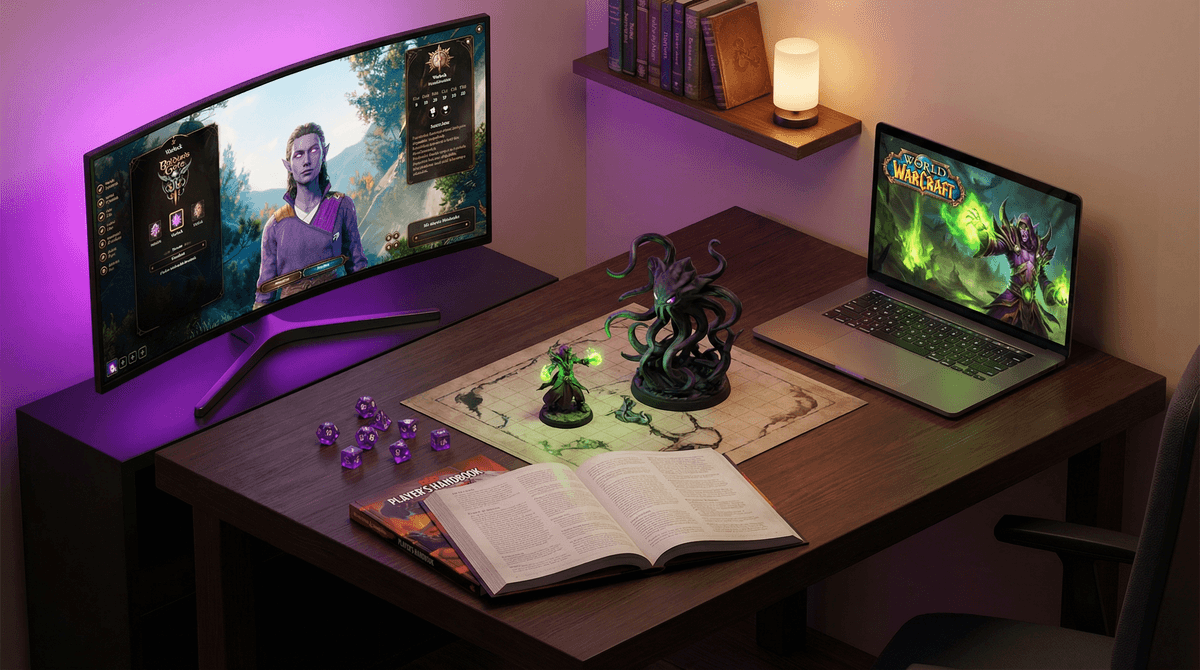
Your kid wants to play a warlock in Dungeons & Dragons, World of Warcraft, or Baldur's Gate 3. Before you panic about the whole "pact with a demon" thing, let's talk about what this actually means in gameplay terms versus what it sounds like at first glance.
The short version: Warlocks are magic users who gain their powers through a supernatural pact or bargain. Yes, sometimes that's with demons or devils. But in most games, it's a storytelling mechanic that teaches consequences, negotiation, and strategic thinking—not an endorsement of actual occult practices.
Where you'll see warlocks:
- Dungeons & Dragons 5th Edition (tabletop RPG, ages 12+)
- Baldur's Gate 3 (video game, rated M, ages 17+)
- World of Warcraft (MMO, rated T, ages 13+)
- Pathfinder (tabletop RPG, ages 12+)
- Warlock of the Magus World novels (ages 14+)
In fantasy gaming, a warlock is a spellcaster who gains magical abilities through a pact with a powerful supernatural entity called a "patron." Unlike wizards who study books or sorcerers who are born with magic, warlocks essentially make a deal: "Give me power, and I'll serve your interests."
The patron could be:
- A celestial being (angelic, good-aligned)
- A fey creature (trickster fairy-tale entities)
- A Great Old One (Lovecraftian cosmic horror)
- A fiend (demon or devil)
- An undead entity (ghost, lich, or death god)
- A genie (elemental being)
The "demon pact" version gets the most attention (and parental concern), but it's only one option among many. In D&D 5th Edition, about 40% of warlock players choose non-evil patrons.
Power fantasy with consequences: Warlocks are strong right out of the gate. They get powerful abilities early, which makes them feel effective even at low levels. But the pact creates built-in story drama—your patron might make demands, create moral dilemmas, or force tough choices.
Customization: The warlock class offers tons of personalization through "invocations" (special abilities you can mix and match). Kids who love building characters and optimizing combinations find this incredibly satisfying.
Roleplaying opportunities: The patron relationship creates natural storytelling hooks. Why did your character make this pact? What does the patron want? How far will you go to keep your powers? These questions drive engaging narrative gameplay.
Edgy aesthetic: Let's be real—the dark, mysterious vibe appeals to teens. Warlocks often wear dark robes, cast shadowy spells, and have morally complex backstories. It's the fantasy equivalent of wearing all black and listening to emo music.
The warlock class does involve mature themes that vary significantly by game and context:
In tabletop D&D (ages 12+):
- The content is entirely controlled by the Dungeon Master and players
- Many groups play warlocks with zero demonic content—just "mysterious magic"
- Even fiend pacts are usually handled like a Faustian bargain story, not actual occultism
- The game explicitly frames these as fantasy storytelling, not religious practice
In Baldur's Gate 3 (rated M, ages 17+):
- Contains mature sexual content, graphic violence, and dark themes
- Warlock storylines involve morally gray choices and consequences
- The game treats pacts as narrative contracts with gameplay implications
- Some companion characters are warlocks with complex, mature backstories
In World of Warcraft (rated T, ages 13+):
- Warlocks summon demons and use "fel magic" (corrupting energy)
- The class fantasy is about controlling dangerous forces, not worshipping evil
- Questlines explore themes of power, corruption, and redemption
- Visual effects include green fire, shadowy magic, and demonic imagery
Some families have genuine concerns about fantasy content involving demons, pacts, or dark magic. That's completely valid, and different families will draw different lines.
What warlocks are NOT:
- Instruction manuals for actual occult practices
- Endorsements of demon worship or satanism
- Attempts to normalize evil or immoral behavior
- Religiously meaningful in any real-world sense
What they ARE:
- Storytelling devices exploring themes of power, choice, and consequences
- Mechanical game systems (spell slots, abilities, damage types)
- Character archetypes from fantasy literature
- Frameworks for discussing ethics and decision-making
If your family's faith tradition has concerns about fantasy magic or demon imagery, that's worth discussing openly with your kids. Many families who avoid horror movies or certain Halloween content are perfectly comfortable with D&D warlocks because they understand the fantasy context. Others aren't, and that's okay too.
The key is distinguishing between fictional representation (warlocks in games) and actual belief or practice (real-world occultism). Most kids grasp this distinction easily, especially when playing with friends around a table or in a clearly fantastical video game world.
Ages 10-12:
- Tabletop D&D with appropriate DM guidance is fine
- Steer toward non-evil patrons (celestial, fey, genie)
- Focus on the "magical powers through a mentor" angle
- Skip games like Baldur's Gate 3 entirely (too mature)
Ages 13-15:
- World of Warcraft warlock class is appropriate for most teens
- D&D with fiend patrons is fine if your teen understands fantasy context
- Watch for social dynamics—some kids use "edgy" characters to test boundaries
- Good time to discuss fictional ethics vs. real-world values
Ages 16+:
- Baldur's Gate 3 becomes appropriate (though still rated M)
- Can handle complex moral narratives about power and corruption
- Warlock characters can prompt great discussions about consequences
- Trust their ability to separate fantasy from reality
It's mostly about game mechanics: Kids often choose warlocks because they're mechanically interesting (recharging spell slots on short rests, customizable invocations, powerful cantrips), not because they're obsessed with demons. My experience watching kids play D&D is that they spend 90% of warlock discussions arguing about which invocations are optimal, not contemplating evil.
The patron relationship teaches consequences: Unlike other classes that just "have" powers, warlocks must navigate an ongoing relationship with their patron. This creates natural teaching moments about agreements, obligations, and what happens when you accept power from others. Learn more about how D&D teaches negotiation skills .
.
You can set boundaries: If your family isn't comfortable with fiend patrons, that's a perfectly reasonable boundary. Your kid can play a warlock with a celestial patron (essentially a divine champion) or a fey patron (trickster fairy godparent) and get the same gameplay experience with different flavor.
Watch the social dynamics: Sometimes kids are drawn to "dark" character choices because of peer influence or wanting to seem edgy. That's worth a conversation—not to shame them, but to understand what they're getting from that choice. Are they genuinely interested in the character concept, or are they performing for friends?
The DM/game matters more than the class: A good Dungeon Master in tabletop games can run warlock content appropriately for any age. A poor DM might make any class uncomfortable. Similarly, Baldur's Gate 3 has mature content regardless of your class choice—the warlock class isn't what makes it M-rated.
Ages 12+ | The gold standard tabletop RPG where warlocks originated in their modern form. The Player's Handbook presents warlocks as one of twelve core classes with extensive customization. Content is entirely controlled by your play group. Check out our guide to starting D&D with kids.
Ages 17+ | Rated M for mature sexual content, graphic violence, and dark themes. Warlocks are a playable class with multiple patron options. The game features morally complex storylines where your pact has real consequences. Absolutely not for younger teens despite the fantasy setting.
Ages 13+ | Warlocks are one of the original classes in this MMO. They summon demons, cast shadow magic, and have a distinct "dark magic" aesthetic. The game frames them as wielding dangerous power for good (or at least, for your faction). Requires subscription and has the usual MMO concerns about online interaction and time commitment.
Ages 12+ | Similar to D&D but with different mechanics. The "Witch" class is closest to a warlock, gaining power from a patron. Slightly more complex rules than D&D 5e, but same fantasy context and content considerations.
If the warlock concept doesn't work for your family but your kid wants to play a magic user, here are alternatives with similar gameplay but different flavor:
Clerics: Get divine magic from worshipping a god. Same "power from another being" dynamic but explicitly religious and usually good-aligned.
Druids: Nature-based spellcasters who transform into animals. All the magical power, zero demonic imagery.
Sorcerers: Born with innate magic in their bloodline. Mechanically similar to warlocks but without the patron relationship.
Wizards: Study-based magic users who learn spells from books. The "earned through hard work" option.
Warlocks are a popular fantasy class that involves making a magical pact with a supernatural entity. Yes, sometimes that entity is a demon or devil. But in practice, this is a storytelling mechanic that creates interesting gameplay and narrative opportunities—not an instruction manual for actual occultism.
For most families, warlocks in games like D&D or World of Warcraft are perfectly fine, especially when you understand the fantasy context and can talk openly with your kids about separating fiction from reality. The class actually creates great teaching moments about consequences, agreements, and what happens when you accept power from others.
If your family has religious or philosophical concerns about demon imagery or dark magic, that's completely valid. You can either set boundaries around patron types (celestial and fey patrons have the same gameplay), choose alternative classes, or decide fantasy gaming with these elements isn't right for your family.
The most important thing isn't the specific class your kid plays—it's whether they're engaging with age-appropriate content in healthy social contexts, understanding the difference between fantasy and reality, and having conversations with you about the stories they're experiencing.
If your kid wants to play a warlock:
- Ask them what appeals to them about the class (mechanics? story? aesthetics?)
- Understand which game they're playing and check its age rating
- If it's tabletop D&D, talk to the DM about content guidelines
- Set clear boundaries if certain patron types aren't okay for your family
- Use it as an opportunity to discuss fantasy vs. reality and fictional ethics
If you want to learn more: