

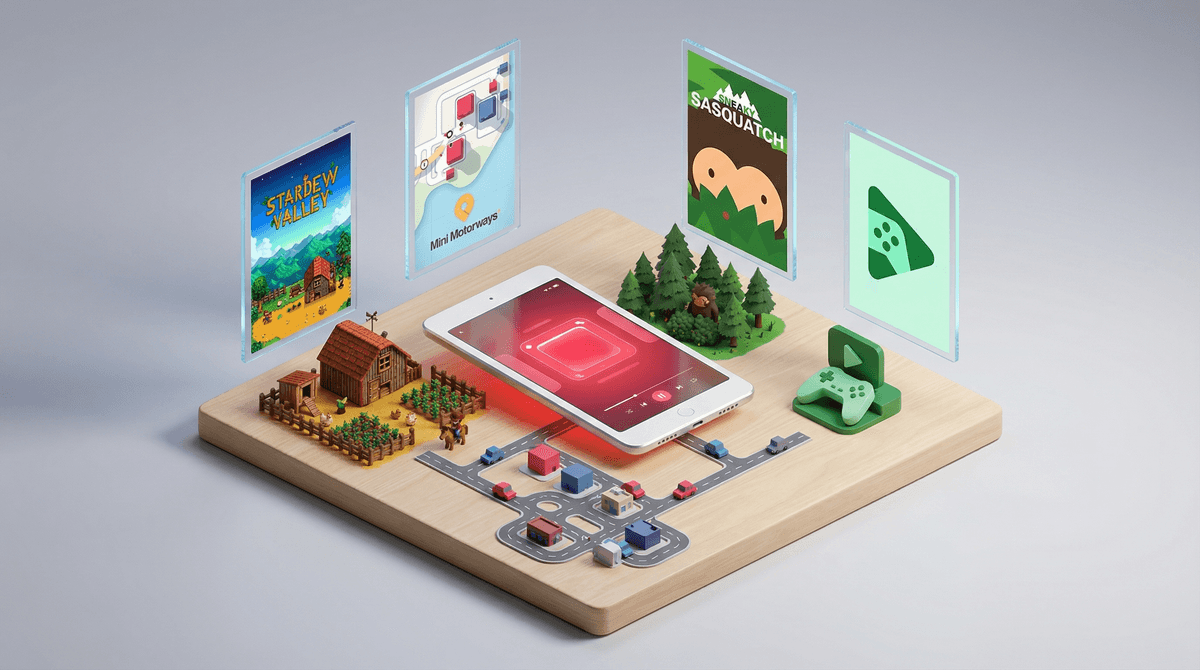
The Truth About Apple Arcade and Ads
TL;DR: Apple Arcade is genuinely ad-free and in-app purchase-free. No asterisks, no fine print. For $6.99/month (or $49.99/year), you get 200+ games with zero ads, zero microtransactions, and zero dark patterns. It's one of the few gaming platforms that actually delivers on its promises to parents.
If you're tired of explaining why you won't buy another 1,000 Robux or watching your kid sit through 30-second ads between levels, Apple Arcade might be the answer you've been looking for.
Apple Arcade is Apple's gaming subscription service that launched in 2019. Think Netflix, but for games. You pay a monthly fee and get unlimited access to a curated library of games across iPhone, iPad, Mac, and Apple TV.
The pitch to parents is simple: no ads, no in-app purchases, no surprise charges. But in 2026, we've all learned to be skeptical of "free from" claims. So let's actually dig into whether Apple Arcade lives up to the hype.
Yes. Completely.
I've spent considerable time testing Apple Arcade games across different genres and age ranges, and the ad-free promise is rock solid. Here's what that actually means:
- No video ads between levels - The thing that makes most mobile games unbearable for parents
- No banner ads - Not even subtle ones at the bottom of the screen
- No "watch this ad for a bonus" - A common workaround other platforms use
- No rewarded video ads - Where kids watch ads to earn in-game currency
- No sponsored content or brand integrations - Games aren't secretly McDonald's commercials
This is genuinely different from the "free" gaming ecosystem most kids are used to. When a level ends in Sneaky Sasquatch, you just... play the next level. Wild concept, I know.
This is where Apple Arcade really shines for parents. There are literally no in-app purchases available in Apple Arcade games. Not because Apple is hoping you'll forget and add them later, but because it's a requirement for games to be included in the service.
What this means practically:
- Your kid can't accidentally (or "accidentally") spend $50 on gems
- There's no premium currency to explain or budget for
- No "pay to win" mechanics that make free players feel like second-class citizens
- No pressure to buy cosmetics, battle passes, or loot boxes
- No pop-ups asking for money every time your kid opens the game
If you've been dealing with Roblox and the endless Robux requests (learn more about how Robux is in fact real money ), or Fortnite and the V-Bucks economy, this will feel like stepping into an alternate universe.
This is the hidden "ad" that concerns a lot of parents in 2026. Even if games don't show traditional ads, are they harvesting data to sell to advertisers?
Apple Arcade games are required to follow Apple's privacy guidelines, which are genuinely more strict than most platforms. Games can't:
- Sell your child's data to third parties
- Track them across other apps and websites
- Include third-party analytics that feed advertising networks
- Require creating accounts that collect personal information (though some games offer optional accounts for cloud saves)
Is Apple collecting some data? Sure—they track what games you play to improve recommendations. But it's not being packaged and sold to advertisers, and it's not following your kid around the internet.
Let's be real about the limitations:
1. You need Apple devices. This isn't a catch if you're already in the Apple ecosystem, but if your kid games on a Switch, PlayStation, or Android tablet, Apple Arcade won't work. It's Apple devices only.
2. Not all games are created equal. The library has some genuinely excellent games (What the Golf?, Grindstone, Slay the Spire+), but also some forgettable filler. You'll need to curate what your kids play, just like you would with any platform.
3. It's still screen time. Ad-free doesn't mean brain-free. A kid binging Apple Arcade games for 6 hours is still a kid staring at a screen for 6 hours. The quality is better, but moderation still matters.
4. Some games have online multiplayer. While there are no ads or purchases, some games do have online features where kids can interact with strangers. You'll still need to think about online safety.
5. The social factor. Your kid's friends are probably playing Fortnite, Minecraft, or Roblox. Apple Arcade games are less likely to be the thing everyone's talking about at lunch. That might matter to your kid, or it might not.
Here are Apple Arcade games that have earned genuine kid and parent approval:
For Ages 6-9:
- Sneaky Sasquatch - Open-world adventure that's like a kid-friendly Grand Theft Auto (you're a sasquatch stealing food from campers)
- [Sago Mini](https://screenwiseapp.com/media/sago-mini-boardgame collection - Gentle, creative games for younger kids
- Lego Builder's Journey - Puzzle game that feels like playing with actual Legos
For Ages 10-13:
- What the Golf? - Absurdist physics-based golf (barely about golf, totally hilarious)
- Grindstone - Puzzle combat game with surprising depth
- Mini Motorways - City planning that's actually engaging
For Ages 14+:
- Slay the Spire+ - Deep strategy card game
- Dead Cells+ - Challenging action platformer (some violence, but stylized)
- Stardew Valley+ - The cozy farming sim that everyone loves
For more options, check out games on Apple Arcade for kids.
If your kid is currently playing ad-supported mobile games: Yes, probably. You're trading $7/month for your sanity and your kid's attention span.
If your kid is spending money on in-app purchases: Definitely yes. If you're buying Robux or V-Bucks more than once a month, Apple Arcade is cheaper and healthier.
If your kid primarily plays console or PC games: Maybe not. The games aren't as deep as Zelda or Minecraft, and you're paying for a separate subscription on top of what you already have.
If you want truly screen-free alternatives: Check out alternatives to video games or board games for kids instead.
Set expectations upfront. If you're switching from free games to Apple Arcade, explain why. "These games don't interrupt you with ads or try to sell you stuff. That's worth paying for." Most kids get this once they experience it.
Use Screen Time limits. Apple Arcade being ad-free doesn't mean unlimited play is healthy. Set time limits through Screen Time settings—the games will still be there tomorrow.
Try the free trial. Apple typically offers a 1-3 month free trial. Use it to actually test games with your kids before committing.
Share with family. One subscription works for up to 6 family members through Family Sharing. That's potentially $1.17 per person if you max it out.
Download for offline play. Most games work without internet, which is clutch for road trips or flights. Download ahead of time.
Apple Arcade is the rare tech product that actually does what it says on the tin. No ads means no ads. No in-app purchases means no in-app purchases. There's no fine print, no workarounds, no "technically ad-free but..."
For $6.99/month, you get a genuinely healthier gaming option for kids. The games aren't designed to be addictive dopamine slots. They're not trying to extract money from children who don't understand currency. They're just... games.
Is it perfect? No. The library isn't as vast as you might want, and it won't replace every gaming experience your kid loves. But if you're tired of the predatory mechanics in most mobile games, Apple Arcade is a legitimate solution.
The truth about Apple Arcade and ads is refreshingly simple: there aren't any. In 2026, that's revolutionary.
- Try the free trial - See if your kids actually enjoy the games before committing
- Set up Screen Time limits - Even good games need boundaries
- Explore the library together - Help your kids find games that match their interests
- Consider what you're currently spending - Add up Robux, V-Bucks, and other in-app purchases over the last few months
- Check out games on Apple Arcade for kids for age-appropriate recommendations
And if you want to understand how Apple Arcade compares to other gaming options, ask about alternatives to Roblox or kid-friendly gaming platforms.