

TL;DR
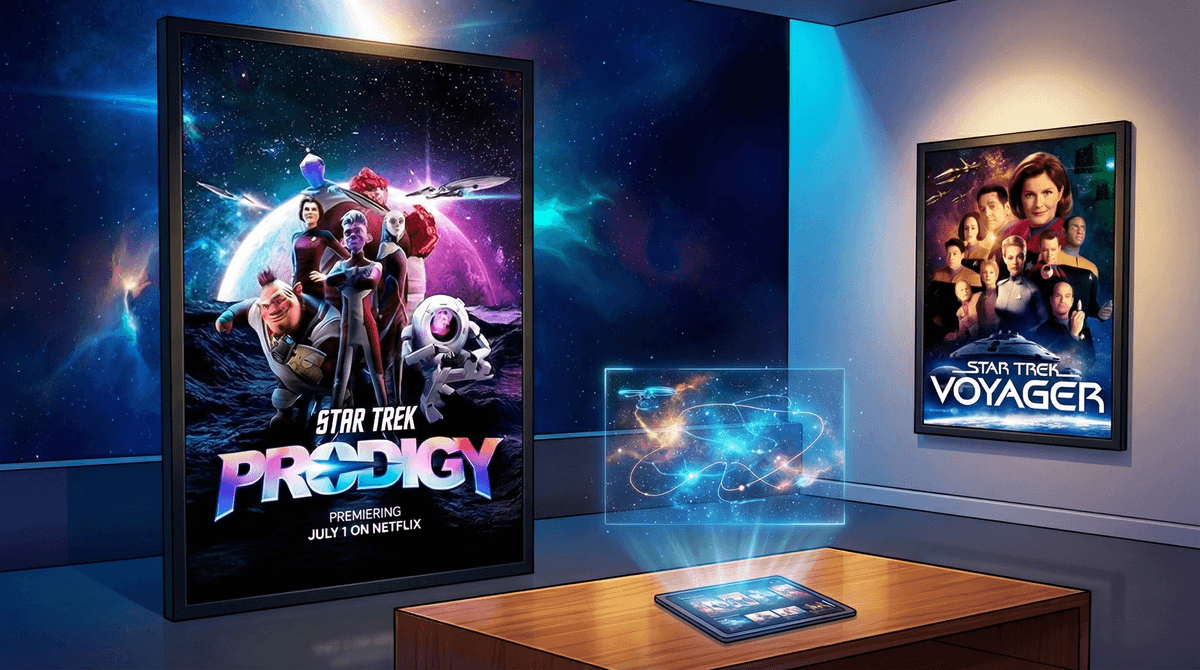
Star Trek: Prodigy is the "on-ramp" to sci-fi we’ve been waiting for. It’s a high-quality, cinematic animated series that follows a group of ragtag alien kids who escape a prison colony by stealing a Starfleet ship. It’s perfect for ages 7+, successfully avoiding the "brain rot" trap of mindless animation while teaching deep lessons about teamwork, ethics, and identity. If your kid likes Minecraft for the exploration or Star Wars: The Clone Wars for the action, this is a must-watch.
If you grew up with Captain Picard or Janeway, you know Star Trek can sometimes be... wordy. It’s a lot of sitting in chairs and talking about subspace anomalies. Star Trek: Prodigy flips the script.
The show starts on Tars Lamora, a grim mining colony where kids (the "Unwanted") are forced to work for a villain called the Diviner. Our main characters don't even speak the same language until they find the U.S.S. Protostar, a derelict Federation ship. They aren't Starfleet cadets; they’re refugees who have no idea what the Federation even is.
Guided by a hologram of Captain Kathryn Janeway (voiced by Kate Mulgrew, reprising her iconic role from Star Trek: Voyager), they have to learn how to fly the ship, work together, and decide what kind of people they want to be. It originally aired on Nickelodeon but has since moved to Netflix, where both Season 1 and Season 2 are currently streaming.
Ask our chatbot for more shows like Star Trek: Prodigy
In a world of "Skibidi Toilet" memes and 15-second TikTok clips, Star Trek: Prodigy is a breath of fresh air. It’s "prestige TV" for the elementary and middle school set.
- The "Outcast" Energy: Every kid feels like an outsider sometimes. The crew—Dal, Gwyn, Rok-Tahk, Jankom Pog, Zero, and Murf—are all "weirdos" in their own way. Seeing them find a home in each other is deeply relatable.
- The Mystery: The show is paced like a serialized mystery. Why was the ship abandoned? What is the "Living Construct"? It keeps kids engaged without relying on loud, flashing lights or repetitive "Ohio" humor.
- Murf: Every show needs a mascot, and Murf (an indestructible, semi-sentient blue blob) is a certified hit. He’s the "Baby Yoda" of the Trek world but with more chaotic energy.
Teamwork as a Survival Skill
Most kids' shows talk about "the power of friendship," but Star Trek: Prodigy treats teamwork as a technical skill. The characters start out selfish and suspicious—because that’s how they survived the prison colony. Watching them learn that they need Jankom’s engineering and Rok-Tahk’s scientific curiosity to literally stay alive is a great lesson in functional collaboration.
Second Chances and Redemption
Dal R’El, the self-appointed captain, starts off as kind of a jerk. He’s arrogant and insecure. But the show allows him to fail and grow. It teaches kids that your "starting stats" or your past mistakes don't define your future. This is a core Star Trek tenet, but it’s presented here through the lens of childhood development.
The Ethics of the "Prime Directive"
Star Trek is famous for its moral dilemmas, and Prodigy doesn't shy away from them. There are episodes that deal with the "Prime Directive" (the rule about not interfering with other cultures). It forces kids to think: Just because we CAN help, SHOULD we? What are the unintended consequences?
While Star Trek: Prodigy is rated TV-Y7, there are a few things to keep on your radar:
- Ages 6-8: They’ll love the colors, the action, and Murf. Some of the Diviner’s scenes might be a little "spooky" or intense, but it’s generally on par with a Disney movie.
- Ages 9-12: This is the sweet spot. They’ll catch the nuances of the character relationships and the "science" (even the fake sci-fi science).
- Ages 13+: Surprisingly, even teens and adults like this show. Season 2, in particular, leans heavily into time travel and multiverse theory that will keep a 14-year-old engaged.
Safety Note: If your kid starts Googling "Star Trek," they might stumble into older fandom spaces. While the Trek community is generally one of the more "wholesome" ones, YouTube comments on any franchise can get toxic. Stick to the show itself or curated educational YouTube channels if they want to learn about space.
If your family is already deep into other franchises, here’s how Star Trek: Prodigy compares:
- Vs. Star Wars: Rebels: Very similar "found family" vibes. Prodigy is a bit more focused on science and exploration, while Rebels is more about the "good vs. evil" fight.
- Vs. The Last Kids on Earth: Prodigy is much more serious and high-stakes. It lacks the "slacker humor" of Last Kids but offers more intellectual depth.
- Vs. Avatar: The Last Airbender: It shares that "epic journey" feel. If your kid liked the character growth in Avatar, they will likely connect with Gwyn’s journey in Prodigy.
Is it a "Hidden" Commercial?
Unlike some shows that exist solely to sell plastic toys, Star Trek: Prodigy feels like a genuine piece of storytelling. Yes, there are toys, but the show isn't built around "collecting them all."
The "Janeway" Factor
If you’re a fan of Star Trek: Voyager, you’re going to love watching this with your kids. It’s a great way to bridge the generational gap. Hologram Janeway is essentially a "Digital Wellness Assistant" herself—she sets boundaries, encourages the kids to solve their own problems, and provides a moral compass.
Season 2 Complexity
Heads up: Season 2 gets complicated. We’re talking "time-loops-and-alternate-realities" complicated. You might find yourself pausing the show to explain how time travel works (or Googling it yourself). It’s great for critical thinking, but it might be a bit much for a 6-year-old to follow solo.
Use the show as a springboard for some "intentional parenting" moments:
- On Leadership: "Dal wants to be the captain, but he doesn't always listen. What makes a good leader vs. a bossy one?"
- On Diversity: "The crew all come from different planets and have different abilities (like Zero being a non-corporeal energy being). How does having different perspectives help them solve problems?"
- On Technology: "Hologram Janeway is an AI. How is she different from ChatGPT or the AI we use today?"
Star Trek: Prodigy is one of the best examples of modern "smart" kids' TV. It respects its audience’s intelligence, looks beautiful, and carries the optimistic "we can be better" message that Star Trek has championed for 60 years.
If you're looking for a show that will actually spark a conversation at dinner—rather than just being something they zone out to—this is your winner.
Next Steps:
- Watch the first three episodes together (they play like a movie).
- If they love the science aspect, check out the Brains On! podcast.
- If they want more space adventure, look into The Wild Robot by Peter Brown.