

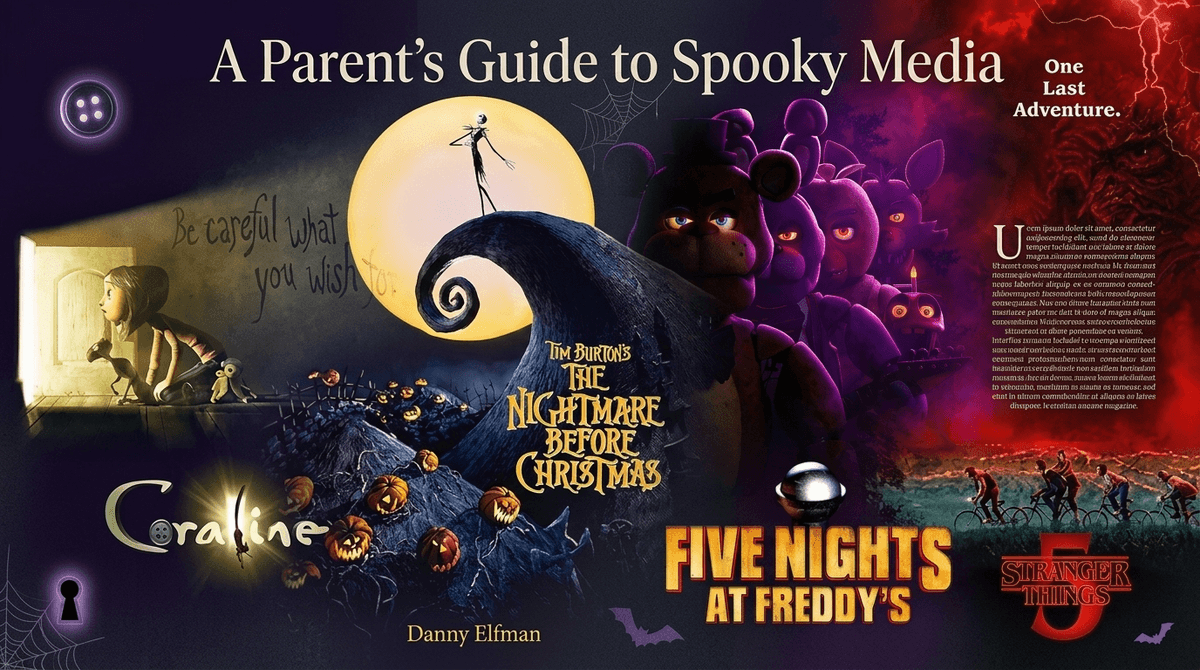
TL;DR If you’re looking for a quick "yes" or "no" on whether to hit play tonight, here are the top gateway horror picks that won't require you to sleep on their floor for a week:
- Best for Ages 6-9: The Nightmare Before Christmas – Classic, spooky-cool, and musically brilliant.
- Best for Ages 9-12: Coraline – High-quality animation, but legitimately creepy.
- Best for Ages 10-13: Five Nights at Freddy's – The ultimate community-norm choice; your kids are likely already talking about it.
- Best for Teens (13+): A Quiet Place – Intense, psychological, and high-quality filmmaking.
- Avoid for Kids: Winnie-the-Pooh: Blood and Honey – It's just trashy "shock" horror that ruins childhood memories for the sake of it. Skip.
Get a spooky movie list based on your kid's specific fears
Screenwise Parents
See allAt some point, every parent gets the request. Maybe they saw a clip of a "Skibidi Toilet" episode that went from weird to actually dark, or they’ve been playing Doors on Roblox and now they want the "real" thing.
It feels counterintuitive to let our kids watch something designed to scare them, but "gateway horror" is actually a developmental milestone. It’s about controlled fear. When a child watches a scary movie in the safety of their living room, they are practicing how to regulate their nervous system. They’re learning that they can feel a spike of adrenaline and come out the other side okay.
Plus, in the world of "Ohio" memes and "brain rot" content, horror is one of the few genres that still demands their full attention. It’s hard to doom-scroll when you’re waiting for a jump scare.
For this age group, we want "safe scares." The focus should be on monsters that are misunderstood or settings that are atmospheric but not truly threatening.
This is the gold standard. It’s visually stunning and introduces kids to the "aesthetic" of horror without the trauma. Jack Skellington is a relatable protagonist who just wants to try something new. It’s spooky, but the stakes are mostly about a misunderstood holiday, not existential dread.
If your kid is particularly sensitive, start here. It’s basically a comedy that uses horror icons. It’s "horror" in the same way a Halloween-themed cereal is horror—it’s just the branding. It helps de-mystify characters like Dracula and Frankenstein's monster.
Whether you go with the 90s show or the newer Goosebumps movie, R.L. Stine is the master of the "middle-grade" scare. The stories usually involve a kid solving a mystery, which gives your child a sense of agency.
Check out our guide on why R.L. Stine is the perfect gateway to horror
This is the age where kids start wanting to prove their "bravery." They are likely already exposed to horror themes through YouTube or gaming. This is the prime time for building resilience.
Do not let the "PG" rating fool you. This movie is genuinely unsettling. The "Other Mother" with button eyes is the stuff of actual nightmares. However, it’s also a masterpiece of storytelling. It deals with themes of appreciation and bravery. If your kid can handle this, they’re ready for the bigger leagues.
This one captures the "neighborhood legend" vibe perfectly. It’s about three kids who realize a neighbor's house is actually a living, breathing monster. It has some intense moments, but the "kids-on-a-mission" trope keeps it grounded.
Look, the movie is... fine. It’s not a cinematic masterpiece, and the pacing is a bit of a mess. But for your 11-year-old, this is their Star Wars. They know the lore from the Five Nights at Freddy's game. The movie is surprisingly tame on gore but heavy on atmosphere and jump scares. It’s a massive cultural touchstone right now.
Learn more about the FNAF lore and why your kids are obsessed
At this stage, we’re moving away from monsters under the bed and into psychological tension or "creature features" that have higher stakes.
This is a fantastic "family" horror movie because the core of the story is about a family protecting each other. It’s incredibly tense, but there is very little "slasher" violence. It’s more about the dread of making a sound. It’s a great way to show teens that horror can be "prestige" cinema, not just cheap thrills.
While it’s a TV show, it’s the definitive "gateway horror" for the modern generation. It pays homage to 80s classics like Poltergeist and It. Warning: it gets significantly darker and more violent in the later seasons (Season 4 is basically a Nightmare on Elm Street tribute).
Based on the Scary Stories to Tell in the Dark book that probably traumatized you in the school library, this movie is a solid anthology-style horror. It’s creepy and uses practical effects that look "real" in a way that CGI often doesn't.
Not all horror is created equal. When you're vetting a movie, look out for these three things that often cause more "damage" than a simple monster:
- Mean-Spiritedness: Some horror movies (especially the "torture porn" subgenre) find joy in the suffering of characters. This isn't "scary-fun"—it's just depressing. For kids, we want horror where the protagonists are capable and have a chance.
- The "Uncanny Valley": This is huge with modern digital trends like Skibidi Toilet. When things look almost human but are slightly off, it triggers a deep primal fear. This can lead to more persistent anxiety than a giant green monster would.
- Jump Scares vs. Atmosphere: A movie that relies solely on loud noises and things popping out is "cheap." It’s a startle response, not a fear response. High-quality horror like The Sixth Sense builds tension, which is much better for teaching kids how to manage their emotions.
Check out our guide on the "Uncanny Valley" and why it freaks kids out
If you're nervous about a specific title, try the "Side-Car" Method:
- Watch together: Don't let them watch a new horror movie alone in their room at night.
- Keep the lights low, but not off: Total darkness increases the "threat" level.
- Talk about the effects: "Wow, did you see how they used makeup to make that zombie look gross?" This breaks the "immersion" and reminds them it’s art, not reality.
- The "Pause" Rule: Give them permission to pause the movie if it gets too intense. Taking a five-minute break to talk about what just happened can prevent a nightmare later.
Horror isn't for every kid. If your child is prone to night terrors or has a very active imagination that leans toward the dark, there is no rush to "toughen them up."
But for the kids who are curious, leaning into age-appropriate horror can be a great bonding experience. It’s a way to say, "The world can be scary, but we can face it together—and we can even have fun doing it."
Just maybe avoid It until they’re old enough to realize that most clowns are just underpaid actors, not ancient interdimensional entities.
- Audit their YouTube: See if they are watching "horror shorts" or "creepypastas" which are often unrated and way more intense than PG-13 movies.
- Look at their Roblox history: If they are playing Piggy or Doors, they are already primed for gateway horror movies.
- Host a "Spooky Night": Start with The Nightmare Before Christmas and see how they handle the vibe.
Get a list of "cozy" horror games for kids who like the vibe but not the scares