

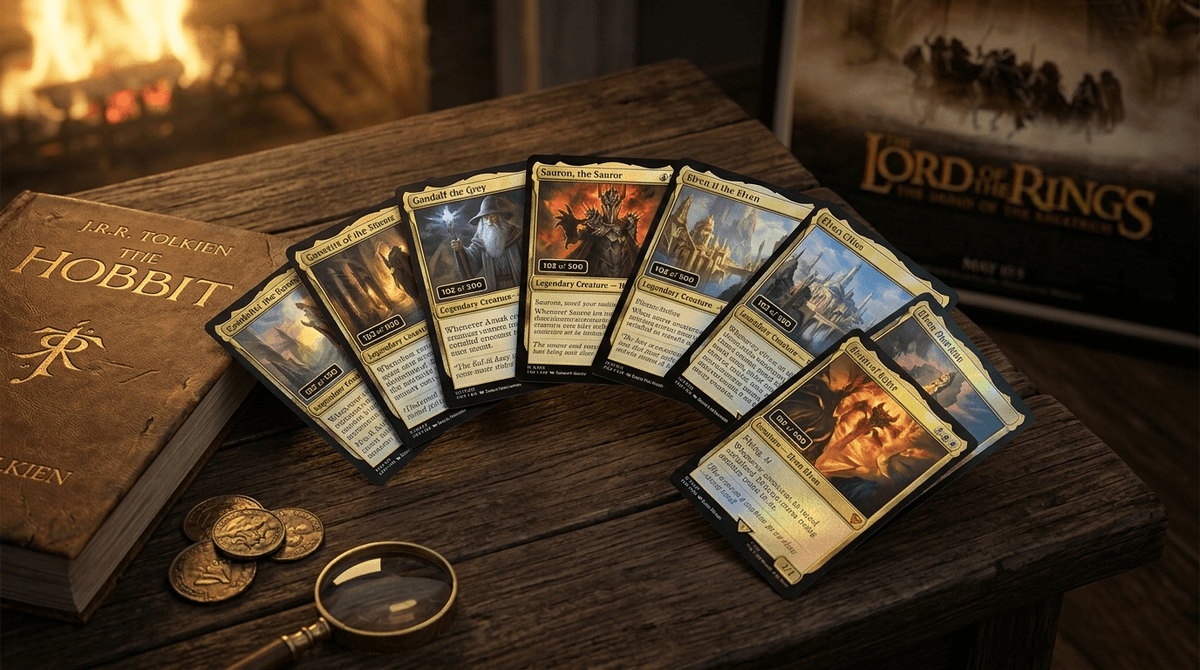
If your kid is asking for a "Hobbit Collector Booster," they aren't just asking for a pack of cards—they’re asking for a $40 lottery ticket wrapped in Middle-earth nostalgia and the hope of finding a "Gleaming Gold Smaug" card that could potentially pay for a semester of college.
TL;DR: The Hobbit MTG Collector Boosters are premium, high-cost packs ($35-$50 each) for Magic: The Gathering that prioritize rare "serialized" cards over actual gameplay. Screenwise recommends these only for older teens (14+) who understand the "lottery" nature of modern TCGs; for kids who just want to play with friends, stick to the much more affordable Play Boosters or a Commander Deck.
In the world of Magic: The Gathering, there are two ways to buy cards: the "I want to play the game" way and the "I want to find treasure" way. Collector Boosters are firmly in the latter category.
Released as part of the 2026 "Return to the Shire" expansion, these packs are filled with shiny (foil) cards, alternate artwork that looks like it was ripped straight from an illuminated manuscript of The Hobbit book, and "borderless" cards that feature sprawling scenes of Erebor or Mirkwood.
Unlike a standard pack of cards, every single card in a Collector Booster is "special" in some way. But the real reason parents are seeing these on birthday wish lists is the "Gleaming Gold Smaug" promotion. Taking a page out of the 2023 "One Ring" playbook, Wizards of the Coast has inserted ultra-rare, numbered versions of the Smaug card into these packs. Some are "1 of 500," but there are rumors of a "1 of 1" version that has the entire hobby in a frenzy.
It’s easy to dismiss this as just another card game, but for a generation raised on Roblox "blind boxes" and Fortnite skins, the transition to high-stakes physical collectibles is seamless.
- The "Loot Box" Rush: Opening a Collector Booster provides a massive dopamine hit. The cards are objectively beautiful, and the "reveal" of a rare card is tailor-made for TikTok or YouTube Shorts.
- The Secondary Market: Kids are hyper-aware that certain cards are worth money. They see influencers selling cards for thousands of dollars and view these boosters as an "investment" rather than a toy.
- The Tolkien Legacy: Whether they fell in love with The Lord of the Rings movies or just finished reading The Hobbit in school, the theme carries a weight that Pokemon TCG sometimes lacks.
Let’s talk numbers, because this is where intentional parenting meets the bank account. A single Hobbit Collector Booster costs roughly the same as a brand-new video game like Stardew Valley or Terraria.
If your child buys a pack and doesn't "hit" a rare card, they are often left with about $5 worth of cardboard. Screenwise categorizes this as "high-volatility spending." It’s not necessarily bad, but it requires a conversation about the difference between buying a game you can play for 100 hours and buying a chance at a windfall.
According to Screenwise data, about 15% of middle schoolers are now engaging with "serialized" card hunting, a trend that has doubled since the original Lord of the Rings set in 2023. This is shifting the hobby from a social game into a speculative market.
If your teen is obsessed with finding the Gleaming Gold Smaug, this is a perfect moment for a lesson in digital and physical literacy.
Instead of just saying "no," try asking:
- "If you don't get the Smaug card, will you still be happy with the cards in the pack?"
- "Are you planning to play the game with these, or just keep them in a sleeve?"
- "What’s your 'stop-loss'—how many packs are you willing to buy before you decide to just buy the specific card you want online?"
In the TCG community, we call this "buying singles." Often, it’s much cheaper to spend $10 on the specific Bilbo Baggins card your kid wants than to spend $200 on boosters trying to find him.
If your family is actually interested in playing the game—which, by the way, is a fantastic way to build math skills, strategic thinking, and social bonds—Collector Boosters are actually the worst way to start.
- For Beginners: Look for the Magic: The Gathering Starter Kit. It usually comes with two ready-to-play decks for under $20.
- For Hobbit Fans: The "Tales of Middle-earth" Commander Decks are pre-constructed 100-card decks that allow you to play as your favorite characters right out of the box.
- For Lower Stakes: If the "gambling" aspect of MTG feels too intense, consider Catan or Wingspan. They offer deep strategy without the predatory monetization of "chase" cards.
Q: What age is The Hobbit MTG appropriate for?
The game itself is rated 13+ by Wizards of the Coast due to complex strategy and some mild fantasy violence in the artwork. However, Screenwise suggests that the "Collector Boosters" specifically are best reserved for ages 15 and up due to the high cost and gambling-adjacent nature of the serialized card hunt.
Q: Is the Gleaming Gold Smaug card actually worth money?
Yes, but the odds of pulling one are astronomically low—often less than 1% per booster box. While a serialized Smaug might sell for $500 to $5,000 (or more for the "1 of 1"), the vast majority of packs will not contain one, making it a very expensive gamble.
Q: What is the difference between a Play Booster and a Collector Booster?
A Play Booster ($5-$7) is designed for playing the game and contains a mix of cards for building a deck. A Collector Booster ($35-$50) is designed for "bling," containing mostly foil cards, special art treatments, and the rare chance at a serialized "Gold" card.
Q: Can my kid play Magic: The Gathering online for free?
Yes, Magic: The Gathering Arena is a free-to-play app that teaches the rules. It’s a great way to see if they actually like the gameplay before you start dropping $40 on physical Collector Boosters.
The Hobbit MTG Collector Boosters are the "luxury cars" of the card-playing world. They are beautiful, exciting, and potentially valuable, but they aren't necessary to enjoy the game. If your kid is a massive Tolkien fan, one pack might be a fun, memorable gift. But if they're chasing the "Gold Smaug" to get rich, it's time to sit down and have a real talk about the house always winning.
Learn more about TCG monetization Check out our guide to the best board games for teens