

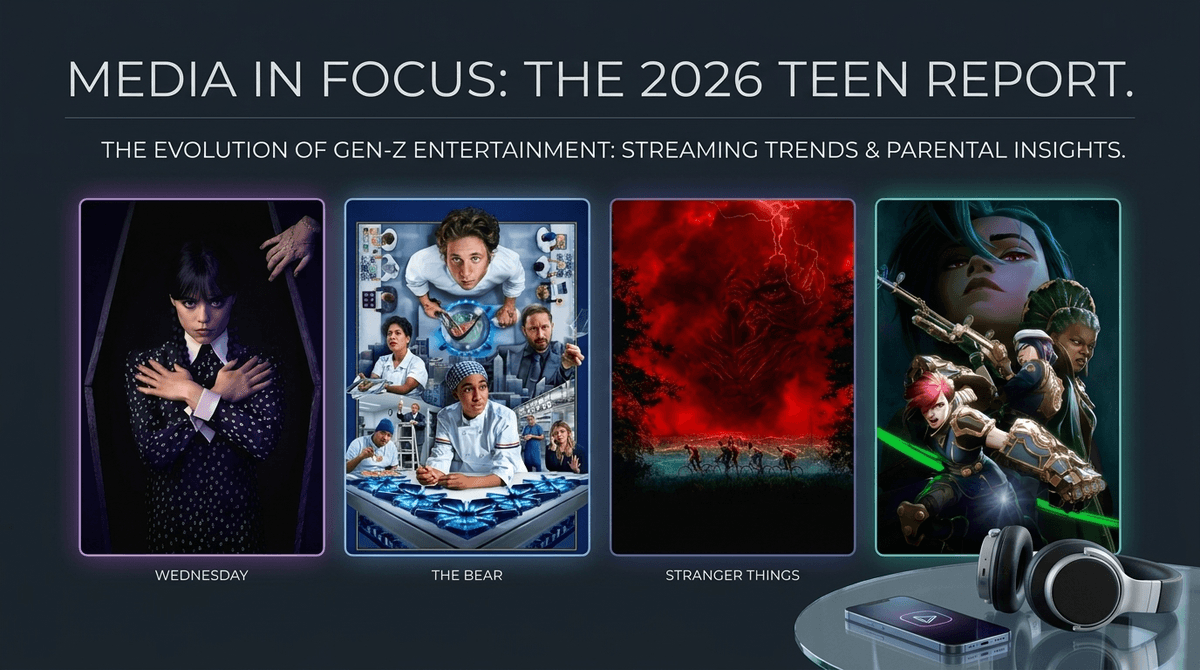
TL;DR If you’re still looking for the Dawson’s Creek or even the Gossip Girl version of teen drama, you’re looking in the wrong decade. In 2026, teen TV has ditched the prom for "high-stakes realism"—think economic anxiety, "Sigma" mindsets, and dark, genre-bending mysteries.
- The Big Hits: Wednesday Season 2 is the reigning champ, leaning into horror over romance.
- The Shift: Teens are increasingly ditching "teen shows" for "prestige TV" like The Bear because they crave competence and "the grind."
- The Concern: The "manosphere" isn't just on YouTube; it’s influencing how boys consume shows like Peaky Blinders.
- The Safe Bets: Heartstopper and The Dragon Prince remain the rare "wholesome" holdouts.
Find a show list based on your teen's interests
Remember when teen dramas were about who was dating whom and whether the protagonist would make it to the state championship? Those days are mostly over. In 2026, the "teen" label on a show is almost an insult to a 16-year-old.
Today’s teens are watching content that mirrors the intensity of the world they’re inheriting. They aren't looking for escapism in the form of glittery high school hallways; they’re looking for competence, dark humor, and high-stakes realism. This is why your 14-year-old might be more interested in a show about a high-stress kitchen than a show about a high school musical.
There’s a reason Wednesday became a cultural titan. It wasn't just the dance. It was the fact that Wednesday Addams is hyper-competent, cynical, and utterly uninterested in "fitting in."
Teens in 2026 are dealing with a digital landscape that feels increasingly competitive. Whether it’s the pressure to have a "side hustle" or the constant algorithmic push toward "looksmaxxing" (the obsession with improving one's physical appearance), they gravitate toward characters who have mastered a skill or who operate outside the "normie" system.
The newest season has officially ditched the "love triangle" nonsense that bogged down season one. Jenna Ortega pushed for more horror and less romance, and it’s paying off.
- The Vibe: Dark, investigative, and fiercely independent.
- Why it matters: It’s a rare bridge show—parents and teens can actually watch this together without it being cringe. It deals with female friendship and boundaries in a way that feels earned, not preached.
Technically an "adult" show, but its popularity among the 15-18 demographic is massive.
- The Vibe: Anxiety-inducing, fast-paced, and obsessed with "the grind."
- Why it matters: This is the "Manosphere-adjacent" gateway. It celebrates discipline and mastery. While the show itself is brilliant, teens often watch it through the lens of "hustle culture."
We need to talk about what’s happening with teen boys and their watchlists. You’ve probably heard the term "Sigma" or "Alpha" tossed around. This isn't just a TikTok meme; it’s a filter through which many boys are now watching television.
They are gravitating toward "Literally Me" characters—anti-heroes who are stoic, successful, and often deeply lonely. Shows like Peaky Blinders and The Boys are being sliced into "Sigma edits" on YouTube and Reels, stripping away the show's original critique of toxic masculinity and turning the characters into idols of "dominance."
If your son is into anime, he’s likely watching this. It’s the ultimate "zero-to-hero" story where the protagonist literally "levels up" his body and power through sheer will and isolation.
- The Concern: It reinforces the idea that the only way to be valuable is to be the strongest person in the room.
- The Conversation: Ask them: "Is it actually possible for one person to do everything alone, or is that just a fantasy?"
Learn more about the "Sigma" mindset and how it affects teen boys
The good news? The "brain rot" soap operas of the 2010s are being replaced by high-concept genre shows. Teens are actually watching things that require them to pay attention to plot mechanics and world-building.
As the series wraps up in 2026, it remains the gold standard. It’s the last "monoculture" show that almost every kid in middle and high school is watching. It’s scary, it’s emotional, and it actually values the concept of a "friend group" over individual clout.
Based on the League of Legends universe, this show is a masterpiece of animation and storytelling. It deals with class warfare, sisterhood, and the ethics of technology (Hextech).
- Ages: 14+ (It’s violent and heavy).
- Why we love it: It’s one of the few shows that treats "teen" characters like adults with real agency and consequences.
The line between "Teen" (TV-14) and "Adult" (TV-MA) has never been blurrier. Shows like Euphoria set a precedent for graphic content that hasn't really gone away, even if that specific show has faded.
What to look out for:
- Vaping and Substance "Aesthetics": Shows often make substance use look like a moody, artistic choice rather than a problem.
- The "Sad Girl" Aesthetic: Shows that romanticize mental health struggles (think 13 Reasons Why legacy) are still floating around in the form of "trauma-core" edits on social media.
- Financial Nihilism: A lot of 2026 content carries a "the world is ending anyway, so why try?" vibe.
Check out our guide on how to talk to your teen about "Euphoria" style content
If you sit your teen down and say, "I am concerned about the Manosphere influence in your viewing of Peaky Blinders," they will rightfully roll their eyes into the back of their skull.
Instead, try the "Media Literacy" approach.
- Ask about the craft: "The lighting in Wednesday is wild—how do they make it look so gloomy but still see everything?"
- Ask about the stakes: "Why do you think everyone in The Bear is so stressed? Is it just the sandwiches, or is it something else?"
- Challenge the "Sigma" edits: If you see them watching a 15-second clip of a character being "alpha," ask, "What happened to that guy in the next scene? Didn't he lose everything because he couldn't talk to his friends?"
Teens in 2026 aren't just "binging" shows; they are looking for a roadmap for how to survive a world that feels increasingly intense. Whether they are watching Wednesday for her "I don't care" attitude or The Bear for its "grind" mentality, they are absorbing values about work, relationships, and identity.
Our job isn't to ban the "dark" stuff—it's to be the person they can talk to when the "realism" of their TV shows starts to feel a little too real.
Next Steps:
- Take the Screenwise Survey: See how your teen’s media diet compares to other kids in their grade. Start the Survey
- Watch one episode: Pick a show from their "Continue Watching" list and just sit through one episode. No lecturing, just watching.
- Check the WISE scores: Before you say "yes" to that new TV-MA show they're begging for, check the Screenwise Media Database for a breakdown of what’s actually in it.