

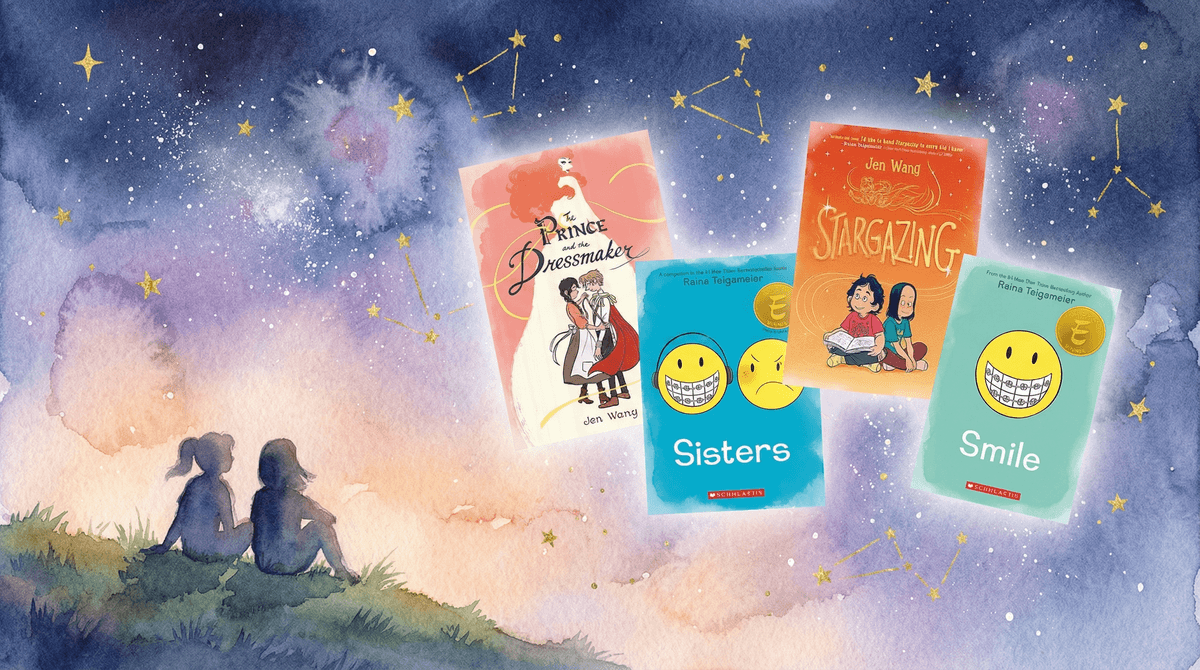
Stargazing is a middle-grade graphic novel that tells the story of two girls navigating the complexities of friendship, identity, and family expectations. Published in 2019, it follows Christine, a quiet rule-follower, and Moon, her charismatic new neighbor who seems to live without boundaries. As their friendship deepens, Christine discovers that Moon is hiding a serious kidney condition, and both girls must figure out what it means to be there for each other when things get really hard.
The book tackles some genuinely heavy topics—chronic illness, cultural identity, family pressure, and the sometimes-painful reality that friendship doesn't solve everything. But it does so with warmth, humor, and the kind of emotional honesty that middle schoolers desperately need but rarely get in their media diet.
If your kid loved Raina Telgemeier's work (think Smile or Sisters), this is a natural next step that deals with slightly more mature themes while maintaining that accessible graphic novel format.
The art style is gorgeous. Jen Wang's illustrations are vibrant and expressive, with a color palette that shifts to reflect the emotional tone of each scene. Kids who might struggle with dense text-heavy novels find graphic novels like this one way more approachable—the visual storytelling does so much of the emotional heavy lifting.
It's about real friendship, not perfect friendship. Christine and Moon's relationship is messy and complicated. Moon can be manipulative and reckless. Christine can be judgmental and rigid. Neither girl is the "perfect friend," and that's exactly why middle schoolers connect with it. They're living through these same dynamics every single day at school.
The cultural representation matters. Both girls are Asian-American, and the book weaves in themes about cultural identity, parental expectations, and what it means to exist between two worlds without making it feel like an after-school special. For kids who see themselves in these characters, it's validating. For kids who don't, it's a window into experiences different from their own.
It doesn't shy away from hard topics. Moon's kidney disease isn't a plot device—it's treated with real weight and complexity. Kids appreciate when books trust them to handle difficult subjects, and this one absolutely does.
Best for ages 10-14, though mature 9-year-olds who are already into graphic novels will likely be fine. The reading level is accessible for most 4th-5th graders, but the emotional themes are really aimed at the middle school experience.
Content to be aware of:
- Medical trauma: Moon's illness is depicted honestly, including hospital scenes and discussions about mortality
- Family conflict: Both families have tension around expectations and communication
- Friendship betrayal: There are moments where the girls hurt each other, lie, and make poor choices
- Mild language: Nothing worse than what they're hearing at recess, but it's there
This isn't a book that will give you nightmares about content warnings, but it will bring up feelings. If your kid has dealt with chronic illness (their own or a friend's), has experienced a friendship breakup, or is navigating cultural identity stuff, this book might hit particularly close to home. That can be therapeutic or it can be overwhelming—you know your kid best.
This is a conversation starter, not a conversation ender. The book raises more questions than it answers, which is actually perfect for middle schoolers who are starting to understand that life doesn't always wrap up neatly. Some questions you might explore together:
- What makes a good friend when someone is going through something really hard?
- How do you balance being yourself with meeting your family's expectations?
- When is it okay to break rules? When isn't it?
- How do you support someone who's dealing with something you can't fix?
It's based on a true story. Jen Wang has talked about how the book is inspired by a real childhood friendship, which adds another layer of authenticity. Kids often want to know "is this real?" and the answer is yes, kind of.
It pairs well with other media about friendship and identity. If your kid is into this, they might also like The Baby-Sitters Club graphic novels, New Kid by Jerry Craft, or even shows like Never Have I Ever for slightly older kids.
Reading it together is worth considering. Graphic novels are quick reads—you could easily finish this in an hour or two. Reading it yourself (or together) gives you shared language for talking about the themes that come up. Plus, honestly? It's a beautiful book. You might actually enjoy it.
Stargazing is one of those rare books that manages to be both gentle and unflinching. It doesn't sugarcoat the hard parts of growing up, but it also doesn't drown in them. It's a story about two imperfect girls trying to figure out friendship, family, and who they want to be—which is pretty much the entire middle school experience in 200 illustrated pages.
For intentional parents trying to find media that's actually worth your kid's time (as opposed to, say, endless YouTube Shorts or TikTok rabbit holes), this is a solid win. It's engaging, it's emotionally intelligent, and it creates natural opportunities for the kinds of conversations you actually want to be having with your middle schooler.
If your kid hasn't discovered graphic novels yet, this could be a great entry point. Consider starting a small graphic novel collection at home—they're particularly good for reluctant readers or kids who are "between books."
If they love it, check out Jen Wang's other work, The Prince and the Dressmaker, which deals with gender identity and self-expression in a historical fantasy setting.
Want to dig deeper? Explore other middle-grade books that tackle friendship and identity or learn more about why graphic novels are actually great for developing readers.
And hey—if your kid finishes this book and wants to talk about it, that's a huge win. Sometimes the best screen time alternative is just a really good book that makes them feel something real.