

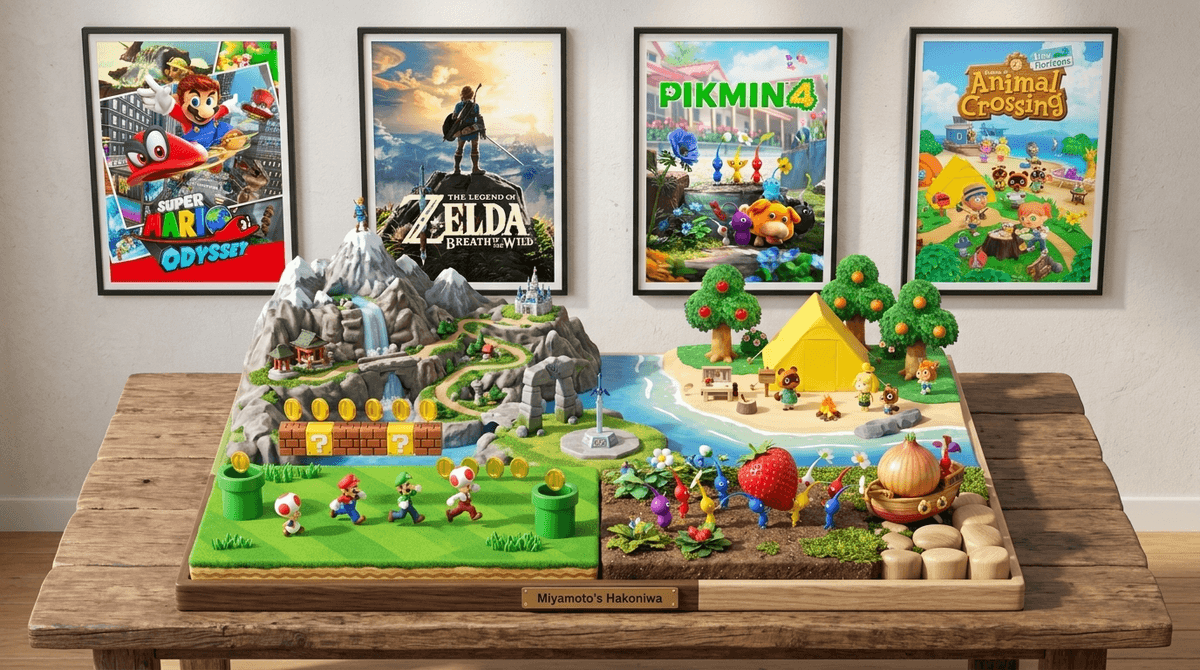
Shigeru Miyamoto is the reason your kid’s Nintendo console feels like a digital playground instead of a dopamine-fueled casino, thanks to his lifelong obsession with "Kankaku"—the physical sensation of play—and his belief that a video game should be a "miniature garden" for a child to explore. While other developers were figuring out how to keep kids glued to screens with loot boxes and endless "grinds," Miyamoto was busy making sure that jumping in a game felt as satisfying as jumping on a real-life trampoline.
Shigeru Miyamoto is the legendary creator of Super Mario Bros. and The Legend of Zelda whose design philosophy centers on intuitive joy, curiosity-led exploration, and empathy for the player. Screenwise recommends his games—like Pikmin 4 and Super Mario Odyssey—because they prioritize creative problem-solving and "real play" over the predatory monetization and social pressures found in many modern platforms.
If video games had a Patron Saint of Childhood, it would be Shigeru Miyamoto. He’s the Fellow and creative powerhouse at Nintendo who didn't grow up wanting to be a computer scientist; he wanted to be a puppeteer or a cartoonist. He joined Nintendo in the late 70s when they were still making playing cards and physical toys, and he brought that "toy-maker" energy to the digital world.
Miyamoto is the mind behind almost every character your kid recognizes on a backpack: Mario, Luigi, Link, Zelda, Donkey Kong, and the Pikmin. But his real contribution isn't just characters; it's a way of thinking about tech that feels human. He famously draws inspiration from his own life—The Legend of Zelda was inspired by him exploring caves as a boy in the woods near Kyoto, and Nintendogs came from him getting a pet puppy.
In a world where digital wellness often feels like a battle against "brain rot" and "Ohio" memes, Miyamoto’s work is the gold standard for what Screenwise calls "Intentional Play."
Have you ever noticed that your kid can pick up a Mario game and know exactly what to do within thirty seconds, but they need a 20-minute YouTube tutorial to understand a complex mobile strategy game? That’s the Miyamoto Method at work.
1. Kankaku (The Sense of Touch)
Miyamoto is obsessed with how a game feels. He believes that if the act of moving a character isn't inherently fun, the rest of the game doesn't matter. This is why Nintendo games often lack the "addiction loops" seen in other titles. The reward isn't a "Daily Login Bonus"; the reward is the tactile satisfaction of the gameplay itself. When your kid plays Super Mario Wonder, they aren't just chasing a high score; they’re engaging in a digital version of "the floor is lava."
2. The Miniature Garden (Hakoniwa)
Miyamoto describes his games as Hakoniwa, or miniature gardens. He wants players to feel like they’ve been handed a box full of secrets. This philosophy encourages "lateral thinking"—using tools in creative ways to solve problems. In The Legend of Zelda: Tears of the Kingdom, for example, there is rarely one "right" way to cross a river. Your kid might build a bridge, a raft, or a rocket-powered paraglider. That’s not just gaming; that’s engineering.
3. Empathy for the Player
While many modern games are designed by data scientists looking at "retention metrics," Miyamoto designs by watching people play. He famously looks for the "smile." If a player gets frustrated or feels cheated by a game mechanic, he considers it a design failure. This makes his games a "safe" emotional space for kids who might be overwhelmed by the high-stakes, high-toxicity environments of competitive shooters.
We talk a lot at Screenwise about the "quality" of screen time. Not all hours are created equal. An hour spent being yelled at by strangers in a lobby is different from an hour spent navigating the lush, quiet world of Pikmin.
Miyamoto’s games are almost entirely devoid of the things that keep parents up at night:
- No Predatory Monetization: You won't find Mario asking for your credit card to buy a "Legendary Skin."
- No Stranger Danger: Most Miyamoto-led titles are single-player or local co-op, meaning your kid is playing with you or their siblings, not a 30-year-old stranger in another state.
- Developmental Benefits: These games reward patience, spatial reasoning, and observation.

If you want to move your family's digital diet toward the "Miyamoto Method," here are the essential titles to check out.
This is the pinnacle of "sandbox" play. Mario travels to different kingdoms, and the goal is simply to explore and find "Power Moons." It’s vibrant, funny, and incredibly forgiving for younger players while remaining challenging for older ones.
Screenwise rates this as one of the best "digital nature" experiences available. It’s less about combat and more about curiosity. "I wonder if I can climb that mountain?" is the core gameplay loop. It’s perfect for kids (Ages 10+) who need to practice focus and persistence.
Pikmin is Miyamoto’s "gardening" game. You lead tiny plant-like creatures to collect items and overcome obstacles. It teaches "Dandori"—the Japanese art of organizing and planning efficiently. It’s strategic, adorable, and teaches kids how to manage multiple tasks without the stress of a typical "war" game.
While Miyamoto didn't direct this one, his DNA is all over it. It’s a slow-paced life simulator where the biggest "stress" is paying off a home loan to a tanuki. It’s the ultimate "cozy game" and an excellent alternative to the high-chaos environments of Roblox.
Don't just hand over the controller and walk away. Miyamoto’s games are designed to be shared.
- Ask about the "Aha!" moments: When your kid figures out a puzzle in Zelda, ask them how they did it. Their eyes will light up because they genuinely "invented" the solution.
- Play the "Miyamoto Challenge": Miyamoto often says he looks at his own furniture and wonders how it could be a game. Ask your kid: "If we made a video game about our kitchen, what would the obstacles be?"
- Explore Game Design: If your kid loves how these games feel, they might be interested in making their own. Check out Scratch or Super Mario Maker 2, which literally lets them build their own Mario levels.
Q: Are Shigeru Miyamoto's games safe for all ages? Generally, yes. Most of his games carry an ESRB "E" (Everyone) or "E10+" rating. They avoid gore, sexual content, and profanity, focusing instead on "cartoon violence" that feels more like a game of tag than a fight.
Q: Is Zelda too hard for an 8-year-old? It depends on the kid, but The Legend of Zelda: Breath of the Wild can be challenging due to its open-ended nature. However, many 8-year-olds thrive in the "sandbox" where they can just explore without feeling pressured to finish the main story.
Q: Why are Nintendo games more expensive than mobile games? You’re paying for the lack of "hooks." A $60 Miyamoto game is a complete, handcrafted experience with no ads or in-app purchases. A "free" mobile game is often designed to extract that same $60 (or more) through microtransactions and psychological tricks.
Q: Does Miyamoto still make games in 2026? While he has moved into a more senior "Creative Fellow" role, he still oversees major projects and ensures the "Nintendo Feel" remains intact. He's also been heavily involved in bringing Nintendo to the real world through theme parks and movies.
In an era where digital media often feels like it's trying to "hack" our children's brains for engagement, Shigeru Miyamoto remains a breath of fresh air. His games aren't just "entertainment"—they are digital extensions of the backyard. By choosing games built on the Miyamoto Method, you’re opting out of the "attention economy" and opting into a world of genuine, wholesome discovery.