

Gateway Horror: How to Watch Spooky Movies Without the Nightmares
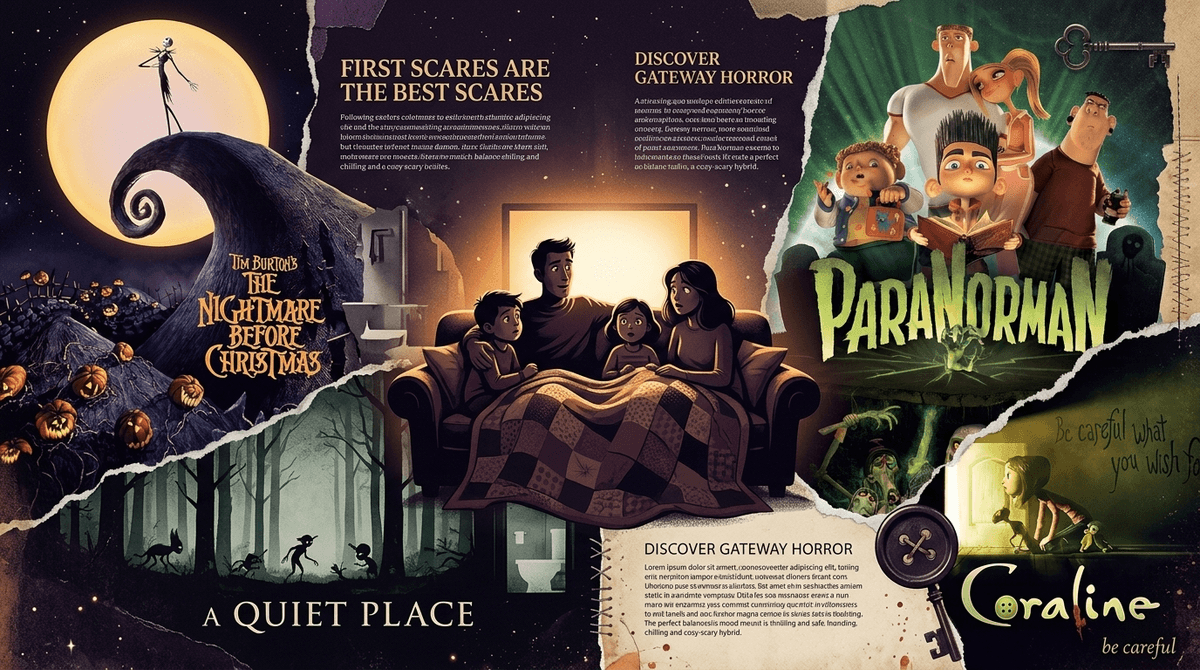
TL;DR: The goal isn't to shield kids from scary content forever—it's to build their "scary movie muscles" gradually. Start with Coraline, The Witches (1990), and Paranorman for younger viewers, then progress to A Quiet Place and Gremlins as they mature. The secret? Watch together, talk it through, and know your kid's specific fear triggers.
Here's something you probably already know: about 92% of families with kids are watching TV regularly, with an average of 4.2 hours of screen time daily. A good chunk of that is streaming services—40% of families let kids choose their own content on Netflix, and 30% of families give kids independent access to Amazon Prime. Which means at some point, your kid is going to stumble across something spooky, whether you planned for it or not.
The question isn't if they'll encounter scary content—it's how you'll help them build resilience around it.
There's a massive difference between trauma and healthy fear processing. Kids who are gradually exposed to age-appropriate thrills in a safe, controlled environment (read: with you, on the couch, with the lights on and permission to pause) actually develop better emotional regulation than kids who either see nothing scary ever, or accidentally stumble into content way above their developmental level.
Think of it like teaching a kid to swim. You don't throw them in the deep end, but you also don't keep them in floaties forever. Gateway horror builds tolerance, teaches media literacy, and honestly? It's a bonding experience. There's something powerful about watching your kid face a fear and come out the other side going "that was scary but I handled it."
Ages 5-7: Spooky with Training Wheels
Hotel Transylvania (PG)
Monsters, but make it silly. Dracula runs a resort for monsters, and the whole vibe is more "Halloween party" than actual scares. Great for kids who are curious about classic monster imagery (vampires, werewolves, Frankenstein) but need it served with a heavy dose of slapstick comedy.
Paranorman (PG)
This one's a step up—it's got zombies, witches, and genuinely eerie moments. But it's also deeply empathetic, with themes about bullying and understanding why people become "monsters." The stop-motion animation creates just enough distance from reality. Watch this one together and be ready to pause for questions.
The Nightmare Before Christmas (PG)
Tim Burton's gateway drug. It's got spooky visuals (living skeletons, oogie boogie, general Halloween aesthetic) but the actual plot is about Jack Skellington having an identity crisis. The songs are catchy enough that the scary stuff becomes almost cozy through repetition.
Ages 8-10: Real Tension, Manageable Stakes
Coraline (PG)
This is where we start getting into legitimate creepy territory. The "Other Mother" with button eyes is genuinely unsettling, and the themes of parental replacement hit different when you're old enough to understand them. But it's also a story about bravery and resourcefulness. Some kids will love this at 8, others need to wait until 10—you know your kid's tolerance for existential dread.
The Witches (1990) (PG)
Roald Dahl adaptation with practical effects that hold up disturbingly well. The scene where the witches remove their wigs and reveal their true faces is a lot. But it's also campy enough, and the kid protagonists are clever enough, that most 9-year-olds can handle it. Skip the 2020 remake—it's somehow both less scary and less good.
Gremlins (PG)
Technically rated PG but this came out in 1984 before PG-13 existed, so it's got some genuine chaos. Cute Mogwai turns into destructive gremlins who cause mayhem. The violence is cartoonish, but there are some jump scares and the gremlins themselves are pretty gnarly. This is a "watch together and laugh at the absurdity" movie.
The Spiderwick Chronicles (PG)
Fantasy creatures, some legitimately scary goblins, and a plot about family dysfunction. The magical realism gives kids just enough distance from reality while still delivering solid scares. If your kid loved Percy Jackson, this is a good next step.
Ages 11-13: Actual Horror (Lite)
A Quiet Place (PG-13)
This is the movie that made a generation of kids understand what tension means. Almost no dialogue, constant dread, but also zero gore and a deeply emotional story about family sacrifice. The monsters are scary but never gratuitous. Great for preteens ready to experience suspense without slasher violence.
The Sixth Sense (PG-13)
"I see dead people" has become a meme, but the movie itself is a masterclass in atmospheric horror. There are some genuinely frightening ghost moments, but it's ultimately a story about empathy and unfinished business. The twist ending gives you something to discuss afterward beyond just "was that scary?"
Jaws (PG)
Another pre-PG-13 movie that's more intense than the rating suggests. But you barely see the shark for most of the runtime—it's all about building dread. Great for kids who are ready to understand how suspense works in filmmaking. Bonus: might make them more cautious about ocean swimming, which honestly isn't a bad thing.
Stranger Things (TV-14)
Okay, it's a show not a movie, but it deserves a mention because it's basically a gateway horror anthology. Season 1 is the most kid-friendly (relatively speaking), with Spielberg-style adventure vibes mixed with genuine scares. Later seasons get darker. Watch it together and use it as a jumping-off point for conversations about 80s nostalgia and practical effects.
Ghostbusters (1984) deserves a special mention because it's somehow both a comedy and genuinely spooky. The library ghost, the demon dogs, Sigourney Weaver possessed on her bed—there's real horror here, but it's balanced with Bill Murray being Bill Murray. Most 9-year-olds can handle it.
Beetlejuice (PG) is another Tim Burton entry that's aged into cult status. It's weird more than scary, with some body horror elements (the stretched faces, the shrimp hands) that might bother younger kids. But it's also absurdist enough that the fear doesn't linger.
Let's be clear about what doesn't belong on this list:
- The Ring - That VHS tape curse hits different when kids still have nightmares about it at 25
- It (either version) - Pennywise is nightmare fuel, full stop. The book is even worse. Save this for 16+
- The Conjuring franchise - These are actual horror movies designed to terrify adults. Not gateway anything
- Hereditary or Midsommar - If you're even considering these for a kid, we need to have a different conversation
This is crucial: scary movies aren't one-size-fits-all. Some kids are fine with monsters but terrified of realistic home invasion scenarios. Others can handle gore but freak out at psychological suspense. Before you queue up any of these, consider:
- Jump scares vs. sustained dread - Some kids prefer quick scares they can recover from; others find constant tension worse
- Fantasy vs. reality - Monsters and ghosts feel safer to some kids than "this could actually happen" scenarios
- Visual vs. implied horror - What you don't see can be scarier than what you do (or vice versa, depending on the kid)
- Themes that hit close to home - A movie about parental abandonment hits different if you're dealing with divorce
Get help understanding your kid's fear profile if you want more personalized guidance.
Here's the thing: watching scary movies together isn't just about being there if they get scared. It's about actively processing the experience:
Before watching:
- Set expectations: "This movie has some scary parts, but we can pause anytime"
- Remind them it's all fake: practical effects, CGI, actors in makeup
- Establish your "safe word" for pausing
During watching:
- Narrate the filmmaking: "See how the music gets louder? That's telling us something scary is coming"
- Physical comfort: blanket, proximity, hand to hold
- Permission to look away or cover ears during intense moments
After watching:
- Talk about what was scariest and why
- Discuss how the characters handled their fear
- Leave lights on, keep doors open, whatever they need
- Revisit funny or empowering moments from the movie
Even with perfect preparation, some kids will have nightmares. That's not a failure—it's part of the process. Here's how to handle it:
- Validate the fear - Don't minimize it with "it's just a movie." Their fear is real even if the source isn't
- Problem-solve together - "What would help you feel safer? A nightlight? Music? Door open?"
- Reframe the narrative - Talk about how the kid characters in the movie were brave, and your kid is brave too
- Take a break - If nightmares persist, pull back on scary content for a while. There's no rush
Building scary movie tolerance is about gradual exposure, co-viewing, and knowing your kid. Start with animated spooky content like Paranorman or Hotel Transylvania, move up to atmospheric tension like A Quiet Place, and always—always—watch together the first time.
The goal isn't to create little horror fans (though that's fine too). It's to teach kids that they can face scary things, process uncomfortable emotions, and come out the other side stronger. That's a life skill that extends way beyond movie night.
And if your kid decides scary movies just aren't their thing? That's completely valid too. Not everyone needs to enjoy being scared, and there are plenty of cozy games and feel-good shows that build resilience in different ways.
Next Steps: