

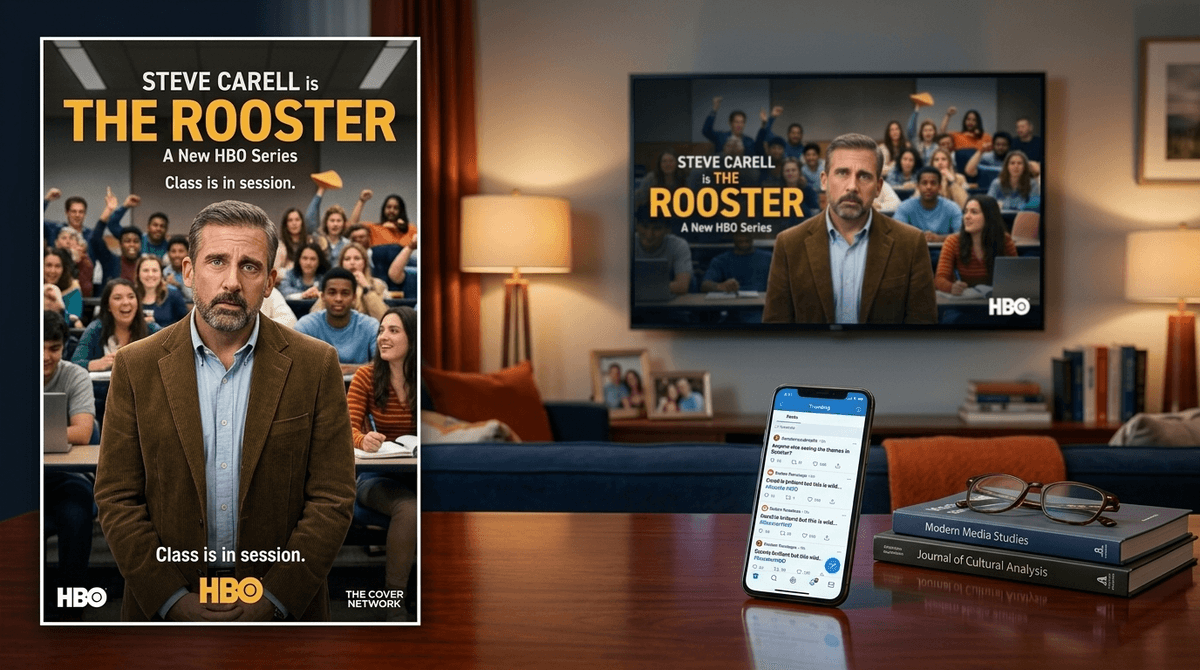
Rooster is rated TV-MA, and it definitely earns that rating with a constant stream of "f-bombs," mature college-campus themes, and the kind of cringe-inducing social situations that make Steve Carell a legend—but this is far more Shrinking than it is The Office.
TL;DR: Rooster is HBO’s 2026 breakout hit starring Steve Carell as a complicated college professor, blending sharp wit with heavy "adult" content like profanity and substance use. Screenwise recommends this for older teens (16+) who can handle the nuance of campus politics and "cancel culture" satire. If your kid is younger but wants a workplace comedy, stick with Abbott Elementary or Parks and Recreation.
If you feel like you’ve been hearing about "Rooster episodes" every time you’re in the carpool lane lately, there’s a reason. Rooster is the massive collaboration between Steve Carell and Bill Lawrence (the genius behind Ted Lasso and Scrubs).
The show follows a legacy professor at a fictional liberal arts college who is struggling to stay relevant in a world of Gen Z activism, AI-written essays, and a very public divorce. It’s funny, it’s heartbreaking, and it’s incredibly "online." It captures the exact vibe of 2026—where everyone is one viral video away from losing their job.
Even though the main character is a guy in his 60s, high schoolers are flocking to this show. Here’s why:
- The Steve Carell Factor: Thanks to the eternal popularity of The Office on streaming, Carell is basically a god to teenagers. They see him as Michael Scott, even when he’s playing a depressed academic.
- College Preview: For high school juniors and seniors, Rooster feels like a "sneak peek" at what’s coming next. It portrays college life with a level of grit and honesty that Grown-ish never quite touched.
- The Dialogue: The writing is fast, mean, and very smart. It uses the slang they actually use (yes, they say "lowkey" and "bet" without it sounding like a 50-year-old wrote it), and it tackles the social issues they talk about on TikTok every day.

Look, Rooster is a great show. It’s arguably some of the best television we’ve seen this year. But Screenwise wants to be clear: this isn’t a "family watch" unless your kids are basically adults.
The Language
It is relentless. If you have a low tolerance for profanity, you’re going to be reaching for the remote every thirty seconds. It’s used for comedic effect, but it’s definitely "R-rated" territory.
Substance Use
Since it’s set on a college campus, there is a lot of drinking and some casual drug use. It’s not necessarily "glorified"—the show often shows the messy consequences—but it is a constant background element.
Sexual Themes
While it’s not as explicit as Euphoria or The Sex Lives of College Girls, there are frank discussions about sex, dating apps, and student-teacher boundaries (usually handled as a "what not to do" scenario).
If your kid is begging to watch Rooster but you don't think they're ready for the TV-MA content, here are some Screenwise-approved pivots:
For Middle Schoolers (Ages 11-13)
- The Office: The classic. It’s TV-PG/TV-14 and gives them that Steve Carell fix without the HBO-level grit.
- Abbott Elementary: A brilliant workplace comedy that is actually appropriate for the whole family.
- Diary of a Future President: Great for kids interested in leadership and school dynamics.
For Early High Schoolers (Ages 14-15)
- Community: It’s also set on a college campus, it’s hilarious, and while it gets weird, it stays within a TV-14 boundary.
- Ted Lasso: If they like the "Bill Lawrence vibe" (funny but with heart), this is the gold standard. It has some language, but the message is incredibly positive.
- The Good Place: Smart, philosophical, and deals with "being a good person" in a way that’s much more accessible.
For Older Teens (16+)
If you do decide to let your older teen watch Rooster, it actually provides some of the best "teachable moment" fodder we’ve seen in years. Screenwise suggests leaning into these three topics:
- The "Cancel Culture" Debate: The show does a great job of showing multiple sides of a campus protest. Ask your teen: "Who do you think was right in that episode? The students or the professor?"
- Digital Footprints: A major plot point involves an old video of the main character resurfacing. It's a perfect (and non-preachy) way to talk about how what they post today might look in 20 years.
- The Reality of College: Use the show to talk about what they expect college to be like. Is it all parties and drama, or is there more to it?
Q: What age is Rooster appropriate for?
Screenwise recommends Rooster for ages 16 and up. While younger teens might find it funny, the nuances of the academic satire and the frequency of "adult" language are better suited for older audiences.
Q: Is Rooster okay for a 13-year-old?
Probably not. Between the heavy profanity and the mature themes of divorce and professional ruin, most 13-year-olds will either be bored by the "grown-up" problems or exposed to more language than most parents are comfortable with.
Q: Why is Rooster rated TV-MA?
The rating is primarily for "L" (Language) and "S" (Sexual content/dialogue). It features frequent strong profanity and frank discussions about adult relationships and campus hookup culture.
Q: Is Rooster like The Office?
Only in that Steve Carell is the lead. While Michael Scott was a lovable buffoon, Carell’s character in Rooster is a brilliant, cynical, and deeply flawed academic. The humor is much "darker" and more grounded in reality.
Rooster is a high-quality, smart comedy that reflects the complexities of 2026 culture. It’s not "brain rot," but it is definitely "adult." If you have a mature high schooler, watching an episode together might actually be the most interesting conversation starter you’ve had all year. Just be prepared for a lot of f-bombs along the way.
- Watch the trailer yourself to gauge the "vibe" before saying yes.
- Check your HBO Max (Max) settings to ensure your younger kids can't stumble into TV-MA content.
- Take our Digital Habits Survey to see how your family's media consumption compares to your local school community.