

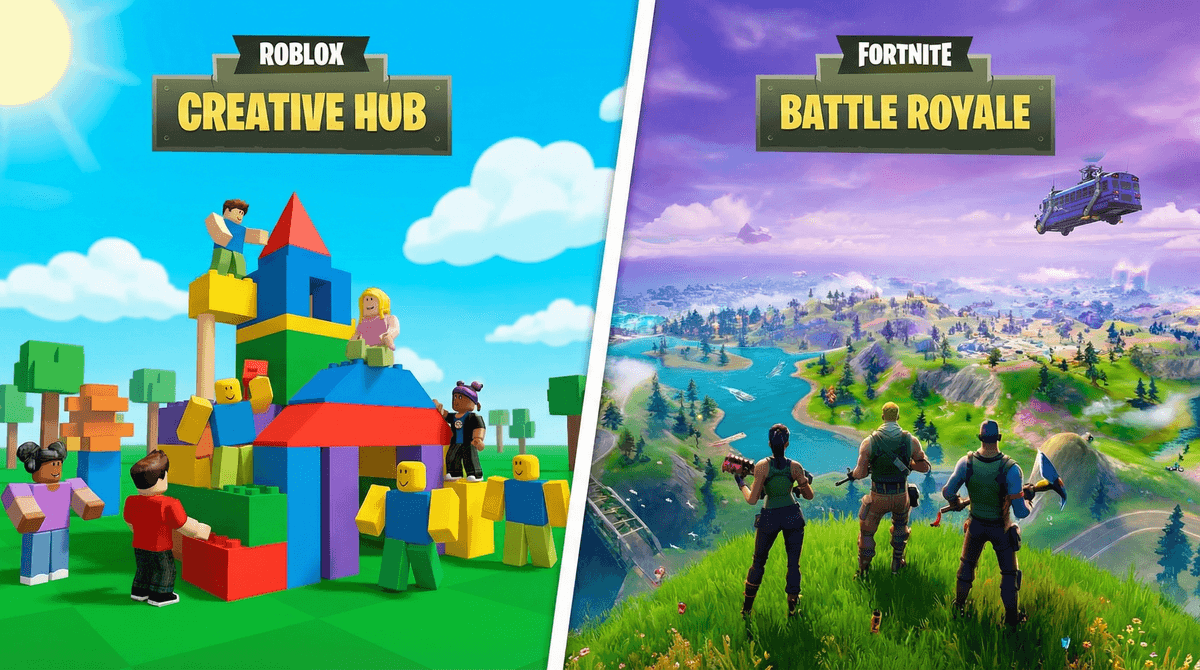
Roblox vs. Fortnite: Which Metaverse Is Right for Your Kid?
Both Roblox and Fortnite are massive multiplayer worlds where kids socialize, create, and play—but they're fundamentally different experiences. Roblox is a platform of user-created games emphasizing creativity and entrepreneurship (with real money involved). Fortnite is a polished battle royale shooter with creative modes, concerts, and brand collabs. Your decision should hinge on your kid's age, maturity, what they want to do online, and how comfortable you are with in-game purchases and voice chat strangers.
Quick take:
- Roblox: Better for younger kids (7+), creativity-focused, wildly varied content quality, more predator concerns
- Fortnite: Better for 10+, shooter combat (though cartoonish), more consistent experience, still has chat risks
Let's get clear on what these actually are, because calling them both "games" is like calling Netflix and YouTube both "video services"—technically true but missing the point.
Roblox is a platform where users create and play millions of different games. Think of it as the YouTube of gaming—anyone can make content, quality varies wildly, and kids spend hours discovering new experiences. It's free to play but has an in-game currency (Robux) that kids will absolutely beg you for. Some young creators are actually making real money here, which is both impressive and complicated.
Fortnite started as a battle royale shooter (100 players drop onto an island, last one standing wins) but has evolved into something much bigger. There's a creative mode where players build their own worlds, social hangout spaces, concerts, movie screenings, and brand collaborations. It's also free-to-play with cosmetic purchases (skins, emotes, battle passes) that don't affect gameplay but are absolutely essential to your kid's social standing, apparently.
Here's the fundamental split:
Roblox is about making stuff. Yes, kids play games on Roblox, but the platform's DNA is creative. Kids can (and do) learn basic coding through Roblox Studio, design their own games, and even monetize them. It's genuinely impressive watching a 10-year-old explain how they scripted a working elevator in their virtual café. The downside? This creative freedom means wildly inconsistent quality and safety across millions of user-generated experiences.
Fortnite is about playing together. While Creative Mode exists and some kids love building, most are here for the core gameplay loop: dropping into matches, competing, hanging out in the lobby, showing off their latest skin. It's more curated, more polished, and more... violent? We'll get to that.
Let's address the elephant in the room: Fortnite involves shooting other players. With guns. To eliminate them from the match.
But (and this is a meaningful but), it's cartoonish. When players are eliminated, they don't die dramatically—they're "eliminated" and their loot drops. No blood, no gore, no realistic violence. Players can build structures instantly, use silly items like "Grapple Blade" or "Ballistic Shield," and dress as everything from superheroes to bananas. The ESRB rates it T for Teen (13+), but plenty of younger kids play it.
Roblox has no inherent violence—it's a platform, not a game. But within Roblox, you'll find everything from peaceful pet simulators to first-person shooters that would make Fortnite look tame. The difference is you can steer your kid toward non-violent experiences on Roblox. On Fortnite, the main mode involves combat (though you can stick to Creative Mode or Party Royale for violence-free hangouts).
Parent reality check: If you're fundamentally opposed to any shooter content, Fortnite's main mode is probably a no. But if you're okay with cartoon combat that's less realistic than most superhero movies, it's worth considering for kids 10+.
Both games will absolutely drain your bank account if you let them. But they do it differently.
Roblox's Robux Economy
Robux is Roblox's currency, and it's everywhere. Kids need it to:
- Buy accessories for their avatar
- Access certain games (some charge admission)
- Purchase in-game items and upgrades
- Support their favorite creators
You can buy Robux directly or get a monthly allowance through Roblox Premium ($4.99-$19.99/month). Here's the thing: Robux feels like fake money to kids, but it's very real money to you. And unlike Fortnite's cosmetics, some Robux purchases actually affect gameplay (pay-to-win mechanics in certain games).
The really complicated part? Kids can earn Robux by creating popular games. Some teens are making serious money—we're talking thousands of dollars. But the vast majority make nothing, and the psychological pull of "maybe my game will be the next big thing" can be intense.
Learn more about how Robux works and whether it's teaching entrepreneurship or exploitation .
.
Fortnite's V-Bucks and Battle Pass
V-Bucks are Fortnite's currency, used exclusively for cosmetics: character skins, emotes (dances), pickaxes, gliders. None of it affects gameplay—a default skin player has the exact same abilities as someone who spent $100.
But here's the catch: these cosmetics are social currency. Kids face genuine social pressure to have the latest skins, especially collab items (Marvel, Star Wars, etc.). The Battle Pass ($10/season, roughly every 3 months) offers the best value and gives kids a progression system with rewards.
The honest truth: You'll spend money on both platforms unless you have superhuman willpower or a kid who genuinely doesn't care (rare). Budget for it or set firm boundaries early. The Fortnite Battle Pass is actually reasonable value if you're going to spend anything. Roblox's monthly Premium subscription prevents constant purchase requests.
Both platforms have chat features, online strangers, and potential for predatory behavior. But the risk profiles differ.
Roblox's Safety Challenges
Roblox's user-generated content model creates unique risks:
- Predator concerns: Because Roblox attracts younger kids (7+) and has private chat features, it's been a target for predators. There have been documented cases of adults grooming children through Roblox chat.
- Inappropriate content: While Roblox moderates, millions of games mean stuff slips through—sexual content, violent games, scams targeting kids.
- Condo games: These are user-created spaces that circumvent Roblox's rules to include sexual content. Roblox shuts them down when found, but new ones pop up.
- Scams: Fake Robux generators, phishing attempts, account theft—all common.
What you need to do:
- Use Roblox's parental controls to restrict chat (friends only or no chat)
- Review your kid's friend list regularly
- Enable Account Restrictions for under-13s (limits game access)
- Have ongoing conversations about not sharing personal info
- Set up Roblox parental controls properly
Fortnite's Safety Challenges
Fortnite's risks are more about social interaction than content:
- Voice chat toxicity: Older teens and adults play Fortnite, and voice chat can get toxic—swearing, slurs, harassment
- Stranger danger: Kids squad up with random players, potentially exposing them to inappropriate conversations
- Competitive stress: The pressure to perform well can cause genuine anxiety in some kids
- Time consumption: Matches are 20-25 minutes, and "just one more game" is powerful
What you need to do:
- Disable voice chat or limit it to friends only
- Use Epic Games parental controls to manage who can contact your kid
- Set time limits (easier said than done when they're mid-match)
- Monitor who they're playing with
- Learn about Fortnite's parental control options
For Kids 7-9
Roblox is the better choice here, with heavy parental involvement:
- Stick to well-known games (Adopt Me, Brookhaven, MeepCity)
- Use Account Restrictions to limit game access
- Disable or heavily restrict chat
- Play together initially to vet games
- Expect to be involved—this isn't a "set it and forget it" age
Fortnite is probably too intense for most kids this young. The combat, pace, and social dynamics skew older. If they're desperate to try it, stick to Creative Mode or Party Royale with voice chat disabled.
For Kids 10-12
Both platforms are viable, depending on your kid:
Choose Roblox if your kid:
- Loves creating and building
- Enjoys variety (trying different game types)
- Is interested in basic game design/coding
- Prefers lower-pressure social interaction
- Isn't bothered by inconsistent quality
Choose Fortnite if your kid:
- Likes competitive gameplay
- Wants a more polished, consistent experience
- Is okay with cartoon combat
- Has friends who play (this matters a lot)
- Can handle losing without melting down
For Kids 13+
Both are fine for most teens, with different appeals:
Roblox becomes more about the creative and social aspects—hanging out with friends in various worlds, maybe trying game development seriously. Some teens outgrow it and find it "cringe," others stay engaged with the creative community.
Fortnite remains popular through high school for many kids. The skill ceiling is high, competitive modes are serious, and it's a legitimate way to hang out with friends online.
Here's something parents often miss: these aren't just games, they're where kids socialize. During COVID, this became obvious, but it's remained true. Kids aren't just playing Roblox or Fortnite—they're hanging out there like previous generations hung out at the mall or park.
Your kid's friends are likely on one platform or the other (or both). Being the only kid who can't play creates genuine social isolation. I'm not saying cave to peer pressure, but factor social connection into your decision. A kid who can't participate in the dominant social platform of their peer group is at a real disadvantage.
Practical approach: If all your kid's friends are on one platform, that's probably your answer unless you have serious objections. You can always set stricter boundaries within that platform.
Go with Roblox if:
- Your kid is younger (7-10)
- They love creating and building
- You want educational value (basic coding exposure)
- You're willing to be actively involved in monitoring
- You want more control over content exposure
- You're comfortable with the Robux economy
Go with Fortnite if:
- Your kid is 10+ and mature enough for cartoon combat
- They want a more polished, consistent experience
- Their friend group is already playing
- You prefer a more curated environment
- You're okay with competitive gameplay
- You want simpler parental controls
Consider both if:
- Your kid is 10+ and interested in both creative and competitive play
- You have the bandwidth to monitor two platforms
- Your kid demonstrates responsible behavior online
- You're willing to set clear time limits across both
There's no wrong answer here—both platforms have millions of kids playing safely every day, and both have legitimate concerns. The "right" choice depends on your specific kid's age, maturity, interests, and friend group.
My honest take: For younger kids (7-9), start with Roblox with strict controls and active parental involvement. For kids 10+, consider their personality—creative kids might prefer Roblox, competitive kids might prefer Fortnite. For 12+, honestly, they'll probably want both, and that's okay with proper boundaries.
The more important question isn't "which platform?" but "how do we approach online gaming as a family?" Set clear expectations about:
- Time limits (use actual timers or platform controls)
- Who they can chat with (friends only is a good default)
- What happens if they encounter inappropriate content (come tell you immediately, no punishment)
- Spending limits (if any)
- Consequences for breaking rules
Both platforms can be part of a healthy digital life. Both can also become problematic without boundaries. The platform matters less than your involvement, communication, and willingness to adjust as your kid grows and circumstances change.
- If you're new to both: Try Roblox first with a younger kid (under 10), Fortnite with an older one (10+)
- Set up parental controls before your kid plays: Roblox parental controls guide | Fortnite parental controls guide
- Play together initially to understand what your kid is experiencing
- Have the money conversation early—decide on a budget or no-spend policy before the begging starts
- Check in regularly about who they're playing with and what they're seeing
- Be willing to adjust—what works at 8 might not work at 10, and that's normal
Want to explore other options? Check out alternatives to Roblox or alternatives to Fortnite. Or if you're wondering about other popular games in your kid's orbit, learn about Minecraft, Among Us, or [Brawl Stars](https://screenwiseapp.com/media/brawl-stars-app.
The metaverse isn't going anywhere. Your job isn't to keep kids out of it entirely—it's to help them navigate it safely, thoughtfully, and in balance with the rest of life. You've got this.