

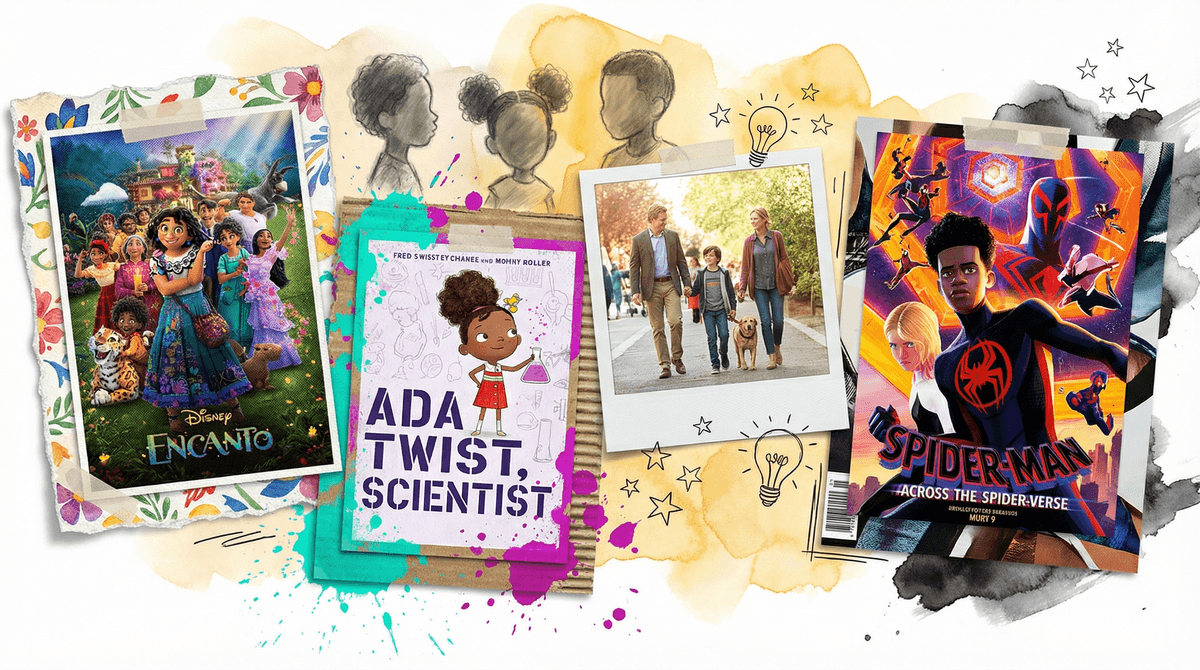
Representation is basically who gets to show up on screen—and how they're portrayed. It's about whether kids see characters who look like them, talk like them, come from families like theirs, or have bodies and brains that work like theirs. It's also about whether kids see people who are different from them portrayed as full, complex humans rather than stereotypes or sidekicks.
We're talking about race, ethnicity, gender, disability, family structure, body types, neurodiversity, socioeconomic status, religion—all of it. And yes, it includes LGBTQ+ characters and families, because surprise, those families exist and those kids are watching too.
The good news? Kids' media has gotten SO much better in the last decade. The bad news? There's still a ton of content out there that's basically a parade of white, able-bodied, neurotypical kids having adventures while everyone else gets to be the funny neighbor or the wise mentor who exists to help the main character grow.
Here's the thing: kids are building their understanding of the world through stories. And if the stories they're consuming all say "people like you don't get to be the hero" or "people like that are always the villain/the joke/the problem to be solved," that shapes how they see themselves and others.
The research on this is pretty clear. When kids see themselves represented positively in media, it boosts their self-esteem and sense of belonging. When kids see diverse characters, it increases their empathy and reduces prejudice. It's not magic—it's just that stories are one of the primary ways humans learn about the world, especially when we're young.
And look, I know what some parents are thinking: "My kid doesn't notice race/gender/disability/whatever." But kids notice. They notice by age 3. They're taking in messages about who matters, who's normal, who's powerful, who's funny, who's scary. They're just not always talking to you about it.
The absence of representation is also representation. When your kid only sees thin, able-bodied princesses, they're learning something about whose body is "right." When every family on screen has a mom and a dad, they're learning something about what counts as a "real" family. When every hero is white, they're learning something about who gets to save the day.
Good representation isn't just checking boxes. It's not "we added one Black friend to the friend group, diversity achieved!" Here's what actually matters:
Multiple characters, not tokens. When there's only one girl in the group, she becomes The Girl. When there are multiple girls, they get to be people with different personalities and storylines.
Complex, flawed, interesting humans. Diverse characters should get to be funny, annoying, brave, scared, wrong, right—the full range. They shouldn't exist just to teach the main character a lesson about tolerance.
Behind-the-scenes diversity matters too. Shows created, written, and directed by diverse teams tend to have more authentic, nuanced representation. Encanto feels different than a movie where one consultant was brought in to check the cultural details.
Casual inclusion. Sometimes the representation is the point of the story (like Wonder, about a kid with a facial difference). But often the best representation is just... there. The kid uses a wheelchair and that's not the plot, it's just part of who they are. The family has two dads and nobody makes a big deal about it.
Ages 2-5: At this age, kids are absorbing everything about what's "normal." This is actually a great time to be intentional about diverse media because they're not yet bringing their own biases to the table. Shows like Daniel Tiger's Neighborhood and Ada Twist, Scientist do a nice job with casual diversity.
Ages 6-9: Kids are starting to notice and ask questions about differences. This is when you want media that shows diversity as normal and stories that explicitly deal with themes of fairness, inclusion, and standing up for others. The Proud Family: Louder and Prouder and Turning Red are great for this age range.
Ages 10-13: Tweens are developing their identity and figuring out where they fit. They need to see characters navigating complex social dynamics, dealing with prejudice, and finding their people. They're also old enough to start having real conversations about representation and stereotypes. The Baby-Sitters Club (the Netflix version) and Raya and the Last Dragon work well here.
Ages 14+: Teens can handle (and benefit from) more complex, nuanced stories about identity, discrimination, and social justice. They're also developing their critical thinking skills—this is when you can watch stuff together and talk about what the show does well and what it misses. Heartstopper and Spider-Man: Across the Spider-Verse are excellent.
Your kid's identity matters here. If your child is part of a marginalized group, seeing themselves represented isn't a nice-to-have—it's essential. It tells them they matter, they belong, their stories are worth telling. Make it a priority to find media where they get to be the hero.
Your kid's identity also matters if they're NOT marginalized. If your kid is white, straight, cisgender, able-bodied, neurotypical—they're going to see themselves everywhere. That's great for their self-esteem! But they ALSO need to see diverse characters so they don't grow up thinking they're the default and everyone else is "other." This isn't about making your kid feel bad about who they are. It's about making sure they see the full, complex humanity in everyone.
Representation isn't just about avoiding racism/sexism/etc. It's also about expanding your kid's world. When they see characters from different cultures, with different abilities, from different family structures, they learn that there are many ways to be human. That's just... good for them as people.
You don't have to make it A Big Deal. You don't need to sit your kid down and say "Today we're watching a show about INCLUSION." Just... put on Bluey (which casually includes characters with disabilities) or Moana (Polynesian princess, no love interest, just adventure). Let the representation speak for itself. Answer questions when they come up, but you don't have to turn every viewing into a teachable moment.
Watch for stereotypes, not just absence. Sometimes representation is worse than no representation if it's all stereotypes. The sassy Black best friend. The nerdy Asian kid. The flamboyant gay character who exists for comic relief. The disabled character whose only storyline is "inspiring" able-bodied people. If you're seeing patterns like this, it might be time to find different media.
Gaming counts too. If your kid is spending hours a day in Roblox or Minecraft, think about the avatars they're creating and the worlds they're exploring. Many games now have extensive character customization options—that's representation too. And games with diverse characters and storylines (like The Last of Us for older teens) can be just as impactful as TV and movies.
Representation in kids' media isn't about being "woke" or pushing an agenda. It's about accurately reflecting the world kids live in and helping them develop empathy, critical thinking, and a healthy sense of self.
The great news is that there's more diverse, high-quality kids' content available now than ever before. You don't have to settle for tokenism or stereotypes. You can find shows, movies, games, and books where kids of all identities get to be heroes, villains, sidekicks, comic relief, and everything in between.
Does this mean you need to audit every single thing your kid watches? No. You're not going to be perfect at this, and that's fine. But being intentional about representation—making sure your kid's media diet includes diverse voices and perspectives—is worth the effort.
Take stock of what your kid is currently watching. Pull up their Netflix profile, check their YouTube history, look at their game library. Who are the main characters? Who's missing? You might be surprised.
Add some new options. Pick one or two shows/movies/games that feature characters your kid doesn't usually see. You can explore alternatives to their current favorites or Get diverse picks based on their interests.
Talk about what you're watching—when it makes sense. If your kid asks a question about a character's identity or family or disability, answer it matter-of-factly. If you notice a stereotype, you can point it out: "Hmm, have you noticed that the funny character is always the fat kid? I wonder why they do that."
Remember: this is ongoing. Representation isn't a one-time fix. It's about building habits over time—habits of seeking out diverse stories, questioning stereotypes, and making sure your kid sees the full range of human experience on screen.
And if you want to dig deeper into specific shows, games, or topics, Screenwise has your back. We've got detailed reviews, age recommendations, and guides for navigating tricky conversations about representation and identity.