

Raising Kind Kids in a Digital World
Look, I'm not going to sugarcoat it: teaching kids to be kind online feels like trying to garden in a tornado sometimes. The digital world moves fast, rewards the loudest voices, and can turn a middle schooler into a different person the second they pick up a phone. But here's the thing—kindness isn't some old-fashioned value that doesn't translate to screens. It's actually more important than ever.
Kids today are growing up in a world where a mean comment can reach hundreds of people in seconds, where "it's just a joke" is the default defense for cruelty, and where algorithmic feeds literally reward outrage and drama. The stats are sobering: by middle school, most kids have either witnessed or experienced cyberbullying. And the platforms they're on? They're not exactly designed with empathy as a core feature.
But before we spiral into doom mode, here's the good news: digital spaces can also be incredible places for kids to practice kindness, build community, and learn how their words impact real humans. The key is helping them see that the person on the other side of the screen is, you know, an actual person.
There's this weird thing that happens when kids (and honestly, adults too) communicate through screens: empathy just... drops. They can't see facial expressions, hear tone of voice, or watch someone's eyes well up with tears. That immediate feedback loop that normally says "whoa, I went too far" just isn't there.
Add in the performative nature of social media—where kids are constantly aware of their audience—and you get situations where being funny or cool matters more than being kind. A kid who would never say something mean face-to-face might drop a brutal comment on someone's TikTok because it'll get laughs from their friends.
This isn't because kids are terrible. It's because digital communication removes the natural guardrails that in-person interaction provides.
Start With Modeling (Yes, They're Watching)
Kids are watching how you text about other people, how you react to negative comments, whether you doomscroll and rage-post. If you're trash-talking the PTA president in the family group chat or making fun of someone's vacation photos, they're learning that screens create a kindness exemption. They're not.
Make The Connection Explicit
When your kid is gaming, watching YouTube, or scrolling Instagram, occasionally point out the humans: "That person spent hours making this video." "Someone's kid is on the other side of that Fortnite match." "The person who wrote that tweet is having a real day."
It sounds simple, but explicitly reminding kids that digital interactions involve real people with real feelings is surprisingly powerful.
Talk About Audience and Performance
Help kids understand that when they're commenting, posting, or chatting in group chats, they're often performing for an audience—and that changes behavior. Ask: "Would you say that if it was just the two of you?" "Are you trying to make your friends laugh, or are you actually trying to help?"
This isn't about shaming them. It's about building awareness of how social dynamics shape digital behavior.
Practice Repair
Your kid will mess up. They'll send a mean text, post something thoughtless, or pile on someone in a group chat. When it happens (not if), the goal isn't perfection—it's repair.
Help them apologize genuinely, not with a non-apology like "sorry you were offended." Practice what actual accountability looks like: "I said something mean and I'm sorry. I was trying to be funny but I hurt you instead."
Ages 6-9: Building the Foundation
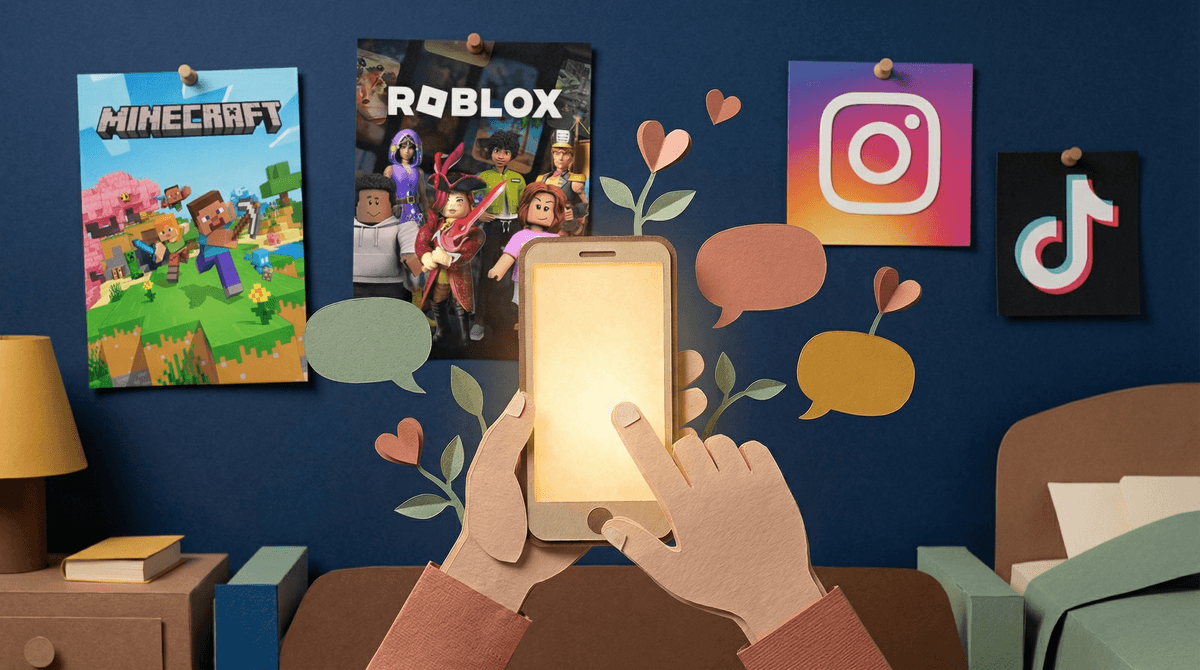
At this age, kids are often playing games like Minecraft or Roblox where they're interacting with others. Focus on:
- Teaching them that real people control other characters
- Practicing what to do when someone is mean (don't engage, tell an adult, block)
- Celebrating when they're helpful or kind in-game
Ages 10-13: Navigating Social Complexity
Middle school is when things get spicy. Group chats become social minefields, and kids start using platforms like Instagram, Snapchat, and Discord. This is when you need to:
- Talk explicitly about See tips for navigating group chat dynamics

- Discuss the difference between funny and mean
- Help them understand that staying silent while someone else is being cruel is also a choice
- Practice upstander behavior: "That's not cool" or "Let's change the subject"
Ages 14+: Developing Digital Citizenship
Teens have more independence and more complex social situations. Focus on:
- Understanding how platforms profit from outrage and division
- Recognizing performative cruelty vs. genuine disagreement
- Building skills for constructive online discourse
- Understanding the long-term consequences of digital behavior (college admissions, job applications, etc.)
When Gaming Gets Toxic
Competitive online games can be incredibly toxic. If your kid plays games like Fortnite, League of Legends, or Call of Duty, they're being exposed to trash talk, slurs, and general awfulness.
You can't completely shield them, but you can:
- Keep voice chat off or friends-only for younger kids
- Talk about why people act differently in competitive environments
- Make it clear that "everyone does it" isn't an acceptable standard
- Help them find gaming communities that actively work against toxicity
The "It's Just Dark Humor" Defense
Teens especially love to claim that offensive jokes are just edgy humor that adults don't understand. Sometimes that's true—Gen Z humor is weird and ironic in ways that can look concerning but are actually pretty harmless.
But sometimes "dark humor" is just cruelty with plausible deniability. Help them think through: Who's the target? Who's laughing? Is this punching up or punching down? Would this be funny to the person it's about?
When Your Kid Is The Mean One
This is every parent's nightmare, but it happens. Maybe you get a call from another parent, or you see something on your kid's phone that makes your stomach drop.
First: don't minimize it. "Kids will be kids" doesn't cut it. Second: get curious about what's driving the behavior. Is your kid feeling powerless somewhere else? Are they trying to fit in? Are they struggling with their own stuff and taking it out on others?
Address the behavior clearly, require repair, and get help if it's part of a bigger pattern.
Raising kind kids in a digital world isn't about perfect behavior or never making mistakes. It's about building a foundation of empathy, practicing repair when things go wrong, and helping kids see that their digital behavior is just... their behavior. There's no screen-based exemption from being a decent human.
The digital world isn't going anywhere. But neither is the fundamental truth that kindness matters, that words have impact, and that the person on the other side of the screen is someone's kid too.
- Have one conversation this week about a specific digital interaction—something they saw, something they did, or something that happened to them. Make it curious, not interrogative.
- Check your own digital behavior. Are you modeling the kindness you want to see?
- Set up repair practices now, before you need them. Talk about what genuine apologies look like in your family.
- Find communities that align with your values. Whether it's a gaming server, a Discord community, or a YouTube channel, help your kid find digital spaces where kindness is the norm, not the exception.
You've got this. And on the days when it feels impossible? That's normal. Just keep showing up.