

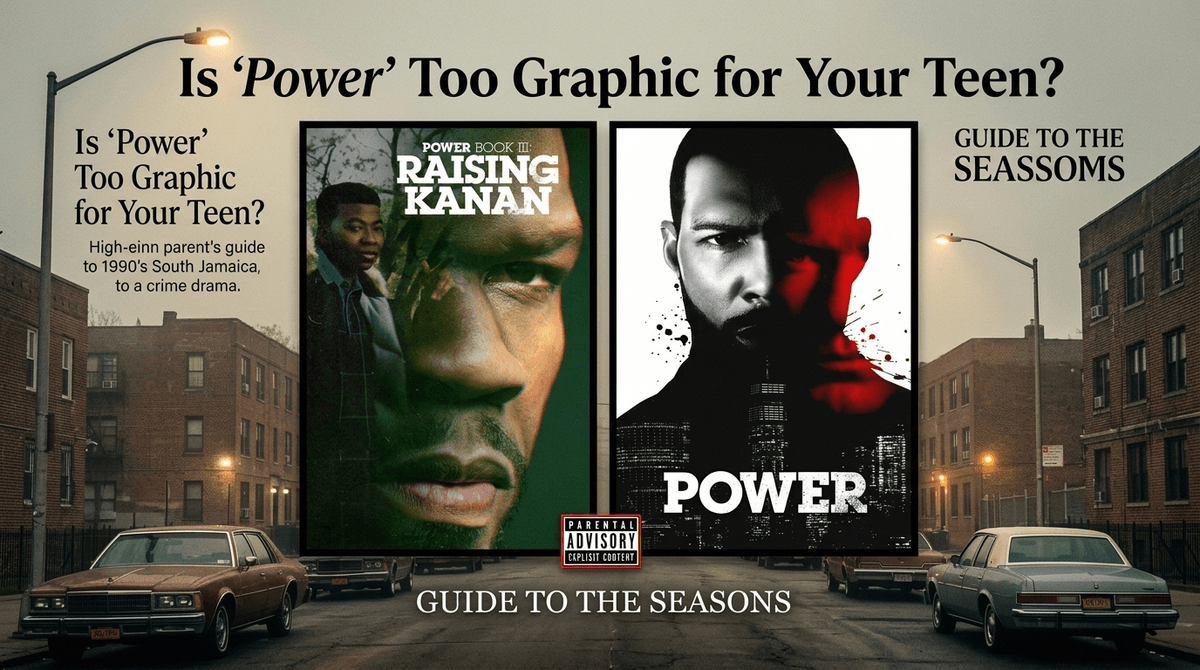
Power Book III: Raising Kanan is the prestige pick of the Power universe, but don't let the high production values fool you: it’s a brutal, R-rated crime saga that treats violence and betrayal as the cost of doing business. If your teen is asking to watch the upcoming final season, they aren't looking for a superhero story; they’re looking at a grim, 1990s-set tragedy where "family first" is a death sentence.
TL;DR: Raising Kanan is set to wrap up its run with a fifth and final season that will likely bridge the gap to the original Power series. While it’s arguably the best-written show in the franchise, it features graphic violence, pervasive "street" language, and heavy drug-trafficking themes. It’s a heavy lift for most, best suited for older teens (16+) who can handle the "no-win" nature of the story. For more mature TV options, check out our best shows for kids list.
As we head into the final chapter of Kanan Stark’s origin story, the stakes are effectively "life or life-without-parole." Based on the Season 4 finale and the early teasers for Season 5, the show is expected to finally introduce Breeze—the character long-teased in Power lore as Kanan’s mentor and eventual victim. This season will likely be the bridge that transforms the Kanan we see now (Mekai Curtis) into the cold-blooded antagonist played by 50 Cent in the original series.
The trailer suggests a total breakdown of the family unit. Raq (Patina Miller) has spent four seasons trying to balance being a drug kingpin and a protective mother, but in Season 5, that tightrope is set to snap. Expect the violence to escalate as the Thomas family’s empire crumbles under the weight of federal investigations and internal snitching.
Most teen-adjacent crime shows (think Outer Banks or even Riverdale) play with "danger" as a plot device. Raising Kanan treats it as an environment. The show is a period piece, and it nails the 1990s South Jamaica, Queens aesthetic—the music, the fashion, the specific tension of the crack era.
But the real draw here isn't the action; it's the messiness of the family ties. You have Raq, who is arguably one of the most complex (and terrifying) mothers on television. You have Marvin and Lou-Lou, uncles who fluctuate between comic relief and cold-blooded killers. For a teen, the hook is watching Kanan try to find his own identity while being suffocated by his family's expectations and their criminal legacy. It’s a "coming-of-age" story where the "age" involves learning how to dispose of a body.
If you’re deciding whether to greenlight a Season 5 binge, here is the reality of what’s on screen:
The Violence is Visceral
This isn't "action movie" violence where people fall down and the camera cuts away. It’s intimate and ugly. We’re talking point-blank executions, torture, and the psychological aftermath of those acts. Season 5 is expected to be the bloodiest yet as the show clears the board for the original Power timeline.
The "Game" is the Main Character
The show doesn't glamorize the drug trade in the way some 90s hip-hop videos might. It shows the paranoia, the constant threat of prison, and the way the business eventually eats everyone involved. It’s a masterclass in showing that there is no "retirement plan" in this world.
Language and Themes
The dialogue is authentic to the setting, which means the F-bomb is a comma. Beyond the language, the themes of police corruption, systemic racism, and the foster care system (through Jukebox’s arc) are handled with a level of grit that requires a mature viewer to process.
If your teen is already locked in for the final season, don't just let the credits roll. The show actually offers some of the best entry points for talking about stuff that matters:
- The "No-Win" Scenario: Ask them: "Does anyone in this show actually seem happy?" It’s a great way to dismantle the idea that the "hustle" is worth the cost.
- Loyalty vs. Survival: Kanan is constantly told that "family is everything," yet his family is the reason his life is in constant danger. Talk about the difference between healthy loyalty and toxic obligation.
- The Power of Environment: The show leans heavily into how the lack of options in 90s Queens funneled smart people like Raq and Kanan into the drug trade. It’s a solid opening to talk about systemic issues without it feeling like a social studies lecture.
If they’re obsessed with the 90s vibes of Raising Kanan, use that interest to pivot to some actual history or better-quality media from that era.
- Music: The soundtrack is a curated list of 90s hip-hop royalty. Use it to introduce them to the era's storytelling—think Nas or Mobb Deep—where the lyrics provide the same "street reporter" perspective the show aims for.
- The Source Material: If they want more "prestige" crime storytelling that’s a bit more grounded, point them toward The Wire. It’s the gold standard for showing how these systems work, and it makes the Power universe look like a soap opera by comparison.
- Reading: For teens who like the "street" genre but need to build those language comprehension strands of literacy, suggest Monster by Walter Dean Myers. It hits many of the same themes of youth, crime, and the justice system but in a way that demands more critical thinking.
Q: Is Raising Kanan appropriate for a 14-year-old? Probably not. While every family has different goalposts, the graphic nature of the violence and the adult themes of drug trafficking and sexual content make this a "high school and up" show. Most 14-year-olds will get the "cool" factor but miss the tragic weight of the story.
Q: Do you need to watch the other Power shows first? Nope. Since this is a prequel set decades before the original, it stands entirely on its own. In fact, many people think it’s better than the original series because it focuses more on character and atmosphere than just "who shot who."
Q: How violent is Season 5 going to be? Based on the trajectory of the series, it will be the most intense season yet. Final seasons of crime dramas usually involve "cleaning house," which is shorthand for a high body count. Expect graphic scenes as the show wraps up Kanan's transformation.
Raising Kanan is top-tier television, but it’s "adult" television in every sense of the word. If your teen is watching, the move is to watch it with them—or at least be in the room—to help them parse the difference between the "boss" lifestyle the show depicts and the inevitable tragedy it’s actually filming.
- Check out our digital guide for high schoolers for more age-appropriate media advice.
- If they love the drama but need a break from the violence, see our best shows for kids list for lighter alternatives.
- Find gritty crime drama recs
