

Raising Emotionally Intelligent Kids in the Digital Age
Look, I'm just going to say it: raising emotionally intelligent kids has always been hard, but doing it when half their social life happens through a screen? That's a whole different level.
The good news? Screens aren't the enemy of emotional intelligence. They're just... complicated. Like most things in parenting, it's not about whether your kid uses technology, but how they use it and what you do alongside them.
Emotional intelligence is basically the ability to:
- Recognize and understand your own emotions
- Manage those emotions (especially the big, messy ones)
- Recognize emotions in others (empathy)
- Navigate relationships and social situations
It's the difference between a kid who can say "I'm frustrated because I lost at Fortnite and I need a break" versus one who throws the controller and screams that everyone else is cheating.
And here's the thing: emotional intelligence is learned. It's not something kids are born with. Which means we have to actively teach it, even (especially) in digital spaces.
Kids today are growing up in a world where:
- A "conversation" might mean rapid-fire texts with no tone of voice
- Social rejection can happen via being left on read or excluded from a group chat
- They're exposed to an endless stream of other people's curated highlight reels on social media
- Gaming can involve real-time voice chat with strangers who might be... not great role models
- AI chatbots can provide emotional support without teaching actual human connection skills
The stakes are real. Research shows that kids with higher emotional intelligence have better mental health, stronger relationships, and even do better academically. But screens can short-circuit some of the natural learning opportunities that used to just... happen.
The empathy gap: When you're texting or gaming online, you miss facial expressions, body language, and tone. That's literally 70%+ of communication. Kids need to learn that "gg ez" (good game, easy) after winning might technically be a compliment but actually feels like rubbing salt in the wound.
Emotional regulation on hard mode: Losing a game in real life? Frustrating. Losing a game when you're already tired, staring at a bright screen, and 30 other people just watched you fail? That's a recipe for a meltdown. Screens amplify emotions, and kids need to learn to recognize when they're getting dysregulated before they rage-quit and break something.
The comparison trap: Every kid on Instagram or TikTok looks like they're living their best life. Teaching kids that social media is a highlight reel, not reality, is crucial for their self-awareness and mental health.
Delayed consequences: In real life, if you're mean to someone, you see their face fall immediately. Online, you might not see the impact of your words for hours, days, or ever. This makes it harder to develop empathy and understand cause-and-effect in relationships.
Ages 5-8: Building the foundation
At this age, you're teaching basic emotion vocabulary and recognition. Screens can actually help here:
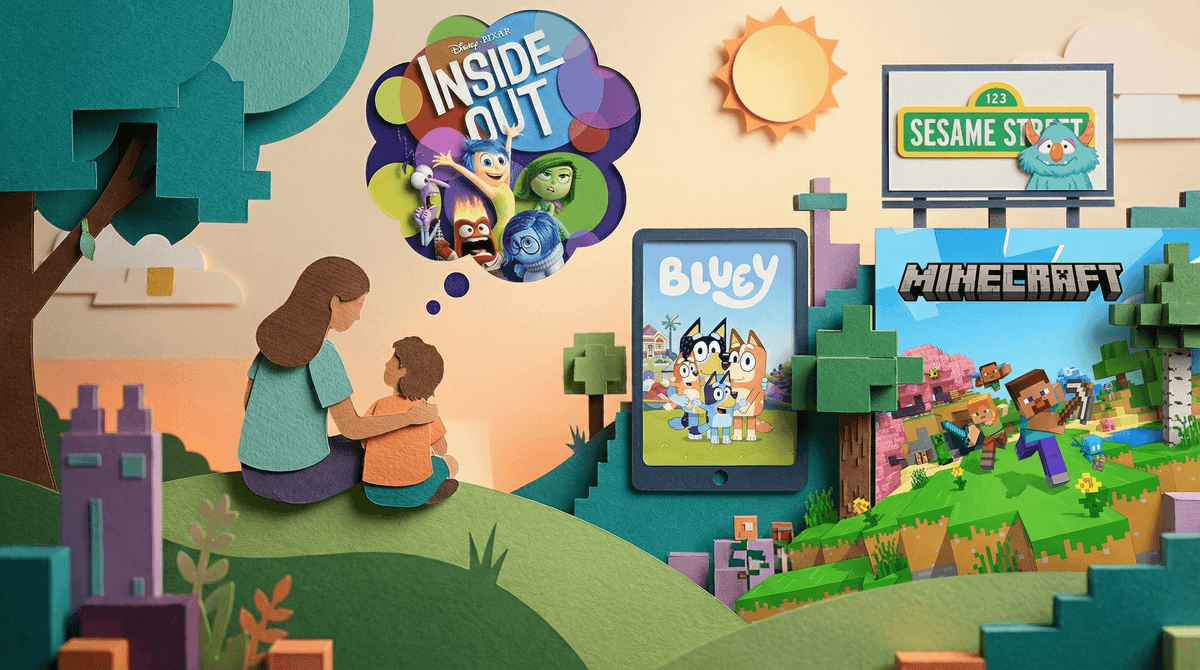
- Watch shows like Bluey or Inside Out and pause to talk about what characters are feeling
- Play simple games together and narrate emotions: "You look frustrated. That level was really hard!"
- Use apps like Breathe, Think, Do with Sesame that teach calming strategies
The key is co-viewing and co-playing. Don't just hand them a screen—be there to process what's happening.
Ages 9-12: Practicing in the wild
This is when kids start having more independent screen time, which means more opportunities to mess up and learn:
- When they're gaming, check in about teamwork and frustration: "How did your squad do? Did anyone get salty?"
- If they're texting friends, talk about tone and misunderstandings: "How do you think Emma felt when you said that?"
- Teach them to pause before posting or sending: "Does this sound how you meant it? Could someone read this differently?"
Games like Minecraft and Roblox are actually great for this—they require collaboration, problem-solving, and dealing with setbacks. Just make sure you're debriefing afterward.
Ages 13+: Real stakes, real practice
Teenagers are navigating complex social dynamics, often primarily through screens. This is when emotional intelligence becomes critical:
- Talk about digital body language: what does leaving someone on read communicate?
- Discuss online drama and how to de-escalate rather than pile on
- Help them recognize when social media is making them feel worse and develop strategies to step back
- Model healthy boundaries: "I'm putting my phone away during dinner because I want to be present"
This is also when you need to talk about See whether teens should use AI chatbots for support and why they're not a replacement for human connection, even if they feel supportive in the moment.
Name it to tame it: Teach kids to identify and name their emotions, especially while using screens. "I'm feeling jealous looking at her vacation photos" or "I'm getting angry because I keep dying in this game" is the first step to managing those feelings.
Create emotion check-in rituals: Before and after screen time, do a quick emotional temperature check. "How are you feeling right now, 1-10?" After gaming: "How do you feel now compared to before?" This builds self-awareness.
Teach the pause: When emotions run high online—whether it's a heated text exchange or a frustrating game—teach kids to literally pause. Close the app. Walk away. Take three deep breaths. Come back when they're calmer.
Practice empathy actively: When watching shows or discussing online drama, ask: "Why do you think they did that? How might they be feeling?" Make it a habit to consider other perspectives.
Model it yourself: Kids learn more from what you do than what you say. When you're frustrated with work email, say it out loud: "I'm feeling annoyed by this message. I'm going to take a minute before I respond." Show them what emotional intelligence looks like in action.
Debrief the fails: When your kid has a digital meltdown—and they will—don't just punish and move on. Once everyone's calm, talk through what happened: What were they feeling? What triggered it? What could they do differently next time? This is where the learning happens.
Emotional intelligence isn't something that just happens. It's built through thousands of small moments where kids learn to recognize, understand, and manage their emotions and relationships. Screens don't prevent this learning—but they do change how it happens.
Your job isn't to keep your kid away from screens until they're emotionally mature enough to handle them. It's to be present, engaged, and intentional about using screen time as an opportunity to practice these crucial skills.
Will they still rage-quit sometimes? Yes. Will they send texts they regret? Probably. Will they get their feelings hurt online? Almost certainly. But with your guidance, each of these moments becomes a chance to build the emotional intelligence they'll need for the rest of their lives—online and off.
- This week: Pick one show or game your kid loves and watch/play it with them. Use it as a chance to talk about emotions and relationships.
- Start a new habit: Do emotional check-ins before and after screen time for one week. See what you notice.
- Have the conversation: Ask your kid about a time they felt strong emotions while using screens. What happened? How did they handle it? What would they do differently?
And if you need help figuring out whether a specific game, app, or show is helping or hurting your kid's emotional development, that's exactly what Screenwise is here for. Because you can't make good decisions without good information—and you've got enough on your plate without having to become an expert in every single thing your kid wants to watch, play, or download.