

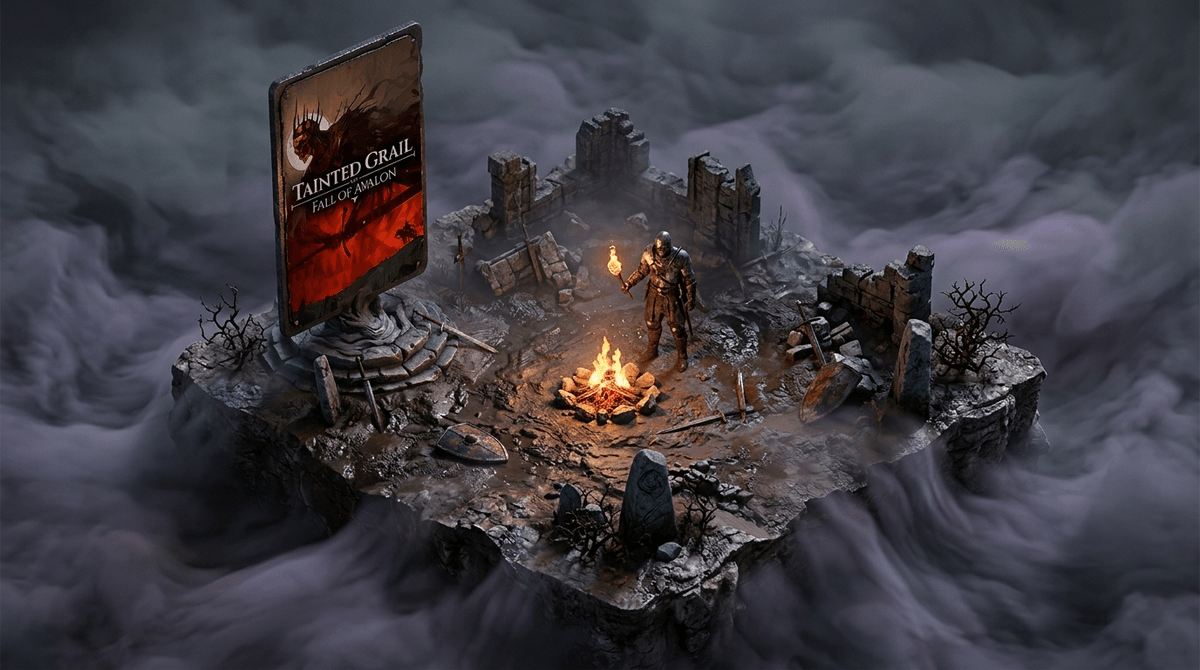
Tainted Grail: The Fall of Avalon is what happens when you take the King Arthur myth, strip away the shiny armor, and dump it into a blender with psychological horror and a heavy dose of "everything is doomed." It’s a first-person RPG that is muddy, bloody, and intentionally bleak, trading the typical "chosen one" heroics for a desperate scramble to survive a world that is literally losing its mind.
TL;DR Tainted Grail: The Fall of Avalon is a grimdark open-world RPG that replaces heroic fantasy with body horror and soul-crushing moral choices. It’s a great fit for older teens who enjoyed the challenge of Elden Ring or the narrative complexity of The Witcher 3. Expect a mature experience where there are rarely "right" answers, only different shades of catastrophe.
The core of Tainted Grail is the "Wyrdness"—a reality-warping fog that is slowly consuming the island of Avalon. In most games, a fog is just a technical trick to hide low-resolution textures; here, it’s a narrative engine for nightmare fuel.
When the Wyrdness rolls in, the world stops making sense. People melt into walls, landscapes shift, and the laws of physics take a vacation. It creates an atmosphere of constant, low-level dread. If your kid is used to the bright, predictable world of Zelda: Breath of the Wild, this is going to be a massive tonal shift. It’s less about "exploring the beautiful frontier" and more about "navigating a dying world before it swallows you whole."
The writing in Tainted Grail: The Fall of Avalon is its strongest suit, but it’s also what makes it firmly "mature." This isn't a game where you choose the "Blue/Good" dialogue option or the "Red/Evil" one. Most quests involve choosing between two terrible outcomes, and the game is more than happy to show you the consequences of your "good intentions" ten hours later.
Characters are desperate, cynical, and often cruel. The game explores themes of religious fanaticism, the cost of power, and what happens to a society when its foundational myths (like King Arthur and the Round Table) turn out to be lies. It’s a masterclass in narrative consequences, but it requires a player who can handle a story that doesn't always want them to feel like a "good guy."
If They Love the Lore, Try These:
- Tainted Grail: The Fall of Avalon (Board Game): The original source material is a massive, narrative-driven tabletop experience that hits many of the same bleak notes.
- The Witcher 3: For more "monster hunting meets messy politics."
- Elden Ring: If they want the same level of environmental storytelling and high-stakes combat.
Visually, Tainted Grail leans hard into body horror. Because of the Wyrdness, you’ll encounter creatures that are distorted, fused with metal, or missing limbs in ways that feel visceral. It isn't just "scary monsters"; it's "disturbing transformations."
The game is dark—literally. You’ll spend a lot of time in shadows, lit only by a torch that is slowly burning out. This resource management (keeping your torch lit to stay sane) adds a layer of survival stress that elevates the horror. It’s not a jump-scare game, but it is an unsettling one.
This game lands best with older teens (16+) who have the emotional maturity to engage with a story about decay and failure. Younger players might find the survival mechanics frustrating or the relentless bleakness depressing.
However, for a kid who is into world-building and complex RPG systems, Tainted Grail offers something most "AAA" games are too scared to touch: a world that feels genuinely dangerous and a story that refuses to pull its punches.
Instead of worrying about the "violence" (which is standard RPG fare), talk about the choices.
The game often asks: "Is it better to let a village die now, or save them and risk them turning into monsters later?" These are heavy, philosophical questions. Ask your kid which choice they made and why. It’s a great way to see how they weigh empathy against pragmatism when there is no perfect solution.
The hardest part of Tainted Grail: The Fall of Avalon isn't the combat; it's the resource management. If your kid is getting frustrated, it’s probably because they ran out of food or light. Pro-tip: Remind them that in this game, running away from a fight isn't "losing"—it's surviving. The game rewards caution over bravado.
Q: Is Tainted Grail: The Fall of Avalon appropriate for a 13-year-old? It’s a stretch. While the gameplay is similar to Skyrim, the themes of body horror, psychological decay, and the sheer bleakness of the world are much more intense. Most 13-year-olds might find it more depressing than fun. It lands better for 16 and up.
Q: How much violence is in the game? It's a first-person RPG, so there is plenty of sword and magic combat. It’s graphic, with blood and visceral sound effects, but the "disturbing" factor comes more from the monster designs and the environmental storytelling (finding the remains of people who were twisted by the Wyrdness) than the actual combat.
Q: Does it have multiplayer or online interactions? No, Tainted Grail: The Fall of Avalon is a strictly single-player experience. You don't have to worry about strangers, but you do have to worry about your kid spending six hours straight trying to figure out how to save a cursed village.
Q: Is it better than Skyrim? "Better" is subjective, but it is definitely darker. If they want a polished, heroic adventure, Skyrim is the pick. If they want a weird, experimental, and genuinely challenging survival RPG, Tainted Grail is the winner.
Tainted Grail: The Fall of Avalon is an ambitious, dark-as-ink RPG that honors the "grimdark" genre. It’s not for everyone, but for the right kid, it’s a deep, rewarding dive into a world that feels unlike anything else in the genre.
- Check out our best games for kids list for more age-appropriate RPGs.
- If they're into the dark fantasy vibe, see our digital guide for high schoolers.
- Find more games with deep moral choices
