

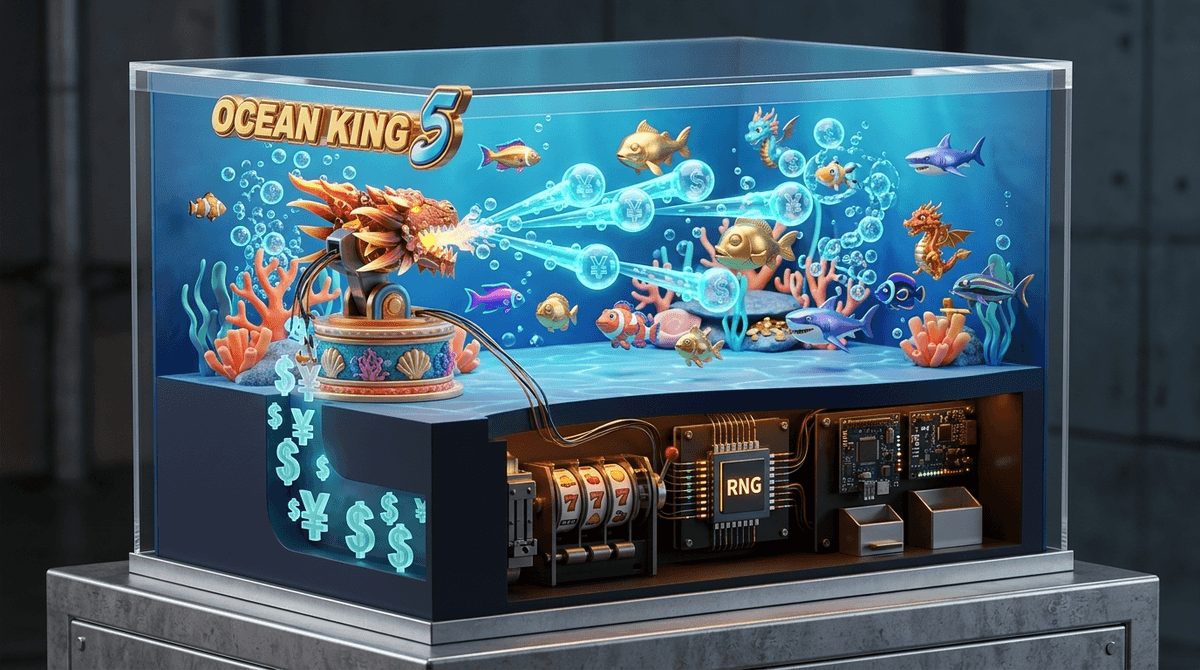
Shooting fish games are gambling simulators masquerading as skill-based arcade shooters, where every "bullet" fired is a literal bet of currency. While they look like colorful, high-octane underwater versions of Space Invaders, the math under the hood is pure slot machine—designed to drain credits through variable-ratio reinforcement rather than reward actual hand-eye coordination.
If your kid is playing Ocean King or any "Fish Hunter" style app, they aren't playing a standard video game; they're engaging with a "social casino" loop where every shot costs money (or in-game currency) and the payouts are randomized. For the same high-speed satisfaction without the predatory math, pivot them toward Dave the Diver or Splatoon 3. Check out our best games for kids list for better ways to scratch that arcade itch.
These games originated in physical "sweepstakes cafes" and arcades before migrating to mobile app stores. Players control a turret at the bottom of the screen and blast away at a chaotic parade of sea creatures. Big fish pay out more "coins" than small fish, but they take more hits to kill.
Here is the catch: Each bullet costs currency. If you’re playing a "10-cent" room, every time you tap the screen to fire, you just spent a dime. The "skill" involved is almost entirely an illusion; the game’s software determines if a fish will "die" based on a programmed payout percentage, much like a slot machine decides when to line up three cherries.
Most games your kid plays—think Mario Kart 8 Deluxe or even Cuphead—are "pay-once" or "play-to-win" experiences. Shooting fish games are "pay-to-fire."
The Currency Sink
In a normal shooter, you have infinite ammo or you find ammo as a power-up. In shooting fish apps, your ammo is your bank account. The game encourages "auto-fire" or "locking on," which drains your balance at a terrifying speed. It’s common for a player to "bet" hundreds of shots per minute without realizing the actual dollar value until the "Game Over" screen hits.
The "Big Boss" Trap
The games often feature massive dragons or golden sharks. These are the "jackpots." They require thousands of hits to take down, enticing kids to dump all their remaining credits into one creature. If another player (or the computer) gets the "final hit," your kid loses everything they invested in that specific fish. It’s a masterclass in the "Sunk Cost Fallacy."
If your kid loves the fast-paced, "everything is exploding" vibe of fish shooters, they don't need a gambling app. They need a game that actually rewards their reflexes.
This is the ultimate "fix" for a fish-shooting obsession. It’s a gorgeous, hilarious indie hit where you hunt fish by day and run a sushi restaurant by night. It has all the "upgrading your gun" dopamine hits of the gambling apps but with actual soul, a great story, and zero predatory currency loops. It’s arguably the best game released in the last few years for this specific niche.
If they want high-speed chaos and "locking on" to targets, Splatoon 3 is the gold standard. It’s messy, it’s competitive, and it’s purely skill-based. There is no "pay-per-shot" mechanic here—just pure, neon-soaked fun.
For a mobile-first alternative, this is a solid "eat everything" simulator. While it has the usual mobile microtransactions, it’s a traditional arcade game where you play as the shark. The goal is survival and high scores, not clearing a digital wallet.
If the "fishing" theme is what they actually liked (unlikely, but possible!), give them this. It’s a peaceful, low-stress exploration game that features a charming fishing mechanic. It’s the "anti-casino" experience.
The real friction point with these games isn't just the money—it's the conditioning. These apps use the exact same sound effects, color palettes, and "near-miss" animations as professional casino equipment. They are designed to build a tolerance for high-frequency betting.
Pro-tip: If you find one of these apps on a device, don't just delete it—look at the "top in-app purchases" in the App Store listing. You’ll likely see coin packs ranging from $0.99 to $99.99. Use that as a conversation starter about how some games are designed as "vending machines" that never actually give you a snack.
Q: Are fish shooting games legal for kids? Most of these apps bypass gambling laws by using "virtual currency" that technically can't be traded back for real cash (though "sweepstakes" versions found in some gray-market apps do allow for prizes). They are usually rated 12+ or 17+ on app stores, but their bright, cartoonish graphics are a direct dog-whistle to younger players.
Q: My kid says they are "winning" lots of coins. Is that good? In the short term, the games are programmed to give "early wins" to hook the player. This is a classic "on-boarding" tactic used by casinos. Those coins can usually only be spent on more ammo, ensuring the player stays in the loop until the balance eventually hits zero.
Q: Is there any skill involved in Shooting Fish? Minimal. While you can choose which fish to aim at, the "catch rate" is determined by the game's Return to Player (RTP) settings. No amount of "good aiming" can overcome a software system that has decided it isn't time for a payout yet.
Shooting fish games are the junk food of the digital world—if the junk food also tried to pick your pocket. They offer the thrill of the hunt with none of the actual sport. If your kid is drawn to the underwater chaos, steer them toward Dave the Diver. It’s a better game, a better use of their time, and it won't treat them like a mark.
- Explore our best games for kids list for actual skill-based titles.
- Check out our digital guide for elementary school to see how to handle in-app spending.
- See if a fishing app is a gambling game
