

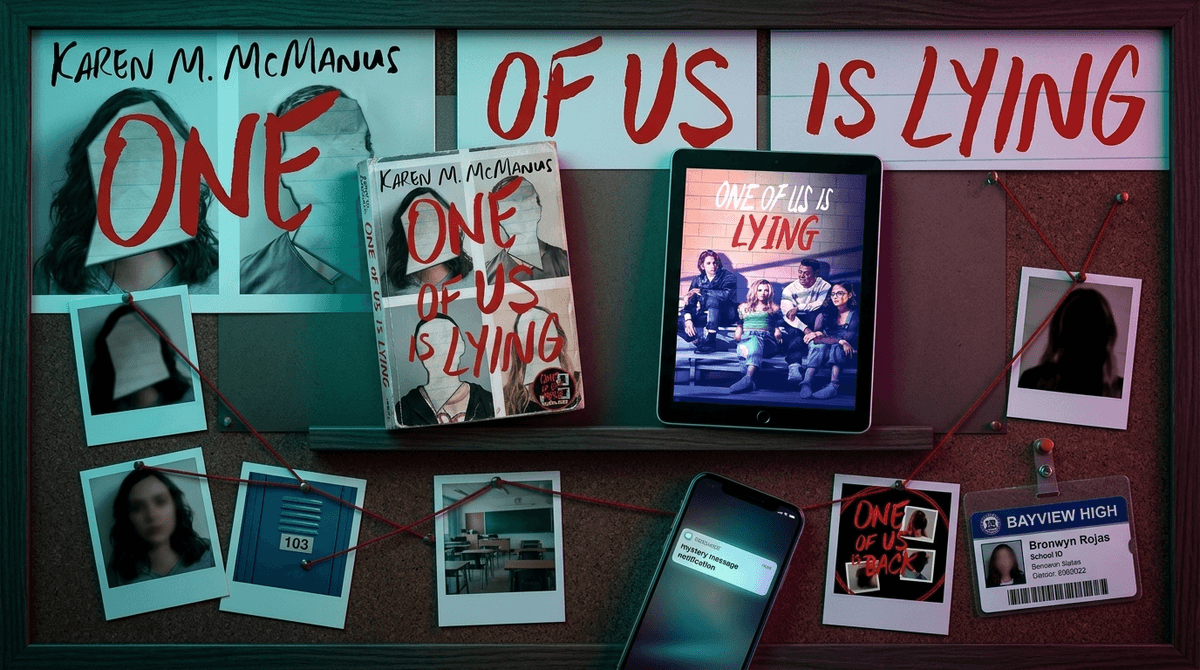
TL;DR: One of Us Is Lying by Karen M. McManus is the definitive "Gen Z Breakfast Club" murder mystery. It centers on five students who walk into detention, but only four walk out alive. The catalyst for the entire plot? A high-stakes gossip app that proves digital secrets are the most dangerous currency in high school. If your teen is obsessed with the One of Us Is Lying TV series or the book, they’re engaging with heavy themes of digital reputation, cyberbullying, and the "permanent record" of the internet.
At its core, One of Us Is Lying is a "whodunit" that leans heavily on high school archetypes: the Brain (Bronwyn), the Beauty (Addy), the Jock (Cooper), and the Criminal (Nate). The fifth student, Simon, is the creator of "About That," a notorious gossip app where he leaks the deepest, darkest secrets of his classmates.
When Simon dies of a sudden allergic reaction during detention, and the police discover he was about to post life-altering secrets about the other four students the next day, everyone becomes a suspect.
It’s a massive hit in the YA (Young Adult) world because it feels urgent. It’s not just about a murder; it’s about how one post on Instagram or a leaked text on Snapchat can effectively "end" a person's life before they even graduate.
Teenagers live in a state of constant surveillance—both from their parents and, more significantly, from each other. McManus taps into the very real anxiety that kids feel about their digital footprint.
- The Mystery Hook: It’s genuinely a page-turner. The "who did it" keeps them reading, but the "what are they hiding" keeps them invested.
- Dismantling Tropes: Kids love seeing the "perfect" girl or the "star" athlete revealed to be human, flawed, and struggling. It validates the pressure they feel to maintain a curated image.
- The Gossip Factor: Let’s be real—drama sells. The fictional app "About That" functions exactly like the real-world (and often toxic) gossip accounts kids see on TikTok or anonymous "confession" pages.
Check out our guide on why teens are drawn to dark YA themes
The "About That" app in the book isn't just a plot device; it's a mirror of the digital world our kids navigate. In the story, the app is a tool for social execution. In the real world, we see this play out on platforms like Discord or through "burn book" style accounts on social media.
This book provides a perfect opening to talk about digital reputation. When the characters' secrets are leaked, their lives are upended. For a teen, the distinction between "online life" and "real life" doesn't exist. If it happens on the screen, it happened to their soul.
The book is a solid A-. It’s well-paced, the characters have actual depth, and the resolution of the mystery is satisfying without being too "neat." It deals with heavy topics like depression, parental abandonment, and the pressure of the college admissions race. It’s a great choice for reluctant readers because the chapters are short and the stakes are high.
The Peacock series is... fine. It’s definitely more "TV-MA" in spirit even if it’s rated TV-14. It ramps up the "sexy" factor and changes some significant plot points (including the ending). If your kid loved the book, they’ll probably complain about the changes, but they’ll watch it anyway. If you're choosing between the two, the book offers a much better exploration of the characters' internal struggles.
If your teen has already blazed through the Bayview High drama, here are some other recommendations that hit that same "high-stakes mystery" vibe:
This is arguably even better than One of Us Is Lying. It follows a teen who investigates a closed local murder case for her senior project. It uses "mixed media" (case files, interview transcripts, logs) which makes it incredibly engaging.
If you want to show them the "OG" version of five kids in detention, this is a classic. It’s a great way to bridge the generational gap, though you might have to explain why nobody has a phone.
If they want more "anonymous person threatening to leak secrets," this is the gold standard. Just be warned: it’s a long, soap-opera-style commitment with a lot of "wait, what?" plot twists.
A darker, more intense look at a girl on a journey to find her sister's killer, told partly through a true-crime podcast format. It’s excellent but definitely for the older teen crowd (16+).
Recommended Age: 14+
While the book is marketed as YA, there are some "mature" elements you should be aware of:
- Language: There is a fair amount of swearing (f-bombs included).
- Themes: It deals with suicide, drug dealing (to pay bills), and infidelity.
- Digital Violence: The way Simon uses his app is a form of psychological warfare. If your child has been a victim of cyberbullying, this might be a "triggering" read.
In the book, the "About That" app is Simon’s personal playground. In real life, these apps pop up every few years under different names—Yik Yak, Sarahah, or even anonymous "NGL" (Not Gonna Lie) links in Instagram stories.
The danger isn't necessarily the app itself, but the anonymity it provides. When kids feel they can't be traced, their empathy levels drop to zero. One of Us Is Lying shows the extreme end of this: a student using secrets to control the social hierarchy of an entire school.
You don't need to give a lecture on "The Dangers of the Internet" (they'll tune you out immediately). Instead, try these conversation starters after they've read a few chapters:
- "Who do you think is the most 'guilty' character so far? Not of the murder, but of being a bad friend?" (This gets them thinking about social ethics).
- "If someone started an 'About That' app at your school, what do you think would happen?" (This helps you gauge the current digital climate of their social circle).
- "Do you think Bronwyn was right to cheat to get the grade? Is the pressure to be 'perfect' actually that bad?" (This addresses the academic anxiety that drives many of the characters).
- "How would the story change if they just... didn't have phones?" (A fun way to look at how tech drives the plot).
Learn more about how to talk to your teen about digital privacy
One of Us Is Lying is a "smart" thriller. It’s not "brain rot" content; it’s a story that requires attention, empathy, and critical thinking. While it’s definitely "edgy," it provides a fantastic jumping-off point for discussions about what it means to be a "good person" in a digital age where every mistake can be screenshotted and shared.
If your kid is reading this, they’re exploring the concepts of redemption and integrity. The characters make massive mistakes, but they also have to figure out how to live with them once the secret is out. In a world where "cancel culture" is a daily reality, that’s a pretty valuable lesson.
- Read the first few chapters yourself. It’s a fast read and will give you a lot of "cool parent" points for knowing the plot.
- Check their phone for anonymous messaging apps like NGL or Sendit. These are the real-world versions of Simon’s app.
- Discuss the "Permanent Record." Use the book to talk about how things posted online don't just go away, even if the app is deleted.