

Look, I get it. You're scrolling through your kid's wish list and it's all explosions, battle royales, and games where the main mechanic is...well, eliminating other players. And maybe you're thinking "is there literally anything else out there?"
Good news: yes, absolutely. Nonviolent video games are exactly what they sound like—games where the core gameplay loop doesn't revolve around combat, fighting, or shooting. Instead, kids are building, exploring, solving puzzles, creating, managing resources, or just vibing in a digital world.
These aren't "baby games" either (though we'll cover options for younger kids too). Some of the most critically acclaimed, genuinely engaging games out there have zero violence. We're talking games that teach systems thinking, creativity, patience, and problem-solving—without a single health bar in sight.
Here's the thing about violent content in games: the research is actually pretty nuanced. Most kids can distinguish between game violence and real-world consequences just fine. But that doesn't mean every kid wants or needs combat-focused games, and it definitely doesn't mean you're being overprotective if you'd prefer your 8-year-old wasn't practicing headshots.
Some kids are genuinely stressed out by combat mechanics. Others just aren't interested—they'd rather design a theme park than defend one. And honestly? Some parents just want a break from hearing "ENEMY SPOTTED" yelled from the living room every 30 seconds.
The beautiful thing about nonviolent games is they prove that engagement doesn't require conflict. Kids can be absolutely absorbed in a game where the biggest challenge is figuring out how to route a train system or breed the perfect virtual sheep.
Ages 5-8: Pure Creativity and Exploration
Minecraft (Creative Mode) - Yes, Minecraft can have combat, but Creative Mode removes all of it. Kids get infinite resources and can just build. It's digital LEGOs with infinite pieces. The learning curve is real, but once they get it, they get it.
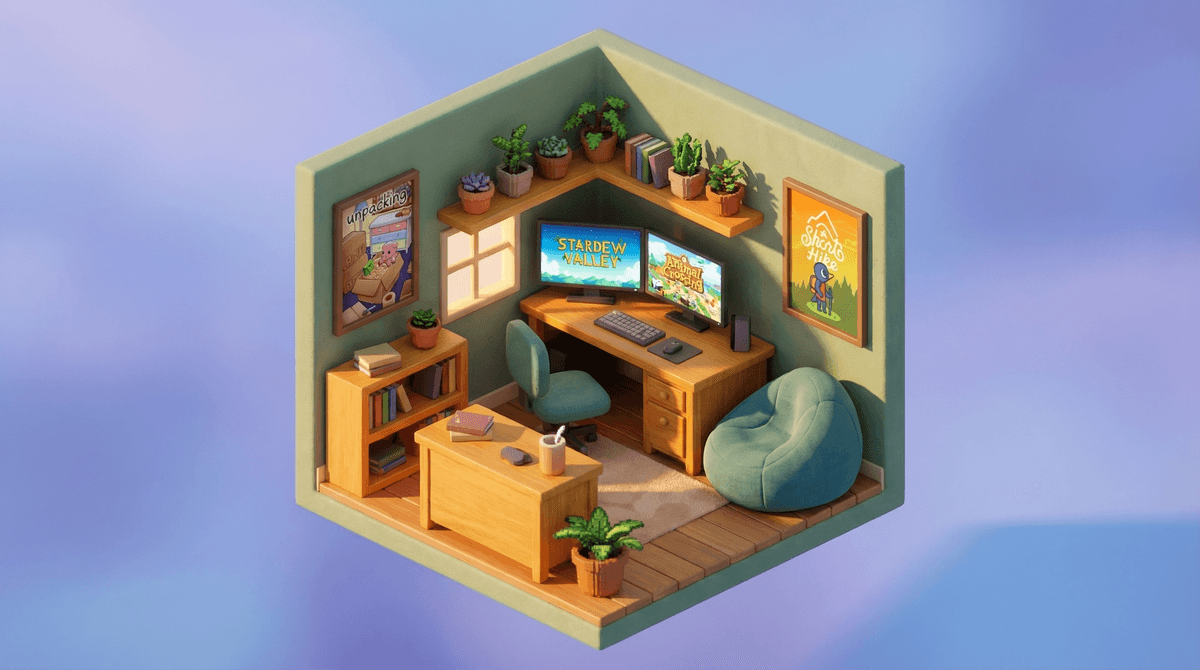
Animal Crossing: New Horizons - You're living on an island, decorating your house, catching bugs, and chatting with anthropomorphic animals. That's it. That's the whole game. It's cozy, it's gentle, and kids absolutely love the collecting and customization aspects.
Unpacking - This one's a gem. You literally just unpack boxes and arrange items in different homes throughout someone's life. It's weirdly meditative and tells a story without words. Great for kids who love organizing (yes, they exist).
Ages 8-12: Building Complexity
Stardew Valley - You inherit a farm and restore it to glory. There's fishing, mining, crop management, relationship building with townspeople, and genuine progression. Fair warning: there is a combat element in the mines, but it's totally optional and not the focus. Most kids just want to optimize their pumpkin yields anyway.
Sims 4 - Create people, build houses, manage their lives. The Sims has been teaching kids about consequences (forget to feed your Sim? They get cranky) for decades. Just be aware that without supervision, Sims can get into some PG-13 situations—nothing explicit, but relationship drama is definitely part of the game.
Spiritfarer - You're a ferrymaster for the deceased, helping spirits move on to the afterlife. It's about death, but in the gentlest, most beautiful way possible. Kids build, craft, farm, and say goodbye. Have tissues ready—this one hits emotionally.
A Short Hike - You're a bird exploring a provincial park. That's it. You hike, you meet characters, you find treasures. It takes maybe 2-3 hours to complete and it's pure joy the whole way through.
Ages 12+: Serious Games Without Combat
Portal 2 - First-person puzzle game with genuinely hilarious writing. You're solving physics puzzles with a portal gun. No enemies to shoot, just problems to solve. The co-op mode is fantastic for siblings or parent-kid bonding.
Outer Wilds - Space exploration and mystery solving. You're in a time loop, exploring a solar system and piecing together what happened to an ancient civilization. It's challenging, beautiful, and completely nonviolent. Best for kids who love figuring things out.
Cities: Skylines - City management simulation. Your kid will learn more about infrastructure, zoning, and public services than they ever wanted to. Bonus: watching them rage about traffic patterns is hilarious.
Unpacking works for this age too—older kids often appreciate the storytelling even more.
Here's where it gets interesting. Roblox and Fortnite are known for their combat games, but both platforms have massive creative and nonviolent communities.
Roblox has thousands of experiences that are purely creative—fashion shows, theme park tycoons, pet adoption games, obstacle courses (obbies), roleplay worlds. The challenge is finding them among the shooter games, but they're there. Check out experiences like "Adopt Me," "Brookhaven," or "Tower of Hell" (frustrating but nonviolent).
Fortnite Creative lets kids build their own worlds and play other people's creations—many of which are puzzle maps, parkour challenges, or social hangout spaces. Zero combat required.
Nonviolent games aren't a compromise—they're often the most creative, thoughtful, and engaging games out there. They teach patience, systems thinking, creativity, and problem-solving without the dopamine hit of digital combat.
If your kid is resistant ("but all my friends play [insert battle royale here]"), try framing these as additional options rather than replacements. Most kids who try something like Minecraft Creative Mode or Stardew Valley end up genuinely hooked—they just needed permission to try something different.
And hey, if you want to explore more options tailored to your kid's specific interests and age, check out our game recommendations tool or learn more about setting up healthy gaming habits in your house.