

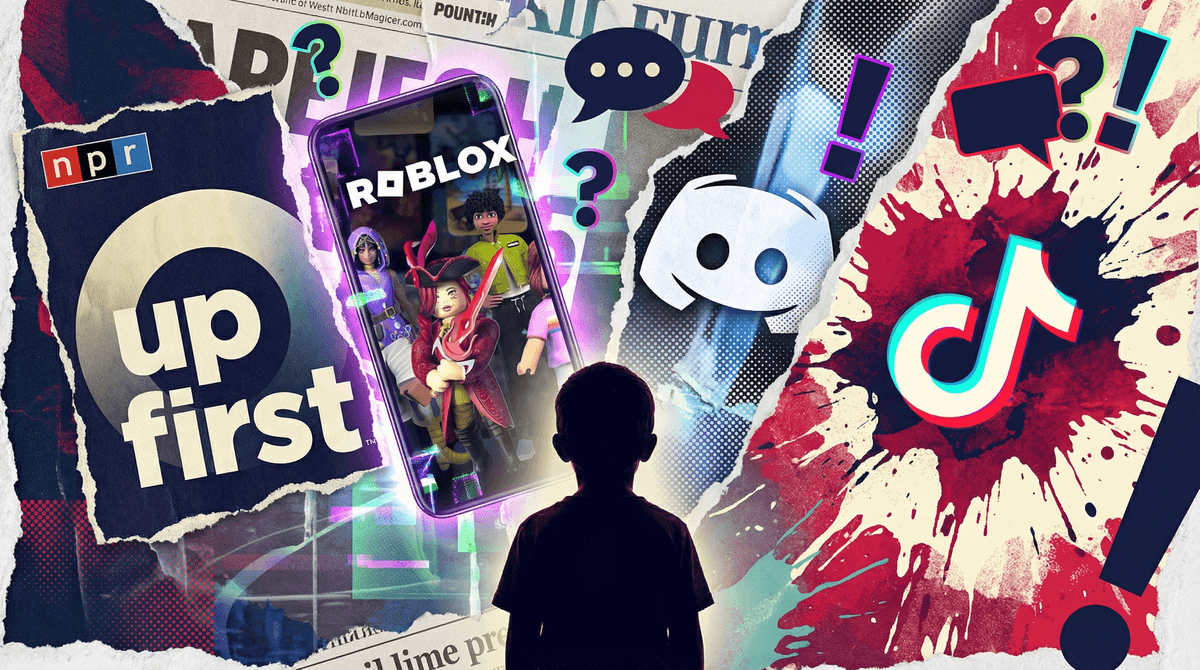
Here's what election season looks like through your kid's eyes: heated debates at the lunch table, TikTok feeds full of political hot takes, family group chats that suddenly feel tense, and maybe some very awkward moments when Uncle Mike and Aunt Sarah start going at it over turkey.
For kids, political season isn't just about candidates and policies—it's about watching the adults in their life get weirdly stressed, seeing their favorite YouTubers take sides, and trying to figure out why their best friend's parents suddenly seem like "the enemy" according to someone at Thanksgiving.
The digital piece makes this exponentially harder. Kids aren't just overhearing CNN in the living room—they're seeing political memes, doomscrolling news, watching creators they trust share hot takes, and getting into actual arguments in Discord servers and Roblox chat.
Political anxiety in kids is real and rising. Studies show that children as young as 8 are reporting stress about political events, and tweens and teens are showing signs of genuine distress about the state of the world.
But here's the thing: kids aren't stressed about policy positions. They're stressed because:
- They're seeing adults they love and trust act scared, angry, or dismissive of each other
- They're absorbing apocalyptic messaging without context or media literacy
- They're getting into identity-based conflicts with peers without understanding nuance
- They feel powerless and don't know how to process big, abstract problems
The goal isn't to shield kids from politics entirely (that's impossible and arguably not great). The goal is to help them build resilience, critical thinking, and emotional regulation around charged topics.
Let's be real: the algorithm doesn't care about your kid's mental health. It cares about engagement. And nothing drives engagement like outrage.
Here's what's happening on their screens:
TikTok and YouTube Shorts are serving up political content that's designed to provoke strong reactions. Even if your kid isn't seeking it out, the algorithm will serve them political takes sandwiched between dance videos and Minecraft clips.
Discord and group chats become echo chambers where kids parrot talking points they've absorbed without really understanding them. It's tribal and intense.
News apps and push notifications deliver context-free headlines designed to alarm. "BREAKING: [Scary Thing]" hits different when you're 12 and don't have the background to understand what's actually happening.
Influencers and creators your kids trust are weighing in—sometimes thoughtfully, sometimes recklessly. When a gaming YouTuber or beauty influencer shares a political take, kids often accept it uncritically because they trust the person.
Elementary (Ages 5-10)
At this age, kids are concrete thinkers. They're picking up on emotional temperature more than content.
What they need:
- Reassurance that they're safe and the adults are handling things
- Simple, honest answers to direct questions (but don't info-dump)
- Help identifying feelings ("It sounds like you're worried about...")
- Limits on news exposure—they don't need CNN playing in the background
What to say: "Grownups are talking a lot about who should be in charge of making decisions for our country. People have different ideas about what's best, and that's okay. Our family is safe, and you don't need to worry about this stuff—that's our job."
Middle School (Ages 11-13)
This is when kids start forming their own opinions but still lack the nuance to hold complexity. They're also deeply peer-influenced and starting to care about fitting in or standing out.
What they need:
- Media literacy skills (who made this? what's the goal? what's missing?)
- Help distinguishing between facts, opinions, and propaganda
- Permission to not have an opinion on everything
- Modeling of respectful disagreement
What to avoid:
- Using them as a mini-therapist for your political anxiety
- Forcing them to defend positions they're still forming
- Dismissing their concerns as "kid stuff"
High School (Ages 14-18)
Teens are capable of real political thought but are still developing emotional regulation and long-term thinking. They're also dealing with identity formation, which makes political disagreement feel personal.
What they need:
- Space to form their own views (even if they differ from yours)
- Tools for engaging in productive debate vs. online screaming matches
- Help managing doomscrolling and news anxiety
- Encouragement to take action in age-appropriate ways (volunteering, local engagement)
What to model:
- Consuming news from multiple sources
- Changing your mind when you learn new information
- Taking breaks from political content
- Engaging respectfully with people who disagree
Create a "No-Shame Zone"
Kids need to know they can ask questions without being judged or lectured. If your kid says something that sounds like it came straight from a questionable TikTok, resist the urge to freak out. Instead: "Interesting—where did you hear that? What do you think about it?"
Teach "Zoom In, Zoom Out"
When kids are spiraling about a political issue, teach them to:
- Zoom in: What can I actually do about this today? (Usually: not much, and that's okay)
- Zoom out: Has humanity faced hard things before? (Yes, and we're still here)
Model Intellectual Humility
Let your kids see you say things like:
- "I don't know enough about that to have a strong opinion"
- "I used to think X, but I learned Y and changed my mind"
- "That's a really complex issue—I'm still figuring out what I think"
Set Boundaries Around Family Conflict
If family gatherings are becoming political battlegrounds, it's okay to set boundaries: "We're not going to debate politics at this dinner. If Uncle Mike brings it up, we're going to change the subject."
And if your kid is genuinely distressed by a family member's views, validate that: "I know it's hard when someone you love sees the world really differently than we do. You don't have to pretend to agree, and you also don't have to fix them."
Curate Their Information Diet
- Limit news notifications—even for teens, constant breaking news alerts are too much
- Encourage long-form over short-form—a 15-minute video essay or article is usually more nuanced than a TikTok
- Subscribe to kid-friendly news sources like NPR Up First or news podcasts designed for younger audiences
- Watch/read together sometimes so you can provide context in real-time
Teach Them to Spot Manipulation
Play "spot the technique" with political content:
- Emotional manipulation: Is this trying to make me scared/angry/outraged?
- Oversimplification: Is this presenting a complex issue as simple good vs. evil?
- Us vs. them: Is this trying to make me hate a group of people?
- Source checking: Who made this and what do they want me to do?
Set Tech Boundaries During High-Stress Times
During debate nights, election results, or other high-intensity political moments, it's okay to say: "We're not doomscrolling tonight. We'll check in tomorrow when we have more information."
Your Anxiety Is Contagious
Kids are incredibly attuned to your emotional state. If you're spiraling, they're absorbing that. It's okay to have feelings about politics, but try to process the most intense stuff away from your kids.
They're Watching How You Treat "The Other Side"
If you're calling people who disagree with you idiots, monsters, or worse, your kids are learning that it's okay to dehumanize people over political differences. Model the behavior you want to see.
Not Everything Needs to Be a Teaching Moment
Sometimes your kid just wants to tell you about their day, not get a lecture about media literacy or civic engagement. Read the room.
It's Okay to Take Breaks
You don't have to be politically engaged 24/7, and neither do your kids. It's okay to watch Bluey and not think about the state of the world for an hour.
Election season is hard for everyone, but kids are especially vulnerable because they're still building the skills to process big, scary, abstract problems. Your job isn't to shield them completely or to turn them into mini-activists—it's to help them build resilience, critical thinking, and emotional regulation.
The digital piece makes everything harder and faster and more intense. But with some intentional boundaries, media literacy skills, and a lot of modeling healthy behavior, you can help your kids navigate this without losing their minds (or yours).
- Check in with your kid: "How are you feeling about all the political stuff going on?" (And then just listen)
- Audit their information diet: What news/political content are they actually consuming?
- Set some boundaries: Maybe no political TikTok before bed, or no news notifications during school
- Model taking breaks: Let them see you step away from the news and do something restorative
And if you need to talk through how to handle a specific situation—like your kid repeating something wild they heard online, or family conflict that's getting out of hand—Get guidance on talking to kids about political disagreements . You're not alone in this.