

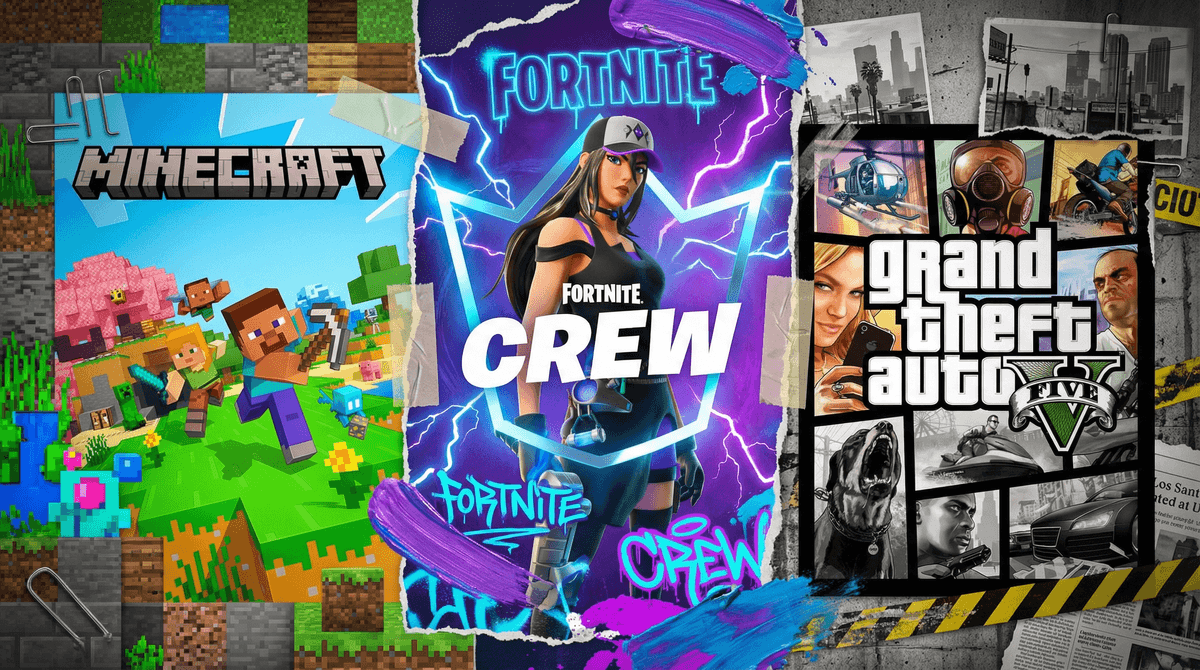
Let's be real: lumping Minecraft, Fortnite, and GTA (Grand Theft Auto) together is like comparing apple juice, energy drinks, and straight vodka. Yes, they're all "games," but that's where the similarity ends.
Minecraft (rated E10+) is a creative sandbox where kids build worlds, solve problems, and collaborate. Fortnite (rated T for Teen) is a fast-paced battle royale shooter with cartoonish violence and a social scene that rivals middle school cafeteria drama. GTA (rated M for Mature 17+) is an open-world crime simulator featuring graphic violence, explicit language, drug use, and sexual content.
The fact that parents are even comparing these three tells you everything about how confusing modern gaming can be. So let's break down what each game actually is, why kids want to play them, and—most importantly—whether they should.
Minecraft is legitimately educational in ways that make teachers happy. Kids learn spatial reasoning, resource management, basic coding (through Redstone), and creative problem-solving. It's essentially digital LEGO with survival mechanics.
Age-wise: The E10+ rating is pretty spot-on. Most 7-8 year-olds can handle Creative Mode (no threats, just building), while 9-10 year-olds typically manage Survival Mode (where monsters appear at night) without nightmares. By middle school, kids are building functioning calculators and recreating the Sistine Chapel.
The catch: Minecraft isn't just the game—it's also YouTube culture around the game, multiplayer servers with strangers, and increasingly, marketplace purchases. A kid "playing Minecraft" might actually be watching someone else play for three hours, which is a very different activity. Understanding Minecraft's ecosystem matters more than the base game rating.
Fortnite occupies this weird middle ground where it's technically a shooter, but nobody bleeds and eliminated players just dissolve into light. It's rated T (13+), but realistically, a massive percentage of 9-12 year-olds play it—and that's where it gets messy.
Why kids love it: It's not really about the shooting. Fortnite is the digital playground—it's where friend groups hang out, where kids feel included in cultural moments, where they learn emotes from their favorite streamers. Saying "no Fortnite" can feel like social isolation to a 10-year-old.
The real concerns: The violence is mild compared to other shooters, but the game is designed to be addictive, the voice chat can be toxic, and the in-game purchases are engineered to make kids feel like they need that new skin. Plus, the skill gap is brutal—losing repeatedly isn't great for every kid's emotional regulation.
The verdict: Many parents land on allowing Fortnite around ages 10-12 with strict boundaries: limited playtime, voice chat off or friends-only, and serious conversations about in-game purchases. Some families say no until 13+. Both approaches are defensible. Here's how to set up Fortnite parental controls if you go that route.
Here's where we stop being diplomatic. Grand Theft Auto is not for kids. Period.
The M rating means 17+ for a reason. This isn't pearl-clutching or being overprotective—GTA literally features graphic murder, torture sequences, strip clubs, drug deals, and a mission structure that rewards criminal behavior. The "satire" defense that adult gamers use? That goes completely over kids' heads.
"But my kid is mature for their age": Cool. They're still not ready for interactive sex scenes and detailed drug use mechanics. This isn't about maturity—it's about content that's specifically designed for adult audiences.
"All their friends play it": I'm calling BS on "all." Some kids play it, often because their parents don't know what's actually in the game. You're not the weird parent for saying no to GTA—you're the informed one.
The real issue: Kids want GTA because it looks like freedom—you can drive anywhere, do anything, cause chaos. They're attracted to the open-world sandbox aspect, not the mature content (usually). The solution? Offer actual alternatives like Spider-Man or Zelda: Breath of the Wild—open-world games with exploration and freedom minus the strip clubs.
Ages 7-9:
- Minecraft Creative Mode: Yes
- Minecraft Survival Mode: Maybe (depends on the kid)
- Fortnite: No
- GTA: Absolutely not
Ages 10-12:
- Minecraft: Yes, all modes
- Fortnite: Family decision (many say yes with controls, many say wait)
- GTA: No
Ages 13-15:
- Minecraft: Yes
- Fortnite: Generally fine with awareness
- GTA: Still no (despite what they tell you about their friends)
Ages 16+:
- Minecraft: Yes
- Fortnite: Yes
- GTA: Your call, but understand what you're saying yes to
The ESRB ratings aren't just suggestions from pearl-clutchers—they're based on content analysis. E10+ means mild cartoon violence. T means teen-appropriate themes and moderate violence. M means mature content that's genuinely not suitable for developing brains.
Ignoring these ratings isn't "chill parenting"—it's just uninformed parenting. You wouldn't let your 10-year-old watch Euphoria on HBO, right? Same logic applies to games.
Minecraft is a genuinely great game for kids that builds skills and creativity. Green light it, but manage the YouTube rabbit holes and online interactions.
Fortnite is the complicated middle schooler of games—not inherently bad, but requires active parenting, clear boundaries, and honest assessment of whether your specific kid can handle the social pressure and addictive design.
GTA is an adult game. Full stop. If your kid is begging for it, talk about why age ratings exist and offer alternatives that scratch the same itch without the strip clubs.
The good news? You don't have to choose between being the "fun parent" and being responsible. You just have to actually know what you're saying yes or no to—which is exactly what you're doing by reading this.
Next step: If you're trying to figure out where your family lands on these decisions, Screenwise can help you think through your specific situation with personalized guidance based on your kids' ages and your family's values. Because "what should my kid play?" isn't a one-size-fits-all answer—but it is an answerable question with the right information.