

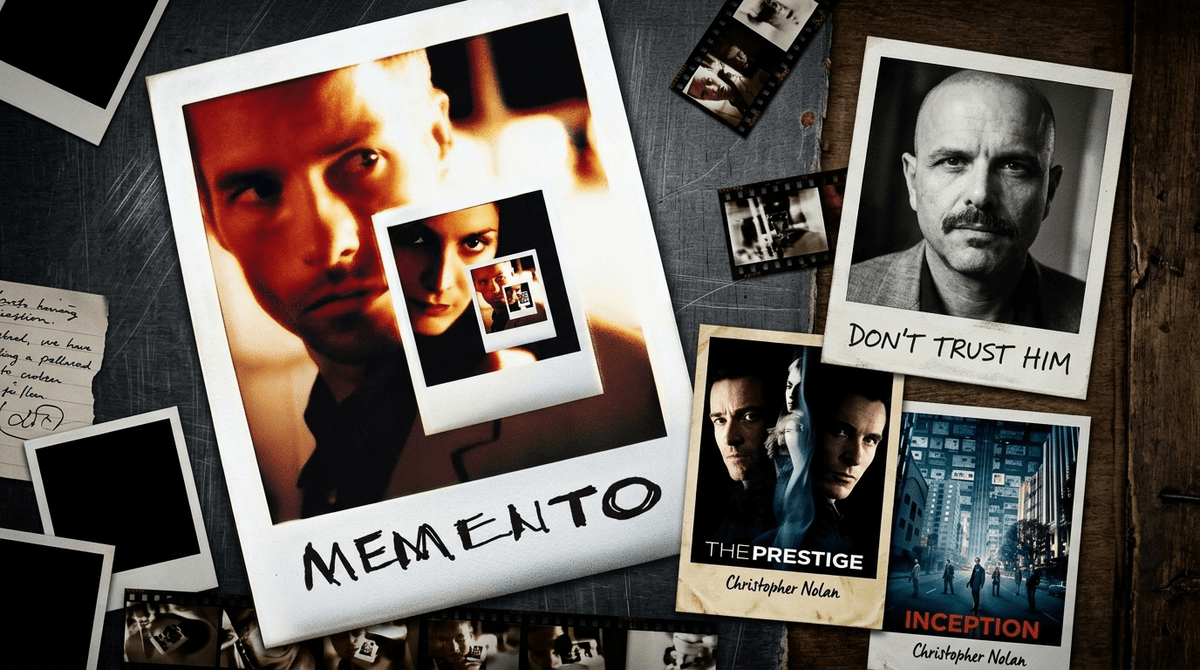
Memento is the ultimate "wait, what?" movie, a non-linear noir that treats the audience’s brain like a jigsaw puzzle. It earns its R rating with gritty violence and a relentless stream of profanity, but the real hurdle for a teen isn't the grit—it’s the mental stamina required to keep up with a story told in reverse. If your teen is ready to graduate from standard blockbusters to cinema that demands a notebook and a second viewing, this is the gold standard.
TL;DR: Memento is Christopher Nolan’s breakout masterpiece about a man with short-term memory loss trying to find his wife's killer. It is rated R for pervasive language and brief but intense violence. It’s a top-tier pick for older teens (15+) who love psychological thrillers like Inception or The Prestige and can handle a story that refuses to hold their hand.
Most movies are a straight line. Memento is a series of loops that move backward. The film uses two timelines: one in black and white that moves forward, and one in color that moves backward. They meet in the middle.
This isn't a stylistic flex. It puts the viewer in the shoes of Leonard Shelby, a man who cannot form new memories. Every time a new color scene starts, you have no idea how Leonard got there or why he’s holding a gun—which is exactly how Leonard feels. For a teen used to the "hero’s journey" formula, this is a total system shock. It rewards active watching. If they look at their phone for thirty seconds, they’re lost for the next twenty minutes.
The R rating is earned, but it’s "prestige R," not "slasher movie R."
- Language: The f-word is the primary adjective in this movie. It’s used constantly and casually by almost every character. If your household is sensitive to profanity, this will be a loud 113 minutes.
- Violence: It’s visceral and messy. There are beatings, a scene involving a woman being punched in the face, and a gritty climax involving a gunshot. The violence feels heavy because the movie is grounded in a depressing, sun-bleached reality.
- Sexual Content: There’s no explicit sex, but there is some brief nudity in the form of photographs and a scene where Leonard is in a hotel room with a woman. It’s more "noir-sleazy" than "erotic."
Watching Memento with a teen is a great way to talk about "the unreliable narrator." Leonard uses tattoos and Polaroids to keep track of his life because he can’t trust his brain. But as the movie progresses, the question shifts: Can we trust Leonard? Can we trust the notes he leaves for himself?
This is a perfect bridge into more complex storytelling. It moves the conversation away from "what happened?" and toward "why is the director showing me this now?" For a high schooler, that’s a massive leap in how they consume media. If they’ve already worked through our digital guide for high school, this is a natural next step in their cinematic education.
The best way to handle the "non-linear confusion" is to lean into it. Don't try to explain the movie while it's playing. Let them be confused. The payoff in the final ten minutes (which is actually the middle of the story) only works if they’ve felt the frustration of Leonard’s condition.
Questions to ask after the credits roll:
- Who was the most "evil" person in the movie? (The answer is never simple).
- Does Leonard actually want to solve the mystery, or does he just want a purpose?
- How do we decide what is "true" if we can't remember the context?
If this hits the mark, they’re likely ready for the rest of the Nolan filmography. Inception is the obvious next step for more "puzzle" energy, while Oppenheimer handles historical weight with a similar non-linear touch.
For more picks that challenge the brain without the R-rated grit, check out our best movies for kids list.
Q: What age is Memento appropriate for? Most teens 15 and up can handle the content. The violence and language are significant, but the psychological complexity is what really determines the age fit. A 13-year-old might just find it frustratingly confusing.
Q: Is Memento too violent for a 14 year old? It depends on the 14-year-old. It’s not a "gore-fest," but the violence is realistic and carries emotional weight. It’s less about the blood and more about the desperation of the characters.
Q: Why is Memento rated R? The MPAA gave it an R for "violence, language, and some drug content." The language is the most pervasive element, with frequent use of strong profanity throughout the film.
Memento is a masterpiece of intentionality. It’s a movie that respects the viewer’s intelligence. For a teen, it’s a rite of passage into "serious" cinema—just be prepared to spend an hour afterward on Reddit or YouTube trying to piece the timeline back together.
