

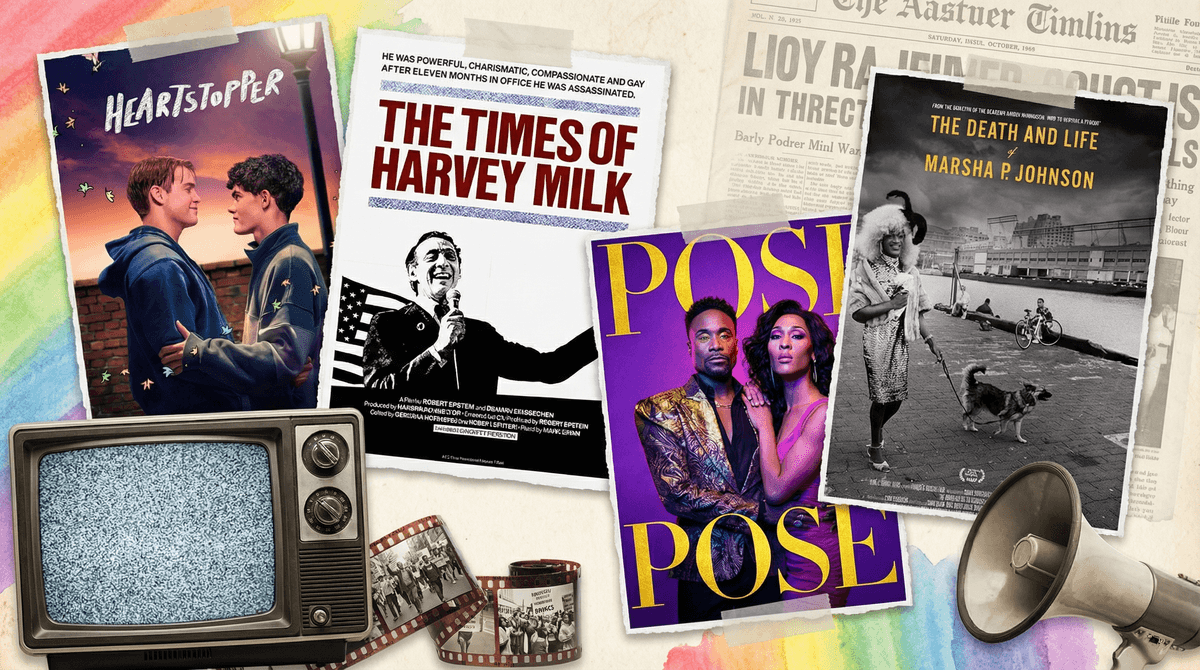
We're living through a moment where queer stories are more visible than ever—from Heartstopper to documentaries about Stonewall, from drag competitions to historical dramas about the AIDS crisis. For many kids, these shows and films are their first introduction to LGBTQ+ history, identity, and activism.
But here's the thing: not all of these are created equal, and not all are age-appropriate for every kid. Some are genuinely educational and moving. Others are... well, let's just say they prioritize drama over accuracy. And as a parent, you might be wondering: Should my kid be watching this? What will they learn? And how do I talk about it afterward?
The good news is that quality LGBTQ+ historical content can be an incredible conversation starter—about civil rights, identity, resilience, and how societies change. The key is knowing what you're working with.
Whether your kid is queer, questioning, or has LGBTQ+ friends (which, statistically, they almost certainly do by middle school), understanding queer history isn't optional anymore—it's part of understanding modern society. Recent data shows that roughly 20% of Gen Z identifies as LGBTQ+, compared to about 3% of Baby Boomers. Your kid's world is fundamentally different from the one many of us grew up in.
And here's what's wild: many kids are learning about LGBTQ+ history primarily through media, not school. Depending on where you live, curriculum may barely touch it. So shows like When We Rise or documentaries like The Death and Life of Marsha P. Johnson become de facto history lessons.
The question isn't whether kids will encounter this content—it's whether they'll encounter it with context and support.
Ages 8-11: Start with representation, not trauma
At this age, focus on shows that normalize LGBTQ+ identities without centering on historical violence or discrimination. The Owl House isn't explicitly historical, but it shows queer characters in a fantasy world where their identity is just... normal. For actual history, consider documentaries like When We Knew (about LGBTQ+ Holocaust survivors) only if your kid is already learning about WWII and can handle that level of historical trauma.
Ages 12-14: Introduction to activism and civil rights
Middle schoolers can handle more complexity. Milk (the 2008 film about Harvey Milk) is rated PG-13 and provides a solid introduction to gay rights activism in the 1970s. It includes violence (Milk's assassination) but contextualizes it within a civil rights framework most kids understand from learning about MLK.
For documentaries, The Times of Harvey Milk is excellent but definitely requires co-viewing and discussion. Pride (the 2014 British film) is surprisingly uplifting and shows LGBTQ+ activists supporting coal miners—it's about solidarity and is generally appropriate for mature 13+.
Ages 15+: The full picture, including AIDS crisis and systemic discrimination
High schoolers can engage with the harder stuff. Pose is transformative television about ballroom culture in the 1980s-90s, but it's TV-MA for good reason—sex, drug use, and the devastating impact of the AIDS crisis. It's also some of the most important queer history on screen, period.
How to Survive a Plague is a documentary about ACT UP and the fight for AIDS treatment. It's not graphic, but it's emotionally intense. The Death and Life of Marsha P. Johnson investigates the mysterious death of a trans activist and Stonewall veteran—it's compelling but requires maturity to process.
Historical accuracy varies wildly. Stonewall (the 2015 film) was widely criticized for centering a fictional white gay man in a story that was actually led by trans women of color like Marsha P. Johnson and Sylvia Rivera. If your kid watches it, they're getting a whitewashed version of history. Better to skip it entirely and watch The Death and Life of Marsha P. Johnson instead.
Trauma representation matters. Some content focuses so heavily on queer suffering that it can be overwhelming, especially for LGBTQ+ kids. Balance historical trauma with stories of joy, resilience, and victory. Pride does this beautifully—it acknowledges the AIDS crisis but centers community and activism.
Intersectionality is often missing. Many mainstream LGBTQ+ historical narratives focus primarily on white gay men. Look for content that includes trans people, people of color, and lesbians. Pose is exceptional here—it centers Black and Latinx trans women in a way that's basically unprecedented in mainstream media.
Your kid's identity matters. If your kid is LGBTQ+, they might find these stories validating—or they might find them heavy. Check in. If they're not queer, these stories build empathy and historical literacy. Either way, your job is to provide context and a safe space to process.
Before watching: "This show is about [specific historical event/period]. It includes [content warnings]. What do you already know about this? What are you curious about?"
During/after: Don't lecture. Ask questions. "What surprised you?" "How do you think things have changed since then?" "What would you have done in that situation?"
Connect to present day: "We just watched a documentary about marriage equality battles in the 2000s. That was less than 20 years ago. Your friend Emma has two moms—they couldn't have been legally married in most states back then."
Acknowledge discomfort: "Some of this is hard to watch. It's okay to feel angry or sad about how people were treated."
Provide resources: If your kid has questions you can't answer, learn more about LGBTQ+ history resources for families .
.
LGBTQ+ historical content isn't just for queer kids—it's for all kids learning to navigate a diverse world. But not all content is created equal, and age-appropriateness matters. Start with representation and joy for younger kids, introduce activism and civil rights in middle school, and save the heavier historical trauma for high schoolers who can contextualize it.
The goal isn't to shelter kids from hard history—it's to give them the tools to understand it, process it, and recognize how far we've come (and how far we still have to go).
Want to explore specific titles? Check out our guides to Heartstopper, Pose, and Milk.
Not sure where to start? Get recommendations based on your kid's age and interests.
Want to understand what other families are watching? Take the Screenwise survey to see how your family's media habits compare to your community's—and get personalized recommendations based on your values and your kid's age.