

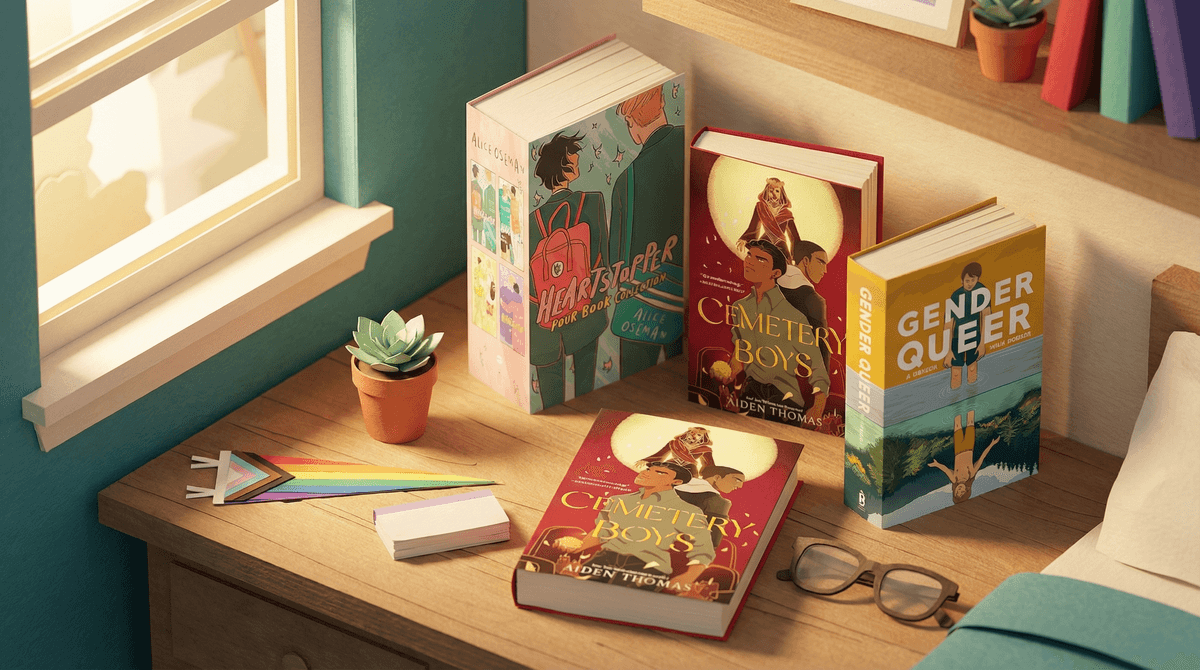
We're talking about books—fiction, memoir, graphic novels, poetry—that feature LGBTQ+ characters, themes, or authors. Some are coming-of-age stories where a character's identity is central to the plot. Others just happen to have queer characters living their lives, saving the world, or falling in love, where being LGBTQ+ is part of who they are but not the entire story.
These books range from lighthearted rom-coms like Heartstopper to heavy memoirs like Gender Queer by Maia Kobabe, from fantasy adventures to contemporary realistic fiction. The landscape is huge, and honestly, it's never been better. Publishers are finally catching up to what teens have been asking for: stories that reflect the actual diversity of human experience.
Here's the thing: representation matters. Not in a preachy way, but in a "seeing yourself in a story makes you feel less alone" way. For LGBTQ+ teens, finding books with characters who share their experiences can be genuinely life-changing. For straight, cisgender teens, reading about people different from them builds empathy and understanding in ways that lectures never will.
And look, whether your teen identifies as LGBTQ+ or not, they're growing up in a world where these conversations are happening. Their friends, classmates, favorite celebrities, and characters in the shows they binge are navigating gender and sexuality in ways that might feel unfamiliar to you. Books are a low-stakes way to explore these topics—no awkward eye contact required.
Plus, let's be real: teens are going to encounter this content somewhere. Would you rather they find it in a thoughtfully written book you can discuss together, or in the chaotic comments section of TikTok?
Not all LGBTQ+ books are created equal, and not every book is right for every age. Here's a rough breakdown:
Ages 12-14 (Middle School) Books at this level tend to focus on identity exploration, first crushes, and finding community. They're usually lighter on sexual content and heavier on emotional discovery.
- Heartstopper by Alice Oseman (also a Netflix series)—the sweetest, most wholesome queer love story you'll find
- The Best at It by Maulik Pancholy—a middle schooler navigating being gay and Indian American
- Melissa (formerly George) by Alex Gino—a transgender girl's journey to be seen for who she is
Ages 14-16 (Early High School) These books start tackling more complex themes: discrimination, mental health, coming out, first relationships. Some include sexual content, but it's usually not explicit.
- Simon vs. the Homo Sapiens Agenda by Becky Albertalli—the book that became the movie Love, Simon
- Cemetery Boys by Aiden Thomas—a trans boy trying to prove himself to his traditional Latinx family (plus, it's a ghost story!)
- I'll Give You the Sun by Jandy Nelson—a beautifully written story about twins, art, and identity
Ages 16-18 (Late High School) Books for older teens can include more mature themes: sex, trauma, activism, systemic oppression. These are often the books that end up on banned book lists.
- Red, White & Royal Blue by Casey McQuiston—the son of the U.S. president falls for a British prince (fun, sexy, political)
- The Miseducation of Cameron Post by Emily M. Danforth—a girl sent to conversion therapy (heavy, but important)
- Gender Queer by Maia Kobabe—a graphic memoir about nonbinary identity (this one's been challenged in a lot of school districts)
These books aren't "making" anyone LGBTQ+. Let's just get that out of the way. Reading about a gay character doesn't turn someone gay any more than reading Harry Potter turns them into a wizard. What these books do is help teens understand themselves and others better.
Some of these books are on banned book lists. And honestly? That's often a sign they're doing something right—tackling uncomfortable truths, challenging the status quo, or simply existing while centering LGBTQ+ experiences. If a book is being challenged, you can look up why and decide for yourself whether those concerns align with your family's values.
Content varies wildly. Some LGBTQ+ books are as chaste as a Disney movie. Others include sex scenes. If you're worried about content, check out reviews on Common Sense Media or read the book yourself first. Or—and this is a wild idea—trust your teen to self-select. Most teens are pretty good at knowing what they're ready for.
Your reaction matters more than the book. If your teen brings home an LGBTQ+ book, your response will stick with them. Curiosity ("What's it about?") beats suspicion ("Why are you reading that?"). Even if you're uncomfortable with the topic, staying open keeps the door open for future conversations.
You don't need to be an expert to have these conversations. Here are some conversation starters:
- "I noticed you're reading [book title]. What made you pick it up?"
- "What do you think about [character]'s story?"
- "Is this something you or your friends relate to?"
- "Are there parts of this book you want to talk about?"
And if your teen is exploring their own identity? Books can be a bridge. Saying "I saw this book and thought of you" can communicate support without forcing a Big Talk before they're ready.
LGBTQ+ books for teens aren't about pushing an agenda—they're about telling stories. Good stories. Stories that make teens feel seen, help them understand people different from them, and spark conversations that matter.
You don't have to agree with every message in every book. But creating space for your teen to explore these stories—whether they're questioning their own identity or just curious about the world—is a way of saying, "I trust you. I'm here. Let's figure this out together."
- Browse LGBTQ+ books for teens to find age-appropriate options
- Check out Heartstopper if you want a universally beloved entry point
- Get help navigating specific conversations with your teen for help navigating specific conversations with your teen