

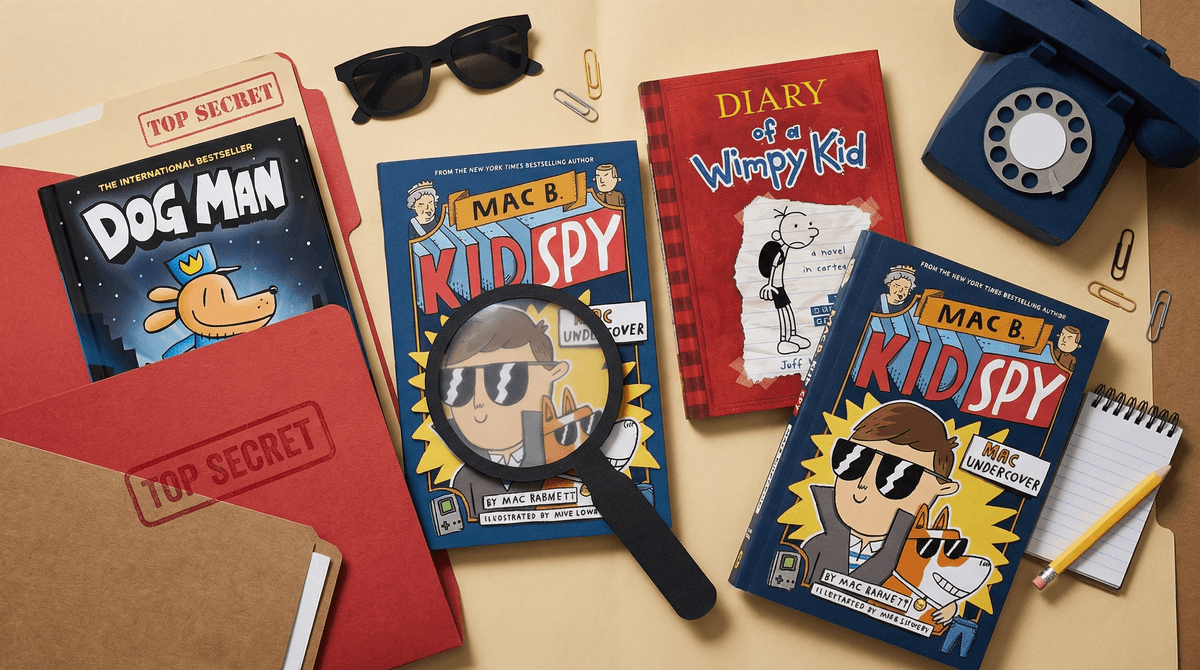
The Mac B., Kid Spy series by Mac Barnett is a chapter book collection that follows the (supposedly true!) adventures of young Mac Barnett as he's recruited by the Queen of England to become a secret agent. Yes, that Queen of England. The series kicks off with Mac B., Kid Spy: Mac Undercover and continues through multiple adventures involving stolen crown jewels, international intrigue, and a whole lot of humor.
These books hit that sweet spot for early chapter book readers—typically ages 6-9—with short chapters, comic-style illustrations by Mike Lowery, and stories that move fast enough to keep even the most reluctant reader turning pages. Each book is around 150 pages, but they read much quicker thanks to the generous illustrations and accessible text.
It's genuinely funny. Mac Barnett has a gift for absurdist humor that works on multiple levels. Kids laugh at the silly situations and visual gags, while parents appreciate the meta-humor and self-aware storytelling. The premise itself is ridiculous—a regular kid becomes a spy for the Queen—and Barnett leans into that absurdity hard.
The format is perfect for transitioning readers. If your kid loved graphic novels like Dog Man or Diary of a Wimpy Kid but you're trying to nudge them toward more traditional chapter books, this series is the bridge. The illustrations aren't just decorative—they're integral to the storytelling, making the reading experience feel less intimidating.
It celebrates creativity and problem-solving. Mac doesn't succeed through physical prowess or violence (more on that in a second). He uses his brain, gets creative with ordinary objects, and often bumbles his way through situations with a combination of luck and cleverness. It's refreshing.
The "true story" framing is delightful. Barnett presents these adventures as his actual childhood memories, complete with "photographic evidence" (obviously doctored photos of young Mac meeting the Queen). Kids old enough to be in on the joke love the winking humor, while younger readers might genuinely wonder if it could be true.
The violence level is cartoonish, not realistic. There are chase scenes, mild peril, and spy gadgets, but nothing graphic or scary. Think classic James Bond meets Home Alone—the bad guys are bumbling, the danger is played for laughs, and nobody actually gets hurt in any meaningful way. It's significantly gentler than most superhero content.
The reading level is accessible but not dumbed down. These books clock in around a 2nd-3rd grade reading level, but the vocabulary and sentence structure are sophisticated enough that kids aren't bored. Barnett doesn't talk down to his audience, which kids pick up on and appreciate.
There are currently seven books in the series (as of 2026), so if your kid gets hooked, you've got plenty of runway. The books can be read in any order, though there are some recurring characters and inside jokes that land better if you start from the beginning.
It might spark interest in actual spy history. Don't be surprised if your kid starts asking questions about real spies, the Cold War, or how secret agents actually work. This could be a great entry point into age-appropriate history discussions .
.
Ages 6-8: Perfect for strong readers or as a read-aloud. The humor works great when read with voices and dramatic flair. Some kids this age might need help with a few vocabulary words, but the illustrations provide plenty of context clues.
Ages 8-10: The sweet spot. These kids can independently read and fully appreciate both the story and the meta-humor. This is also the age where kids are starting to develop their own reading identities, and a series like this can be the thing that makes them think "oh, I'm a reader now."
Ages 10+: Might feel a bit young for some fifth graders, but reluctant readers or kids who gravitate toward humor will still enjoy these. They're also quick enough that they make great palate cleansers between heavier books.
Here's the thing about "hook books"—sometimes we need them. If your kid has been resisting reading, or if they've been stuck in graphic novel land and you're worried they're not progressing, a series like Mac B. can be the gateway drug to longer-form reading.
That said, these aren't going to challenge a strong reader the way something like Percy Jackson or Nevermoor might. And that's okay! Not every book needs to be a stretch. Sometimes kids just need to experience the pure joy of devouring a fun story.
If your kid loves these and you want to build on the momentum, consider:
- The Bad Guys series (similar humor, slightly more text)
- Who Would Win? series (nonfiction but equally engaging for this age)
- Hilo series (graphic novels with heart and adventure)
Mac Barnett's Kid Spy series is exactly what it promises to be: fast-paced, funny, and accessible chapter books that get kids reading. They're not going to win literary awards, and they're not trying to. They're trying to make second and third graders laugh while turning pages, and they absolutely succeed.
If you've got a reluctant reader, a kid transitioning from picture books, or just a young person who loves silly humor and adventure, grab Mac Undercover and see what happens. Worst case scenario, you've spent 30 minutes reading a genuinely entertaining book together. Best case scenario, you've unlocked a new passion for reading that will serve them for life.
Worth noting: These books make fantastic gifts for early elementary kids, travel well (thin and light), and are perfect for reading in the car or on planes. They're also great for kids who "don't like reading" but will happily listen to audiobooks—the audio versions are well-produced and capture the humor beautifully.
If your kid is hooked: Check out other books by Mac Barnett, including his picture books (The Wolf, the Duck, and the Mouse is gorgeous) and his other middle-grade work.
If you want more spy-themed content: The Spy School series by Stuart Gibbs is the next step up for ages 9-12, with more complex plots and slightly more mature humor.
If you're trying to build a reading habit: These books are short enough to finish in a few sittings, which gives kids that satisfying feeling of completion that can motivate them to pick up the next one. Consider getting the first three books at once so there's no gap between finishing one and starting another.