

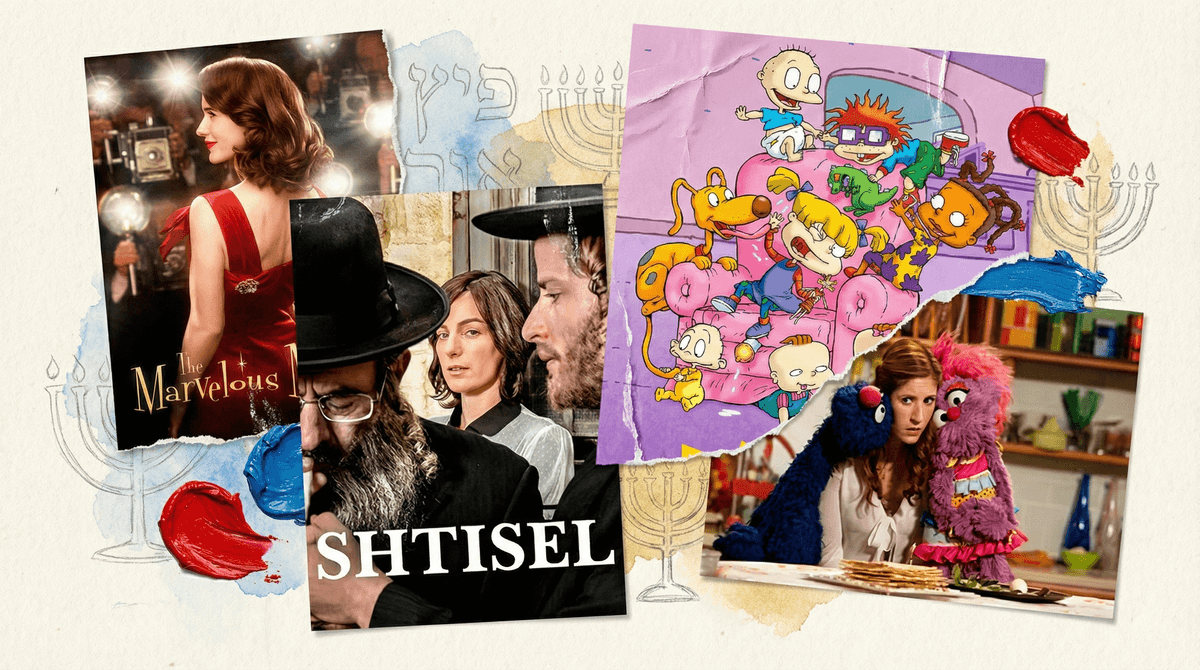
Jewish TV shows are series that center Jewish characters, culture, traditions, or themes — from comedies that explore modern Jewish identity to dramas that grapple with history and heritage. We're talking everything from The Marvelous Mrs. Maisel to Shtisel to animated shows like Rugrats (yes, the Pickles family celebrates Hanukkah).
These shows range from explicitly Jewish stories set in specific communities to mainstream content that just happens to feature Jewish families living their lives. And honestly? That representation matters. When kids see characters who celebrate the same holidays, ask similar questions about identity, or navigate the same cultural tensions they do, it validates their experience in a media landscape that doesn't always reflect them back.
Here's the thing: Jewish kids are growing up in a world where they're simultaneously very visible (hello, antisemitic incidents are up) and kind of invisible in mainstream media. When Jewish characters do appear, they're often reduced to stereotypes — the neurotic mom, the cheap businessman, the self-deprecating comedian.
Quality Jewish representation on screen does a few important things:
It normalizes Jewish life. Shows that casually include Shabbat dinners, bar mitzvah prep, or debates about whether to put up a Christmas tree (in interfaith families) tell kids: your life is normal and worth depicting.
It opens conversations about values. Jewish culture emphasizes questioning, debate, education, social justice, and community responsibility. Shows that explore these themes — even indirectly — give you natural entry points to discuss what matters to your family.
It provides historical context. Whether it's The Diary of Anne Frank adaptations or shows like Hunters that tackle Nazi hunters in 1970s America, these shows can spark age-appropriate conversations about the Holocaust, antisemitism, and resilience.
It shows diversity within Judaism. There's no monolithic "Jewish experience." Orthodox families in Brooklyn live differently than Reform families in LA. Israeli culture differs from American Jewish culture. Sephardic and Mizrahi Jews have different traditions than Ashkenazi Jews. Good representation shows that complexity.
Elementary (Ages 5-10)
Rugrats has multiple Hanukkah and Passover episodes that are genuinely thoughtful while being totally accessible to little kids. Tommy Pickles' family is Jewish, and the show treats their traditions as just... normal family life.
PJ Library — okay, this is technically a book program, but they have animated content online that's specifically designed for young Jewish kids. Stories about holidays, values, and Jewish identity told at a preschool/early elementary level.
Shalom Sesame is the Israeli co-production of Sesame Street. It teaches Hebrew, Israeli culture, and Jewish concepts through the familiar Sesame format. Great for families raising kids with connection to Israel or Hebrew language.
Middle Grade (Ages 8-13)
The Baby-Sitters Club (Netflix reboot) features Stacey McGill, who's Jewish, and the show includes a really well-done episode about her bat mitzvah that explores what it means to connect with tradition when you're not particularly religious.
Ghosts (CBS version) has a Jewish ghost character (Sasappis is Native American, but there's also Isaac, a Revolutionary War ghost who's revealed to be Jewish). It's played for laughs but with genuine warmth.
Teens (Ages 13+)
The Marvelous Mrs. Maisel — Upper West Side Jewish family in the 1950s-60s. Gorgeous production, sharp writing, and a fascinating look at mid-century American Jewish life. Some mature content (infidelity, adult themes) but nothing gratuitous. Great for older teens.
Shtisel — An Israeli show about an ultra-Orthodox family in Jerusalem. Subtitled, slow-paced, and absolutely beautiful. It's a window into a world many secular or Reform Jewish families don't know well. Teens who are curious about religious observance find it fascinating.
Never Have I Ever features Ben Gross, a Jewish teen character who's more than just "the Jewish kid." His identity comes up naturally — he has a bar mitzvah flashback, his parents are recognizably Jewish — but he's a fully realized character first.
Hunters — This is the edgy one. Nazi hunters in 1970s America, led by Al Pacino. Violent, stylized, and controversial (some Jewish groups criticized its historical liberties). Only for older teens, and honestly, watch it with them so you can discuss what's real history vs. revenge fantasy.
Not all Jewish shows are appropriate for all ages. Hunters is violent. Transparent deals with gender identity and sexuality. Unorthodox has mature themes about leaving religious communities. Check ratings and read reviews before family viewing.
Some shows spark hard conversations. Holocaust content, antisemitism, interfaith relationships, Israel/Palestine — these topics come up. That's not a reason to avoid them, but it is a reason to watch together and be ready to pause and discuss.
Representation isn't always perfect. Some shows lean into stereotypes even while trying to celebrate Jewish culture. Use that as a teaching moment: "Why do you think they made that character so neurotic? Is that realistic or is it playing into old ideas about Jewish people?"
Your family's Jewish practice matters. If you're raising kids in an Orthodox home, Shtisel might feel familiar and affirming. If you're secular or interfaith, it might feel foreign. Both reactions are valid. Talk about how your family practices Judaism and why different families make different choices.
Jewish TV shows aren't just "nice to have" — they're genuinely important for Jewish kids growing up in a diverse but sometimes alienating media landscape. They validate identity, spark conversations about values and history, and show the beautiful complexity of Jewish life.
The key is watching together when possible, especially with older content. Pause. Ask questions. Let your kids tell you what they notice. "Did you see that they lit Shabbat candles?" "Why do you think that character decided to have a bat mitzvah even though her family isn't religious?" "How is that family's Judaism different from ours?"
These shows are tools — not babysitters, not complete Jewish education, but valuable entry points for ongoing conversations about identity, culture, and what it means to be part of an ancient people living modern lives.
Want more recommendations? Check out our guide to Jewish books or explore shows about diverse families that include Jewish representation alongside other identities.
And if you're looking for ways to balance screen time with actual Jewish practice and learning, we can help you think through that too .
.