

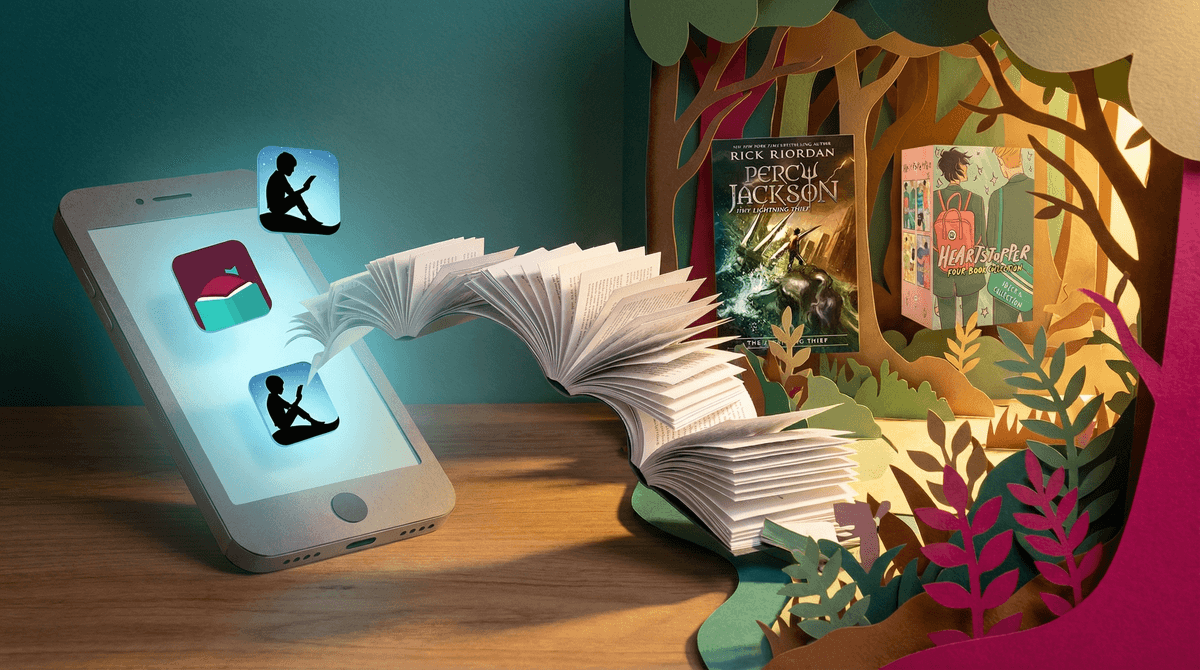
How to Get Your Teen Reading: From Screens to Pages
Let's be real: your teen used to devour books. Maybe it was Percy Jackson, maybe it was graphic novels, maybe it was whatever dystopian series their friends were passing around. And now? Now you're lucky if they read the text messages you send them.
Here's the thing — your teen probably hasn't stopped reading. They're reading Discord chats, Reddit threads, fanfiction, game wikis, subtitles on TikTok videos. The average teen is processing thousands of words daily. They just aren't reading books, and that's what's making you nervous.
And honestly? That nervousness is valid. There's something fundamentally different about sustained reading versus the fragmented, scroll-based consumption that dominates screen time. Book reading builds different neural pathways, develops deeper focus, and creates a kind of immersive thinking that doomscrolling just... doesn't.
But lecturing about "the importance of reading" is about as effective as telling them to "just put the phone down." So let's talk about what actually works.
Before we jump into solutions, it's worth understanding what's actually happening:
The homework factor: By high school, reading has often become a chore. Required reading lists full of books that feel irrelevant, plus the pressure to extract "themes" and "symbolism" — it sucks the joy right out of it.
The comparison trap: Social media makes everything feel less interesting by comparison. A book requires you to sit still and imagine. TikTok delivers dopamine hits every 15 seconds. It's not a fair fight.
Identity shift: The kid who loved reading might be trying on new identities in middle school or high school. Sometimes "reader" doesn't feel like a cool identity to claim, especially if they're already labeled the "smart kid."
Genuine exhaustion: Between school, activities, social pressures, and the general anxiety of being a teenager in 2026, they might just be... tired. Reading requires mental energy they don't always have.
Meet Them Where They Are
Stop trying to get them to read what you think they should read. If they want to read Heartstopper graphic novels, that counts. If they're into fantasy romance with questionable tropes, that counts too. Reddit threads about game lore? Still reading.
The goal isn't to turn them into literary scholars. It's to keep the muscle of sustained attention and imagination active. You can guide toward quality, but you can't force it.
Make It Social
Teens are wired for social connection right now. Use that:
- Suggest books that have active fandoms (anything with a show adaptation works great)
- Start a casual two-person book club with them — you both read the same book and text reactions
- Let them know when a book is going viral on BookTok (yes, that's a thing, and it's actually getting teens to read)
- Gift books that their friends are reading
Remove Friction
This is huge. If reading requires them to:
- Remember the book exists
- Find it on the shelf
- Carry it to school
- Not lose their place...
They're not going to do it. Instead:
- Get them a library card and show them how to check out ebooks on their phone. Libby is the app most libraries use, and it's actually good.
- Let them use Kindle or Apple Books on their phone. I know, I know — more screen time. But we're being pragmatic here.
- Audiobooks count. Libro.fm or Audible for car rides, walking the dog, or before bed.
- Keep physical books in weird places: bathroom, car, their nightstand, the kitchen counter.
Create Phone-Free Pockets
You can't compete with the phone when it's in their hand. So create situations where it's not:
- "No phones at dinner" means they might actually pick up the book on the table
- Long car rides without WiFi are perfect for audiobooks
- Before-bed phone curfew (charge phones outside bedrooms) creates natural reading time
- Waiting rooms, appointments — bring a book instead of defaulting to the phone
Find the Right Format
Some teens are never going to love traditional novels, and that's okay:
- Graphic novels and manga: Heartstopper, anything by Raina Telgemeier, Nimona
- Short story collections: Less commitment, easier to finish
- Nonfiction about their interests: Gaming history, true crime, psychology, whatever they're into
- Poetry collections: Rupi Kaur, Amanda Gorman — short, impactful, very shareable
- Choose-your-own-adventure: There's been a renaissance of these for older readers
Normalize Reading as Part of Your Life
If you're constantly on your phone and never reading yourself, that's the model they're seeing. Not saying you need to perform reading, but:
- Actually read books yourself
- Talk about what you're reading (briefly, not lecture-mode)
- Have books visible in your house
- Go to bookstores together sometimes
- Share articles or book recommendations naturally
Use Their Interests as Entry Points
Into Minecraft? There are novels set in that universe. Love Stranger Things? There are tie-in books and similar vibes in other series. Obsessed with true crime? There's an entire genre for that.
Find book recommendations for teens based on their interests .
.
Let's save you some time:
- Forcing classics: Unless they're genuinely interested, making them read Dickens in their free time is a recipe for resentment
- Bribing: "I'll pay you $20 to read this book" makes reading transactional, not enjoyable
- Comparing to siblings: "Your sister read three books this month!" Cool, now they'll never read out of spite
- Removing all screens until they read: This just builds resentment toward books
- Making them write book reports: You're not their English teacher
Your teen's relationship with reading is probably going to look different than yours did. That's not necessarily bad — it's just different. The goal isn't to turn them into a bookworm who reads for four hours a day. It's to keep reading as a viable, enjoyable option in their life.
Some teens will naturally return to reading in college or their twenties when the pressure is off. Some will always prefer other forms of media. Both outcomes are fine.
But if you can keep the door open — make books accessible, remove friction, meet them where they are — you're giving them a tool they can return to whenever they need it. A way to build focus, imagination, and sustained attention in a world that's constantly trying to fragment both.
This week: Take them to the library or bookstore with zero agenda. Let them browse. Don't comment on their choices. Just be there.
This month: Read something yourself and mention it casually once. Model the behavior without preaching.
This year: Check out our guide to building better screen time habits that create natural space for reading.
And remember: you're not trying to raise a perfect reader. You're trying to raise a human who has options beyond the scroll.