

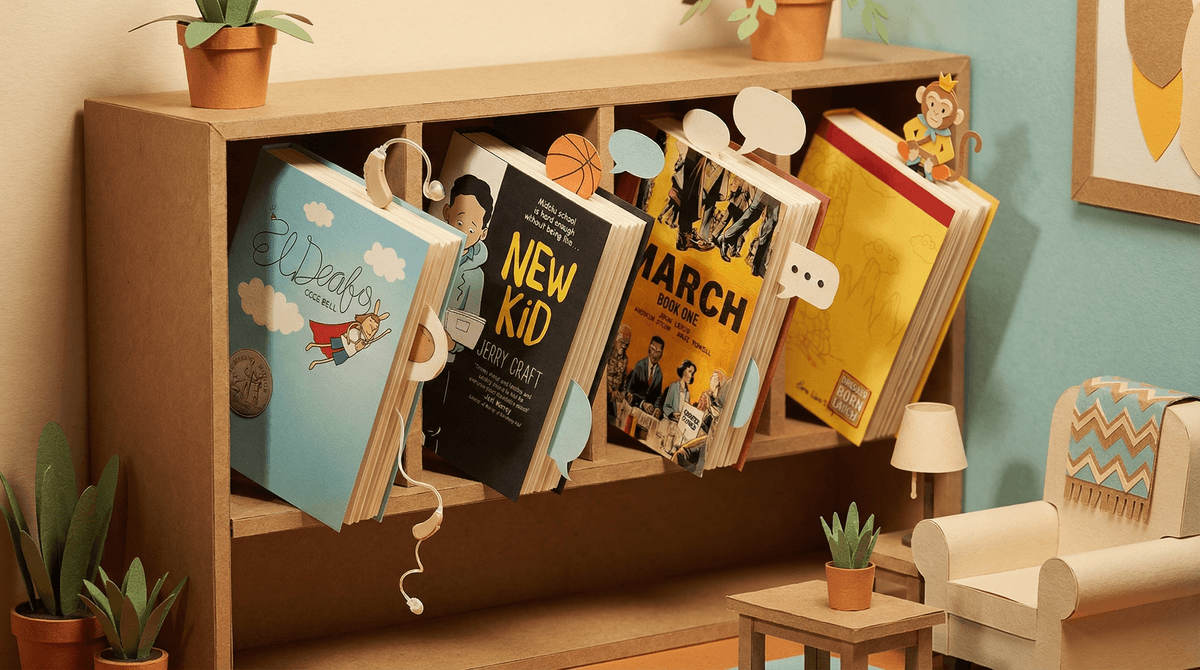
Look, I get it. When you hear "graphic novel," you might think of superhero comics or manga your kid devours instead of doing homework. But there's a whole world of graphic novels out there that do something pretty remarkable: they help kids understand experiences completely different from their own.
These aren't your typical picture books or chapter books with a few illustrations. Graphic novels use the combination of visual storytelling and text to create an immersive experience that can actually make abstract concepts like empathy, identity, and perspective-taking more concrete for young readers. The visual element does something special—it shows facial expressions, body language, and environments in ways that pure text sometimes can't capture.
And here's the thing: kids who might struggle with dense chapter books often absolutely devour graphic novels. The format isn't "easier" or "less than"—it's just different. And for teaching empathy? It might actually be more effective.
We're raising kids in a world that desperately needs more empathy. Between social media echo chambers, increasing polarization, and the general chaos of modern life, helping kids understand that other people have completely different lived experiences is crucial.
Graphic novels are uniquely suited for this because they:
Show, don't just tell. When a character experiences discrimination, poverty, or family challenges, kids see it on the page. They see the character's face. They feel the weight of the moment visually.
Make complex topics accessible. Heavy subjects like immigration, mental health, gender identity, or historical trauma can feel overwhelming in traditional formats. Graphic novels break these down into digestible, visual narratives that kids can process at their own pace.
Appeal to reluctant readers. That kid who claims they "hate reading"? Hand them New Kid by Jerry Craft and watch them finish it in one sitting.
Create entry points for conversation. After your kid reads a graphic novel about someone's different experience, you have a natural opening to talk about it. "What did you think about how Jordan felt at his new school?"
Ages 8-12: Building Foundation
New Kid by Jerry Craft - Jordan is one of the few kids of color at his fancy private school. This Newbery Medal winner tackles microaggressions, code-switching, and what it feels like to not quite fit in anywhere. It's funny, it's real, and it opens up conversations about race and belonging without being preachy.
El Deafo by Cece Bell - Cece loses her hearing as a young child and has to navigate school with a giant hearing aid (her "phonic ear"). Kids see what it's actually like to be the "different" kid, to want to fit in, and to eventually embrace what makes you unique.
Roller Girl by Victoria Jamieson - About friendship, growing apart, and finding your own path. Less "heavy" than some others but teaches kids that people can want different things and that's okay.
Ages 10-14: Deeper Complexity
American Born Chinese by Gene Luen Yang - Weaves together three stories about identity, stereotypes, and what it means to be caught between cultures. Gets into some real stuff about racism and self-acceptance.
The Best We Could Do by Thi Bui - A memoir about a family's escape from Vietnam and their life as refugees. Helps kids understand the refugee experience and generational trauma in a deeply personal way. Better for mature tweens and teens.
Gender Queer by Maia Kobabe - Yes, this is the most banned book in America right now. It's a memoir about figuring out gender identity and sexuality. Important note: It has some mature content, so preview it first. For families open to discussing gender identity, it's an invaluable window into an experience many kids don't understand.
Ages 13+: Real-World Issues
March trilogy by John Lewis - The late Congressman John Lewis's memoir of the Civil Rights Movement. This is living history, and it's powerful. Kids see what activism looked like, what people risked, and why it mattered.
They Called Us Enemy by George Takei - George Takei's childhood in Japanese American internment camps. Most kids learn about this in school, but seeing it through a child's eyes makes it hit different.
Fun Home by Alison Bechdel - A complex memoir about family, sexuality, and coming to terms with a parent's hidden life. Mature content, but incredible for older teens ready for nuanced storytelling.
These aren't "easy readers." Just because they have pictures doesn't mean they're simple. Many graphic novels tackle heavy, complex subjects. That's the point.
Preview when needed. Some of these books deal with mature themes—sexuality, violence, trauma. If you're unsure whether something is right for your kid, check out Common Sense Media reviews or flip through it first.
Don't dismiss the format. If your kid is reading graphic novels, they're READING. They're building literacy skills, visual literacy, and critical thinking. The format is legitimate and valuable.
Use them as conversation starters. The best part about these books is they give you a shared reference point. "Remember in New Kid when Jordan's teacher mixed him up with the other Black student? Have you ever seen something like that happen?"
Libraries are your friend. Graphic novels can be pricey. Most libraries have great collections, and librarians can recommend titles based on your kid's interests and maturity level.
"Won't they just look at the pictures?" That's... kind of the point? The pictures ARE part of the story. Visual literacy is a real skill, and graphic novels require readers to integrate text and images to understand the full narrative.
"Will this make them stop reading 'real' books?" Nope. Most kids who love graphic novels also read traditional books. And even if they don't, they're still reading complex narratives and building empathy.
"Some of these topics seem too mature." They might be! You know your kid best. The age ranges I've suggested are guidelines, not rules. Some 10-year-olds are ready for American Born Chinese, others need to wait until 13.
In a world where kids can spend hours watching YouTube or playing Roblox without ever encountering a perspective different from their own, graphic novels offer something valuable: a window into someone else's life.
They're not a replacement for real-world diverse friendships and experiences, but they're a powerful supplement. They help kids practice perspective-taking in a low-stakes environment. They normalize different experiences. They show that everyone has a story.
And honestly? They're just really good stories. If your kid is engrossed in a book—any book—that's teaching them about someone else's experience, that's a win.
Start with your kid's interests. Love sports? Try Roller Girl. Into history? March is incredible. Let their interests guide the entry point.
Visit your library. Ask the librarian for recommendations. They know what's popular with kids your child's age and can suggest titles based on reading level and maturity.
Read together or separately. Some families love reading the same book and discussing it. Others prefer letting kids read independently and then chatting about it after. Both work.
Follow up with conversation. "What did you think?" "Was there a part that surprised you?" "Have you ever felt like that character?" Keep it light—you're not giving a book report quiz.
Want more recommendations? Find graphic novels about specific topics or experiences your family is interested in exploring.
The goal isn't to turn your kid into a perfectly empathetic human overnight (that's impossible). It's to give them tools to understand that their experience isn't universal, that other people's lives look different, and that different doesn't mean wrong. Graphic novels are just one tool in that toolbox—but they're a really good one.