

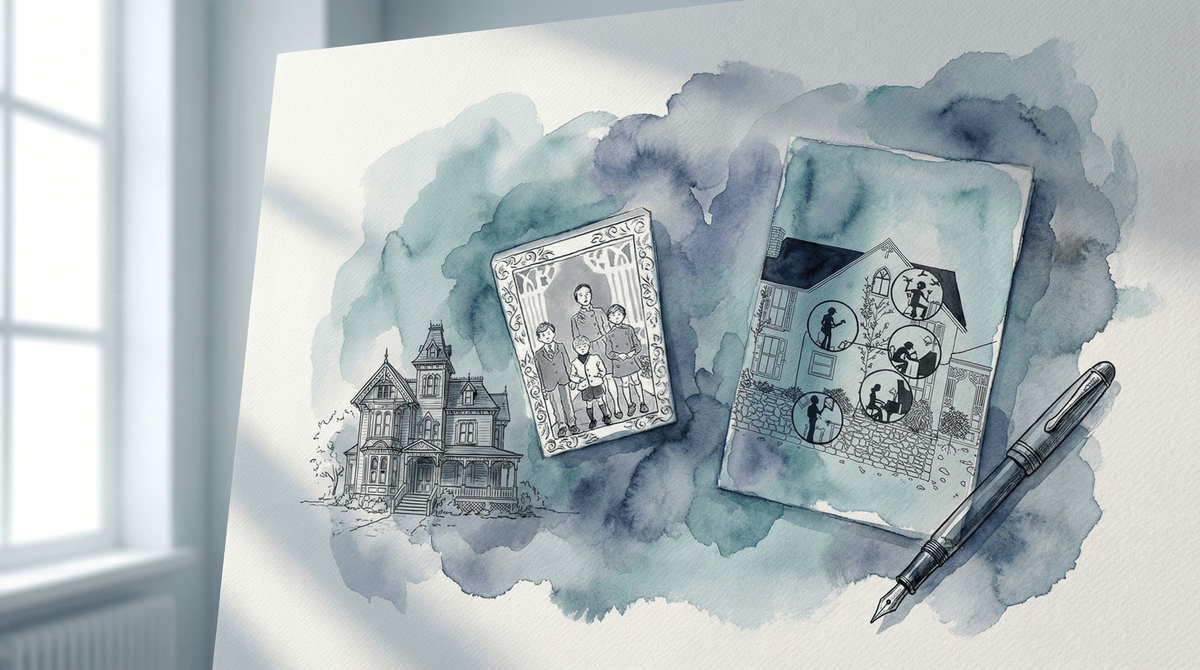
Fun Home by Alison Bechdel is a groundbreaking graphic memoir published in 2006 that's become required reading in many high school and college English classes. The title has a double meaning—it refers both to the nickname for the funeral home where Bechdel grew up and to the idea of a "fun" home, which her family's complicated dynamics decidedly were not.
The book weaves together Bechdel's coming-of-age story as a lesbian with the unraveling mystery of her father's closeted sexuality and his death (likely suicide) when she was 19. It's literary, referencing everything from Ulysses to The Importance of Being Earnest, and it's told through detailed black-and-white illustrations that are sometimes beautiful, sometimes stark, and always intentional.
Here's the thing parents need to know upfront: This is not a graphic novel in the superhero sense. It's a memoir that happens to use the graphic format to tell a deeply complex story about family secrets, sexuality, mental health, and grief.
Fun Home has become a cultural touchstone, particularly in LGBTQ+ literature and in discussions about memoir as an art form. It was adapted into a Tony Award-winning Broadway musical and is frequently assigned in:
- High school English classes (usually grades 11-12)
- College literature and gender studies courses
- AP Literature and AP Language courses
- Summer reading lists for incoming college freshmen
The book is celebrated for its innovative use of the graphic memoir format, its literary sophistication, and its honest portrayal of queer identity at a time when such narratives were less common in mainstream literature.
Let's be direct about what's in this book, because you'll want to know before your teen brings it home or before it appears on a syllabus:
Sexual content: The book includes depictions and discussions of sexuality, including a scene showing two women having sex (not graphic but clearly depicted), references to the father's affairs with teenage boys and men, and discussions of pornography. Bechdel is frank about her own sexual awakening and experiences.
Mature themes: Depression, possible suicide, closeted sexuality and its psychological toll, dysfunctional family dynamics, emotional abuse, and the complicated grief of losing a parent you had a fraught relationship with.
Language: Some profanity, though not excessive.
The age question: Most educators and publishers recommend this for ages 16+ or grade 11+. Some schools assign it to mature 10th graders. It's definitely not appropriate for middle school.
Here's where I'll be honest with you: Fun Home might make you uncomfortable. It made a lot of parents uncomfortable when schools started assigning it, leading to challenges in various school districts .
.
But discomfort isn't necessarily a reason to keep a book away from a mature teen. Consider what the book actually offers:
Literary merit: This is a sophisticated text that teaches visual literacy, narrative structure, and intertextuality. Students learn to "read" images alongside words, analyzing how the two work together to create meaning.
Representation: For LGBTQ+ teens, seeing queer identity portrayed with complexity and honesty can be profound. For all teens, it expands understanding of experiences different from their own.
Family complexity: The book doesn't offer easy answers about Bechdel's relationship with her father. It sits with ambiguity and complicated grief in a way that's actually quite mature and realistic.
Mental health awareness: The book explores how secrets and repression affected her father's mental health and her family's dynamics—relevant themes for today's teens.
If your teen is assigned this book—or chooses to read it—here's how to engage:
Read it yourself first if you can. The graphic format makes it a relatively quick read (you can finish it in 2-3 hours), and you'll be better equipped to discuss it.
Ask open-ended questions: "What did you think about how Bechdel portrayed her father?" or "How did the illustrations add to the story in ways words alone couldn't?"
Acknowledge the mature content: You can say something like, "I know this book deals with some heavy topics. How are you feeling about it?" This opens the door without making it weird.
Connect to broader themes: Talk about how family secrets affect everyone, how important authentic identity is, and how grief is rarely simple.
Respect their experience: If your teen is LGBTQ+, this book might resonate differently than it does for you. Make space for their interpretation.
Some families will decide this book isn't right for their teen, and that's okay. If it's assigned reading and you have concerns:
Talk to the teacher first: Ask about the educational objectives and how mature content will be handled in class discussions. Many teachers send home permission slips or content warnings for this text.
Request an alternative: Most schools will offer an alternative assignment if you have genuine concerns, though this varies by district.
Consider the timing: A book that feels too mature for your 15-year-old might be perfectly appropriate at 17. It's not all-or-nothing.
Fun Home is a significant work of literature that happens to contain mature content. It's not mature content masquerading as literature—there's a real difference, and it matters.
For teens who are ready for it (generally 16+), it offers a sophisticated exploration of identity, family, memory, and grief. It teaches visual literacy and narrative complexity. And yes, it portrays sexuality and deals with heavy themes, but it does so in service of a larger, meaningful story.
The question isn't really "Should anyone ever read this?" but rather "Is my teen ready for this now?" And that's a question only you can answer, based on your teen's maturity, your family values, and your teen's own interest level.
Next Steps: If this is coming home as assigned reading, read it yourself, talk to your teen about it, and reach out to their teacher if you have questions. And if you're looking for other sophisticated graphic novels that might be more appropriate for younger teens, check out Smile by Raina Telgemeier or American Born Chinese by Gene Luen Yang.