

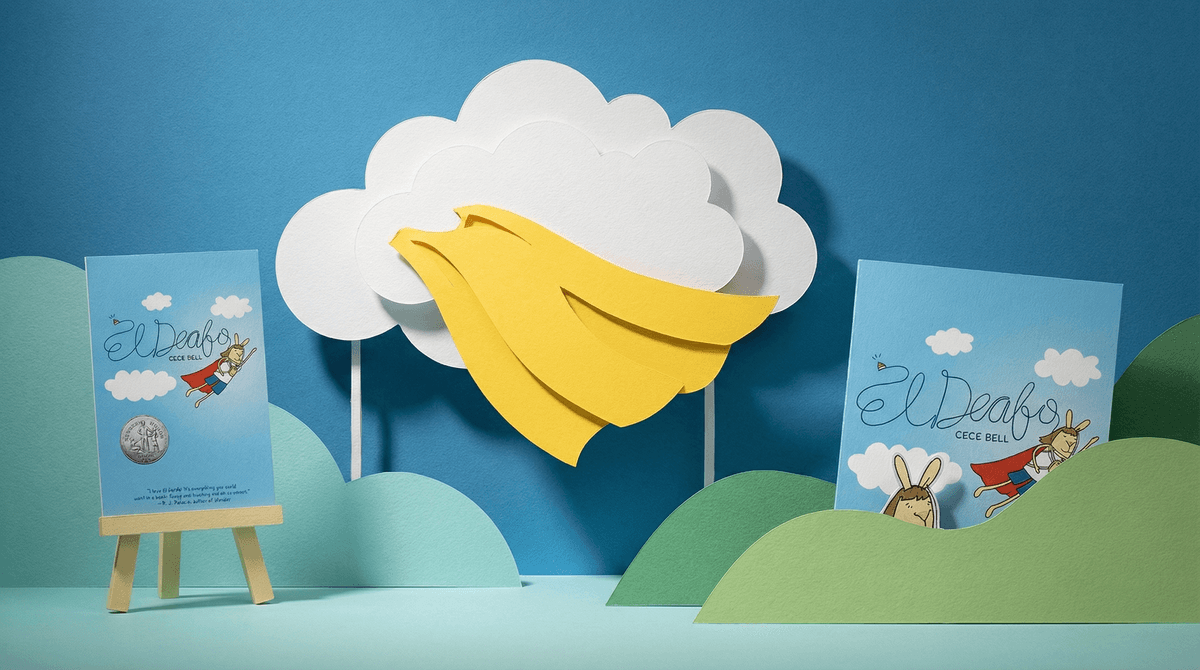
El Deafo by Cece Bell is an award-winning graphic novel memoir that tells the story of a young rabbit named Cece who loses her hearing after an illness at age four. Published in 2014, it's based on author Cece Bell's own childhood experiences navigating elementary school with a bulky hearing aid called a Phonic Ear.
The book follows Cece through the awkwardness of being "different," the challenges of making friends, and her eventual realization that her hearing aid isn't just a medical device—it's her superpower. When she wears it, she imagines herself as "El Deafo," a superhero with special abilities (like being able to hear her teacher from anywhere in the school).
The graphic novel format makes it incredibly accessible for kids ages 8-12, though younger kids who are strong readers can definitely handle it, and older middle schoolers still find it resonant. It's won pretty much every award a kids' book can win, including a Newbery Honor.
Here's the thing about El Deafo: it's genuinely funny and relatable, even if your kid doesn't have hearing loss. Cece deals with universal kid stuff—wanting to fit in, navigating friendship drama, crushing on a boy, feeling embarrassed by things that make you different, and trying to figure out who you are.
The graphic novel format is a huge draw. Kids who might feel intimidated by a chapter book about "a serious topic" will pick this up because it looks fun and moves quickly. The illustrations are expressive and warm, and Bell's decision to draw all the characters as anthropomorphic animals (rabbits, mostly) creates just enough distance to make difficult moments feel safe to explore.
Kids also respond to Cece's honesty. She's not a perfect protagonist—she gets jealous, makes bad friend choices, and sometimes feels sorry for herself. That authenticity makes her feel like a real person, not a "teaching moment."
It's not preachy, but it is educational. Your kids will learn about hearing loss, hearing aids, lip reading, and what it's like to navigate school with a disability—but it never feels like a lesson. It's just Cece's story.
The friendship dynamics are complex and realistic. Cece experiences some genuinely hurtful moments from other kids—not bullying exactly, but the kind of thoughtless exclusion and awkwardness that happens when kids don't know how to handle difference. One friend treats her like a charity case. Another friend is great one-on-one but ignores her in groups. These moments can spark really valuable conversations about how we treat people who are different from us.
There's a subtle message about self-advocacy. Throughout the book, Cece struggles with whether to speak up about her needs or just try to blend in. By the end, she's learning to advocate for herself without apologizing for who she is. That's a powerful message for any kid, but especially for kids who feel different in any way.
The superhero framing is brilliant. The "El Deafo" persona isn't just cute—it's Cece's way of reframing her hearing aid from a source of shame to a source of power. Kids get this instinctively. It's a master class in resilience without ever using that word.
Content-wise, it's very appropriate. There's no violence, no scary content, no inappropriate language. The most intense moments are emotional—times when Cece feels left out or embarrassed. These scenes might hit hard for sensitive kids, but they're handled gently.
Ages 7-9: This is the sweet spot. Kids this age are navigating their own friendship challenges and starting to notice differences between themselves and their peers. The graphic novel format makes it accessible even for kids who are still building reading stamina. You might want to read it together so you can pause for questions.
Ages 10-12: Upper elementary and middle school kids will appreciate the more nuanced friendship dynamics and Cece's internal struggles with identity. They're old enough to have more sophisticated conversations about disability, inclusion, and what it means to be a good friend.
Ages 13+: While the book is marketed to younger readers, plenty of middle schoolers and high schoolers still love it, especially if they're into graphic novels like Smile by Raina Telgemeier or Guts by Raina Telgemeier. It can also be valuable for teens who work with younger kids or who are thinking about disability representation in media.
If your kid is reading El Deafo, here are some conversation starters that don't feel like a book report:
"What did you think about how Cece's different friends treated her?" This opens up discussion about the nuances of friendship and inclusion without putting kids on the spot.
"Have you ever felt different from everyone else? What was that like?" This connects Cece's experience to their own life in a way that builds empathy.
"What do you think about the El Deafo superhero idea?" This can lead to conversations about reframing challenges, finding strength in difference, and how we think about ourselves.
"If you had a friend who was deaf or hard of hearing, what would you want to know?" This is practical and helps kids think about how to be inclusive in real life.
We're in this interesting moment where kids are consuming tons of media—YouTube, TikTok, Roblox—but not always encountering diverse stories or complex emotions. El Deafo offers something different: a chance to sit with a character's experience, to understand someone's world from the inside.
It's also a great counterbalance to the perfectionism kids see online. Cece messes up. She feels awkward. She doesn't always know what to say. And that's okay. That's the story.
For kids with hearing loss or other disabilities, seeing themselves represented as the hero of the story—not the sidekick, not the inspiration, but the actual protagonist with a full inner life—is huge.
El Deafo by Cece Bell is one of those rare books that's both genuinely entertaining and genuinely important. It's not going to solve all your parenting challenges or teach your kid everything they need to know about disability, but it will open doors for conversation and build empathy in a way that feels natural.
If your kid loves graphic novels like Smile, Real Friends by Shannon Hale, or New Kid by Jerry Craft, they'll love this. And even if they're not typically into reading, the format and the story might just hook them.
Read it yourself first if you want to be prepared for conversations, but honestly, it's a quick read—you can knock it out in an hour.
Check if your kid's school or library has it. It's widely available and often used in classrooms, so there's a good chance it's already on the shelf.
Look for the sequel. Cece Bell wrote a follow-up called El Deafo: The Superpowered Sequel that continues the story into Cece's teenage years.
Explore other books about disability. If your kid connects with this one, they might also like Wonder by R.J. Palacio or A Kind of Spark by Elle McNicoll.
Want to explore more books that help kids build empathy and navigate complex emotions? Check out our guide to age-appropriate graphic novels or learn more about how to talk to kids about differences and disability.