

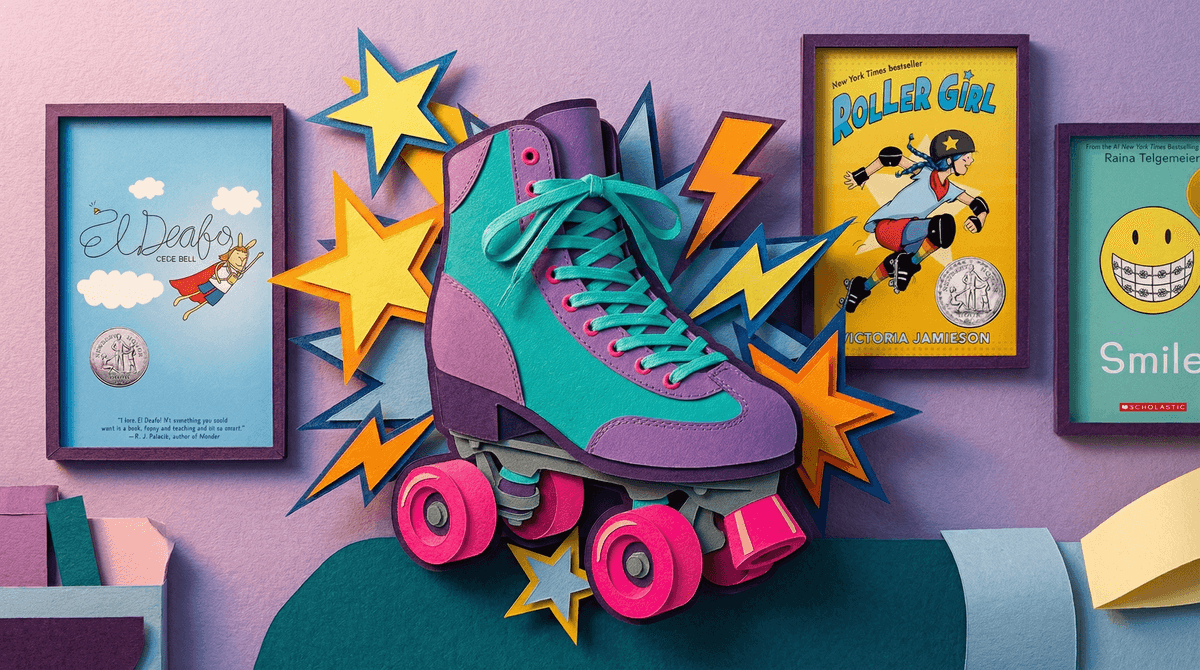
Roller Girl by Victoria Jamieson is a graphic novel that follows 12-year-old Astrid as she discovers roller derby and herself during one transformative summer. When her best friend Nicole chooses ballet camp over roller derby camp, Astrid finds herself navigating new friendships, learning to fall (literally and figuratively), and figuring out who she is when she's not just "Astrid-and-Nicole."
Published in 2015, this Newbery Honor book has become a staple in middle grade libraries and classrooms. It's about 240 pages of full-color illustrations that make it accessible for reluctant readers while still packing an emotional punch that resonates with kids (and honestly, adults too).
It's a graphic novel that doesn't feel like homework. The visual format makes it a quick, engaging read—most kids can finish it in a sitting or two. The roller derby scenes are dynamic and exciting, but what really hooks readers is how real Astrid feels.
Kids at this age are starting to experience that weird, painful realization that friendships change. Maybe your best friend since kindergarten suddenly wants to hang out with different people, or you're discovering interests your friend doesn't share. Roller Girl captures that specific middle school anxiety perfectly—the fear that growing apart means something is wrong with you.
The book also celebrates finding your thing. Astrid discovers roller derby and becomes obsessed in that beautiful, all-consuming way that tweens do. Whether your kid is into Roblox game development, competitive dance, or collecting rocks, they'll recognize that feeling of finally finding what makes you light up.
This is a great bridge book. If you have a kid who loves graphic novels like Smile by Raina Telgemeier or El Deafo by Cece Bell, this fits right in. It's dealing with slightly more complex emotional territory than some younger graphic novels, making it perfect for ages 8-13.
The friendship conflict is nuanced. Nicole isn't a villain—she's just a kid whose interests are diverging from Astrid's. There's no dramatic betrayal or mean girl behavior. Instead, it's the more subtle (and honestly, more painful) experience of slowly realizing you and your best friend are growing in different directions. This makes for great conversations about how friendships evolve and how that's okay, even when it hurts.
Roller derby culture is authentically portrayed. Jamieson actually skated with a roller derby league while working on the book, and it shows. The sport is depicted as empowering and inclusive—there are skaters of different body types, ages, and backgrounds. The derby names (like "Slamazonia" and "Braidy Punch") are funny without being inappropriate.
There's a supportive mom who isn't perfect. Astrid's mom is present and encouraging, but she also has her own life and interests. She doesn't solve all of Astrid's problems, but she's there when needed. It's a refreshing portrayal that shows parental support without helicopter parenting.
Identity outside of friendships: Astrid has to figure out who she is when she's not part of a duo. This is huge for middle schoolers who often define themselves by their friend groups. It's worth asking your kid: "What are things you love that are just yours?"
Trying new things and being bad at them: Astrid falls. A lot. She's not a natural, and she has to work hard to improve. In an era where kids can watch YouTube tutorials and expect instant mastery, seeing a character struggle and persist is valuable.
The complexity of jealousy: Astrid feels jealous of Nicole's new ballet friends and of the more experienced derby girls. The book doesn't shame her for these feelings but shows her working through them. This is a great entry point for conversations about comparing ourselves to others on social media and in real life.
Finding your community: The roller derby team becomes Astrid's people. They're not replacing Nicole, but they're filling a different need. This can lead to conversations about how we can have different friend groups for different parts of our lives—something that's increasingly relevant as kids navigate school friends, neighborhood friends, and online communities.
Ages 8-10: This is on the upper end for this age group, but advanced readers will enjoy it. They might need help processing some of the more complex friendship dynamics. The physical comedy of roller derby falls will definitely land with this age.
Ages 11-13: The sweet spot. These kids are living this friendship evolution in real time. Many are also at the age where they're trying to find their "thing," whether that's a sport, an art form, or a game like Minecraft where they can build their own world.
Ages 14+: Still valuable, especially for kids who are reluctant readers or who are dealing with friendship changes. It's a quick, satisfying read that doesn't feel babyish despite the middle grade classification.
Roller Girl is one of those rare books that entertains while tackling real emotional territory. It's not preachy, it's not trying to teach a lesson—it's just telling a good story about a kid figuring things out.
In a digital age where kids are constantly connected to friends through group chats and social media, the book's message about healthy independence and finding yourself outside of your relationships is more relevant than ever. It's a great reminder that it's okay to want different things than your friends, and that growing apart doesn't mean anyone did anything wrong.
If your kid loves it, there's a whole world of similar graphic novels to explore. And if they finish it and suddenly want to try roller derby? Well, there are worse ways to spend a Saturday afternoon than watching your kid learn to fall safely while wearing a helmet covered in stickers.
Read it together or separately, then talk about it. Ask your kid who their favorite character was and why. Ask if they've ever felt like Astrid—watching a friendship change and not knowing how to stop it.
Use it as a springboard for trying new things. Maybe your kid won't want to join roller derby, but is there something they've been curious about? A new game, a sport, an art class?
Check out other books in this genre. If you're looking for more graphic novels that deal with real middle school issues without being heavy-handed, Screenwise can help you find recommendations that fit your kid's interests and reading level.